
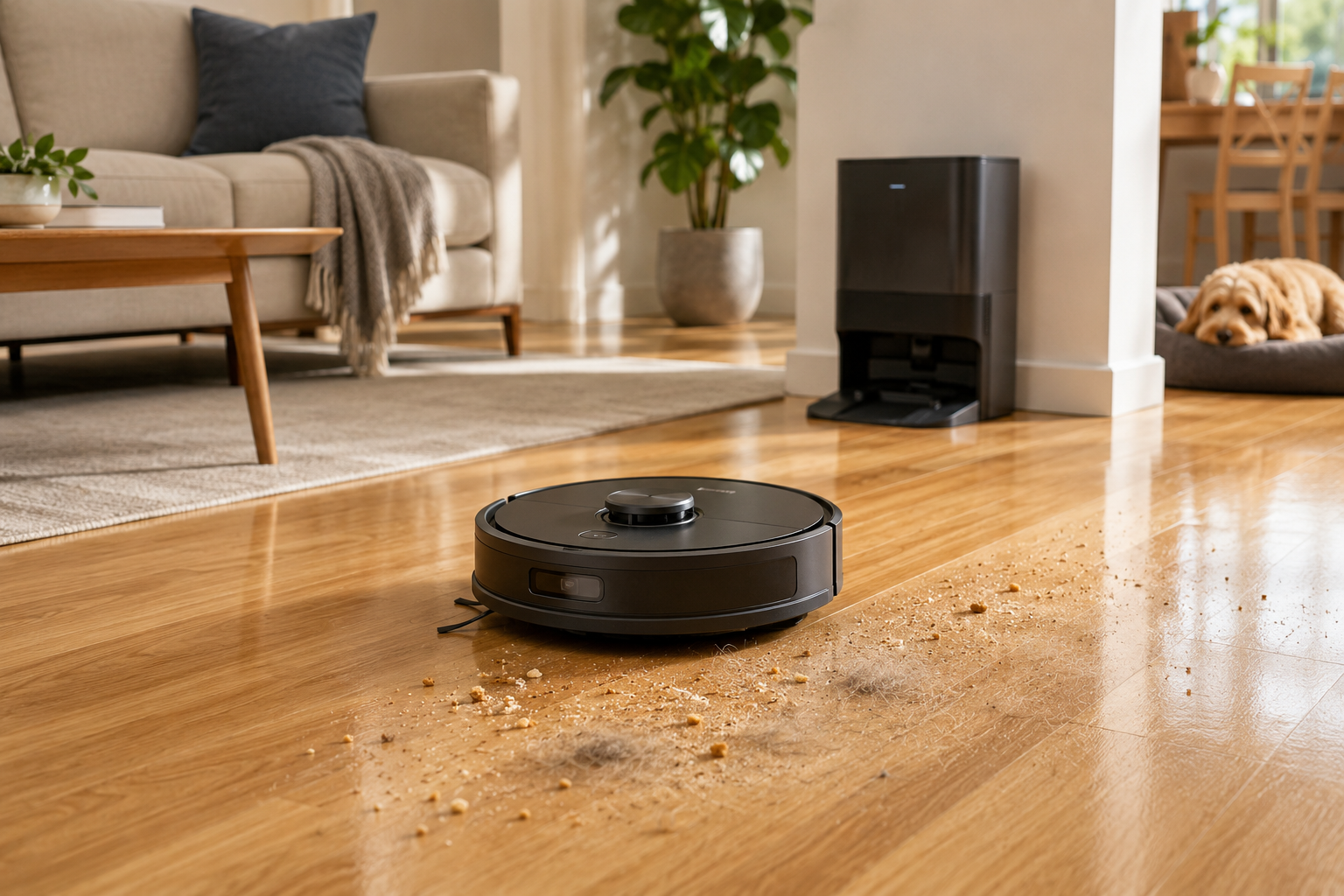
How to Choose a Robot Vacuum for Hardwood Floors (Without Getting It Wrong)
Hardwood floors look gorgeous — until they’re covered in pet hair, dust bunnies, and the crumbs your kids swear they didn’t leave behind. A robot vacuum sounds like the perfect fix, but here’s the thing: not all of them are kind to timber. Some scratch. Some get stuck. Some just push debris around in circles.
This guide breaks down exactly what to look for in a robot vacuum for hardwood floors, so you can buy with confidence and actually enjoy the thing.
Why Hardwood Floors Need a Specific Approach
Carpet and hardwood are very different cleaning surfaces, and robot vacuums are not all built with that in mind.
On carpet, suction and brush agitation do the heavy lifting. On hardwood, you need suction that can capture fine dust without scattering it, and brushes that won’t grind grit into your floor’s finish. A stiff bristle brush spinning at high speed is the last thing your floorboards need.
Hardwood also tends to show everything — dust trails, streaks, missed patches. So navigation matters more than you might think. A robot that bumps around randomly will miss corners and push debris along edges rather than picking it up.
Key Features to Look For
Rubber Brush Rolls (Not Bristles)
This is probably the most important spec to check. Traditional bristle brushes can trap hair and send debris flying across smooth floors. Rubber brush rolls or brushless suction inlets do a much cleaner job on hard surfaces. They’re also easier to clean, which is a bonus.
Some models let you swap between a bristle roll and a rubber roll depending on the surface. That’s worth paying for if your home has a mix of carpet and timber.
Strong Suction With Adjustable Modes
Fine dust and pet dander settle flat on hardwood. You need reliable suction to actually lift it. Look for models with multiple suction modes — not because you’ll always crank it to max, but because having the option matters on a busy week.
That said, raw suction power (measured in Pa) isn’t everything. Airflow path design and how well the vacuum seals around its dustbin matter just as much. A well-designed 2,000 Pa vacuum can outperform a poorly designed 3,000 Pa one.
Smart Navigation
Older robot vacuums bounce around using bump sensors. Newer ones use LiDAR or camera-based mapping to actually learn your floor plan. For hardwood floors specifically, smart navigation means the robot follows methodical rows rather than random paths — which picks up more dust in fewer passes.
It also helps with edge cleaning. Dust accumulates along skirting boards, and a robot with decent edge detection will follow those lines rather than stopping half a metre away.
Low-Profile Design for Getting Under Furniture
Hardwood floors and open-plan living often go together. That usually means coffee tables, bed frames, and dining chairs with low clearance. A robot vacuum that’s too tall simply won’t reach under them — and that’s where a lot of dust hides.
Most models sit between 7–10 cm tall. If you have low furniture, aim for the shorter end of that range.
Mopping Combo (If You Want It)
Many robot vacuums now include a mopping attachment. On hardwood, this can be great or awful depending on implementation. A vibrating mop pad that applies light, controlled moisture can leave floors looking genuinely clean. A soggy pad that dumps water on your boards? That’s a warranty claim waiting to happen.
If mopping matters to you, look for models with precision water control and avoid anything that uses a gravity-fed water tank without flow regulation.
What to Avoid
A few things worth steering clear of:
- Aggressive brush rolls: If the listing only shows a bristle brush and no rubber option, scroll on.
- No-name brands with vague specs: Suction power listed as “MAX” with no Pa rating is a red flag.
- Very cheap models without mapping: They’ll miss spots and drive you mad within a week.
- Mop attachments with no water control: Great for tile, risky for timber.
What About Pet Hair on Hardwood?
Pet hair is tricky on smooth floors because static makes it cling to skirting boards and float back up when disturbed. If pets are a factor, look for models with tangle-free brush rolls and a decent-sized dustbin. You’ll be emptying it more often than you expect.
Some higher-end models now include self-emptying bases, which means the robot deposits hair and dust into a larger bag at the dock. For pet owners, this is genuinely useful — not just a gimmick.
So, What’s the Right Choice?
There’s no single answer, but the shortlist of features that genuinely matter for hardwood floors is pretty clear: rubber brush rolls, reliable suction, smart navigation, and the right height to get under your furniture. Everything else is a bonus.
Spend a bit of time comparing specs rather than just looking at brand names or price points. A mid-range model with the right features will outperform an expensive one that’s built with carpet in mind.
Your floors are worth the research. And once you’ve got the right robot vacuum running on a daily schedule, you’ll wonder how you managed without it.