Most people reach for a foot warmer without thinking twice. It’s cold, your feet are uncomfortable, and a little heat sounds like exactly what you need. That’s completely reasonable. But foot warmers — whether disposable chemical packets, electric slippers, or plug-in heating pads — can cause real harm when used longer than intended or in the wrong conditions. Knowing the warning signs of overuse can save you from a painful, sometimes serious injury.
Redness, Burning Sensation, and Early Skin Changes
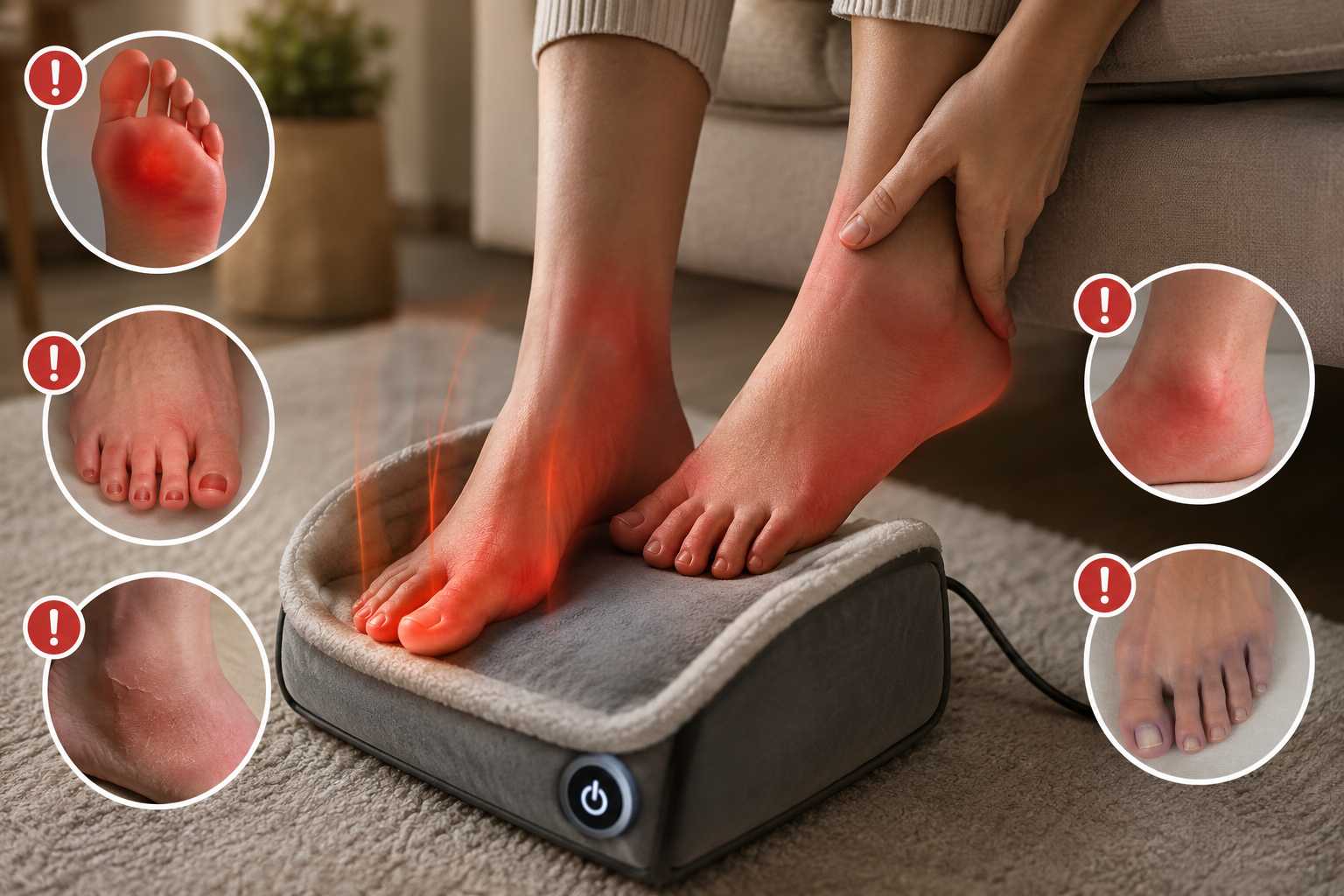
The first signs are often easy to dismiss. Your feet feel a bit too warm, there’s a mild tingling, or you notice the skin looks a little pink. These are your body’s earliest signals that the heat has become too much.
Typical early symptoms of a foot burn are redness of the skin (usually on the sole of the foot), increased sensation of heat or warmth in the skin and the burning sensation that indicates that the tissue is being damaged. The tricky part is that these signals can be subtle at first, and it’s easy to assume the warmth just means the product is “working.”
Disposable warmers present a particular risk here. Chemical foot warmers can reach temperatures as high as 165°F if exposed to an oxygen-rich environment, such as shoes with ventilator holes. That’s far hotter than most people realize, and the warmth inside a boot can mask just how intense the heat has become until actual skin damage has occurred.
If you feel any discomfort or notice skin redness while using a foot warmer, take it off immediately. Don’t wait to see if it settles down.
Blistering and Burns From Prolonged Contact
If overuse continues past those early warning signs, the damage escalates. When overheating occurs, users may not feel warning signs in time to prevent serious injury, resulting in severe burns that can worsen before the product is removed.
Second-degree burns from foot warmers are not rare. Online reports show that second-degree burns have been documented in winter athletes, including cyclists and runners, who used toe warmers during activity. One podiatry clinic in Idaho specifically warns that running, snowshoe running, or other high-intensity movement can increase the risk of burns due to friction and excess heat.
Blistering is a sign that damage has already moved beyond the surface layer of skin. At that point, the area needs proper wound care and possibly medical attention, not more heat.
People with reduced sensation in their feet face a much higher risk here. Conditions like diabetes, neuropathy, or previous frostbite injuries can reduce sensation in the feet, increasing the risk of burns because the early warning signals simply don’t register.
A Lacy, Discolored Rash: Toasted Skin Syndrome
This one catches people off guard. You might not have a burn in the traditional sense, but after weeks of daily foot warmer use, a strange rash appears on your feet or lower legs. It looks almost like a net or marbled pattern, brownish or reddish in tone. This is known as erythema ab igne, sometimes called “toasted skin syndrome.”
Toasted skin syndrome is a skin condition that develops from repeated and prolonged exposure to low levels of heat. The heat is warm enough to damage skin over time, but not hot enough to cause an immediate burn. It can cause a discolored, patchy rash.
Research published in Cureus (2025) describes a case where a woman developed erythema ab igne from multi-hour direct exposure to a heat source placed near her legs daily for several months. The treatment was simply to remove the heat source, but the patient had to be counseled on the importance of stopping prolonged use before permanent damage set in.
The concern with erythema ab igne isn’t just cosmetic. Prolonged and continued exposure to heat increases the risk of permanent skin discolouration, skin damage and in rare cases malignant changes including squamous cell carcinoma. Most instances resolve spontaneously once the heat source is removed, but only if identified early enough. Delayed recognition or continued exposure increases the risk of complications, including irreversible pigment changes or cutaneous malignancy.
If you notice a net-like rash developing on your feet or lower legs and you’ve been using a foot warmer regularly, bring it up with a doctor.
Swelling, Itching, and Persistent Discomfort After Use
Beyond visible burns and rashes, overuse can show up in subtler ways. Localized swelling (particularly when combined with redness), persistent itching after removing the warmer, or general discomfort that lingers for hours after use are all worth paying attention to.
Swelling in a specific area of the foot can be a sign of burn-related injury, though only when accompanied by other symptoms such as redness or heat.
An itchy sensation is also a noted symptom of toasted skin syndrome, even in its early stages. If your feet feel irritated or restless after removing a warmer, especially if you’ve been using it daily, the heat may be disrupting the skin’s normal function.
Who Is at Greatest Risk
Some people need to be more careful than others. Older adults and individuals with reduced sensation, including those with diabetes-related cold sensitivity, poor circulation, or Raynaud’s disease, are less able to feel early signs of overheating and are therefore at higher risk of serious injury.
Using a foot warmer while asleep is another high-risk situation. Even products designed for overnight use can cause problems if the foot stays in direct contact with the heat source for too long. Some manufacturers design auto shut-off timers specifically to address this, but not all products include them.
Hot water bottle foot warmers should be limited to short intervals of 20 to 30 minutes at a time, with sufficient time allowed for the skin to cool between sessions. Disposable chemical warmers should never be placed directly against bare skin, regardless of how cold it is outside.
Conclusion
Foot warmers are genuinely useful, especially in cold climates or for people who struggle to stay warm. But they need to be treated with the same care as any heat source. If your skin looks red, feels hot to the touch, starts blistering, or develops a net-like discoloration over time, those are signs you’ve been using your warmer too long or too intensely.
Remove the warmer, let your skin rest, and if symptoms persist or look like anything more than minor redness, see a doctor. For daily users, following the manufacturer’s guidelines on duration and placement goes a long way toward keeping things safe. And if you’re buying new, look for models with auto shut-off timers and adjustable heat settings as a baseline.
Your feet do a lot of work. A little warmth is fine. Just don’t let comfort get in the way of noticing when something’s wrong.
Sources and Research References
- Erythema Ab Igne Associated With Prolonged Direct Skin Contact With a Space Heater: A Case Report
Authors: Viniya Patidar, Mary Ann Kirkconnell Hall, Bonnie Cruser
Publication Year: 2025
Journal: Cureus
DOI: 10.7759/cureus.83204
URL: https://www.ncbi.nlm.nih.gov/pmc/articles/PMC12122052/ - Erythema Ab Igne: Toasted Skin Syndrome as a Cutaneous Marker of Chronic Pain
Publication Year: 2025
Journal: PubMed Central (NIH)
URL: https://www.ncbi.nlm.nih.gov/pmc/articles/PMC12275499/ - Erythema Ab Igne – StatPearls
Organization: National Center for Biotechnology Information (NCBI) / StatPearls
URL: https://www.ncbi.nlm.nih.gov/books/NBK538250/ - Erythema Ab Igne: A Rare Presentation of Toasted Skin Syndrome With the Use of a Space Heater
Journal: PubMed Central (NIH)
URL: https://www.ncbi.nlm.nih.gov/pmc/articles/PMC7971733/ - What Is Toasted Skin Syndrome (Erythema Ab Igne)?
Organization: Cleveland Clinic
URL: https://my.clevelandclinic.org/health/diseases/toasted-skin-syndrome - Erythema Ab Igne | Dermatology Advisor
URL: https://www.dermatologyadvisor.com/ddi/erythema-ab-igne/ - Girl’s Leg Blisters After School Ski Trip (Case Report)
Journal: Contemporary Pediatrics
URL: https://www.contemporarypediatrics.com/view/girls-leg-blisters-after-school-ski-trip - Are Toe Warmers All They’re Cracked Up to Be?
Organization: Rocky Mountain Foot & Ankle (Podiatry clinic)
URL: https://www.rockyfootandankle.com/blog/are-toe-warmers-all-they-re-cracked-up-to-be-experienced-idaho-podiatrist.cfm - The Hidden Dangers of Toe Warmers
Author: Maureen E. Roberts
Publisher: Trail Runner / ATRA
URL: https://trailrunner.com/trail-news/the-hidden-dangers-of-toe-warmers/ - Burned Feet: How to Prevent and Treat the Injury
Organization: Family Footcare CT
URL: https://familyfootcarect.com/burned-feet-how-to-prevent-and-treat-the-injury/ - Heated Insole & Foot Warmer Burn Injury Information
Organization: Saiontz & Kirk / Youhavealawyer.com (citing U.S. Consumer Product Safety Commission warnings)
URL: https://www.youhavealawyer.com/blog/2026/01/22/heated-insole-and-electric-foot-warmer-lawyers-helping-burn-injury-victims-pursue-compensation/ - Are Foot Warmers Safe to Use?
Organization: OneAbove (safety usage guidelines)
URL: https://www.oneabove.co.uk/blogs/news/are-foot-warmers-safe-to-use