What Is the Best Electric Foot Warmer? A Practical Buyer’s Guide
Cold feet have a way of ruining an evening. The right electric foot warmer depends less on the label and more on how and where you plan to use it.

There is no single option that works for everyone. What suits someone working from home all day is a different product from what suits a person who wants warmth in bed at night. This guide breaks down the main types, the features worth paying attention to, and how to match one to your situation.
Quick answer: Not sure where to start? A medium-sized flat pad with double-sided heating and at least three heat settings works well for most situations.
The Main Types of Electric Foot Warmers
Heated Foot Mats & Flat Pads
These plug into a standard outlet and sit on the floor under your feet, usually around 30 x 50 cm with multiple heat settings. Simple to use and easy on the budget. They warm from below, which suits most people, though some prefer warmth from all sides.
Double-Sided or Wrap-Around Pads
Heating elements sit on both the top and bottom, so your feet warm from both the soles and the tops at the same time. A comfortable pick for anyone who wants more complete coverage than a flat pad offers.
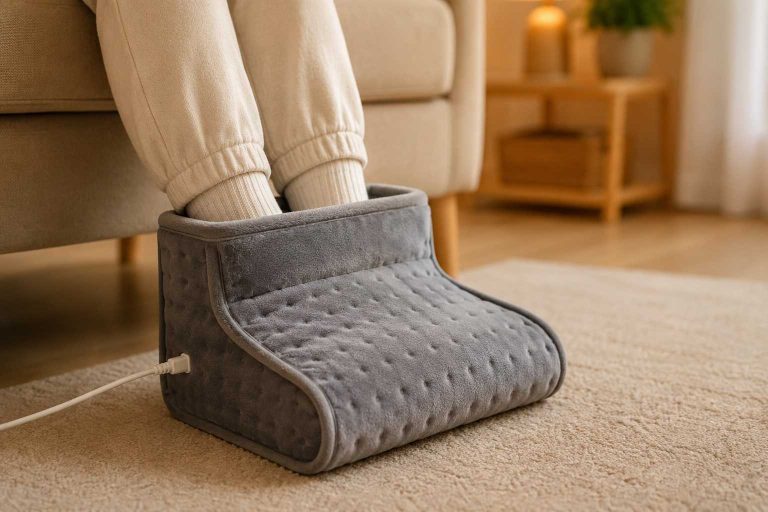
Heated Slipper-Style Warmers
You slide your feet in like a bootie, with heating wrapped around the whole foot. Offers a more immersive feel and lets you walk around a bit without leaving the warmth behind.
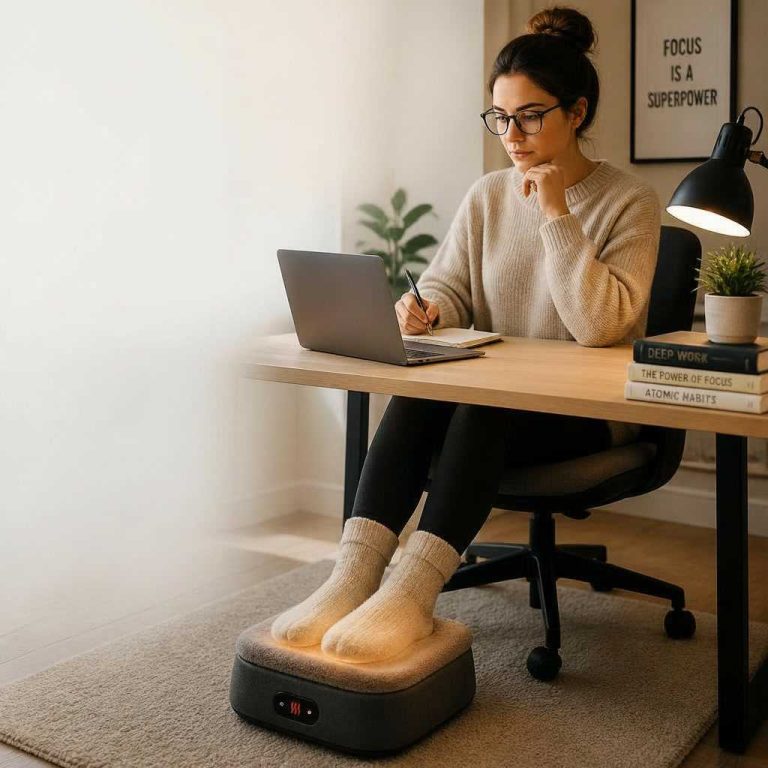
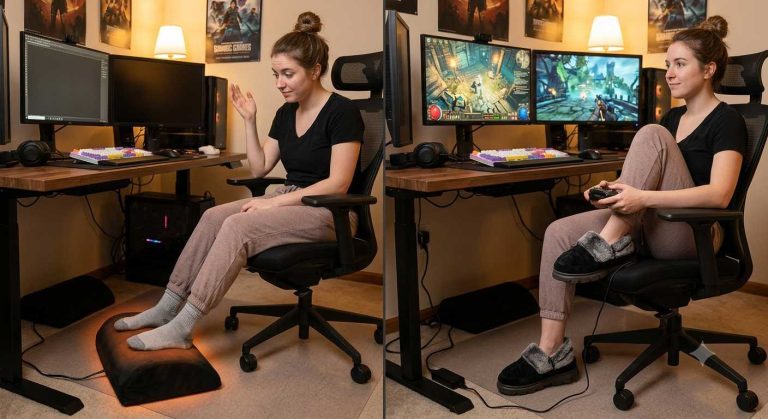
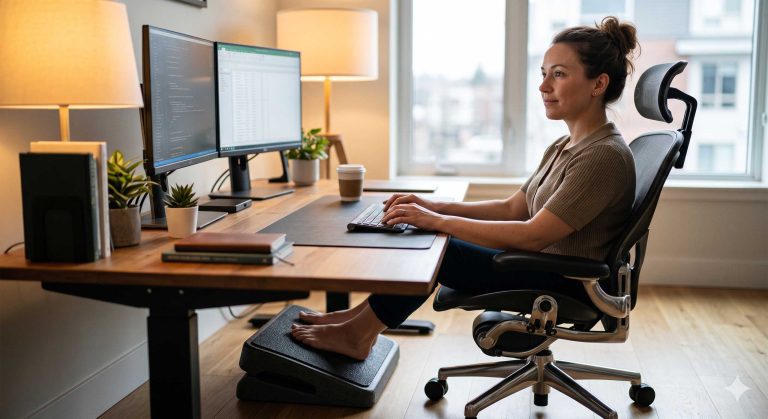
Under-Desk Foot Warmers
Built specifically for office use, usually in mat form with a lower profile and a longer cord so they sit comfortably beneath a standing or seated desk.
Features That Actually Matter
- Heat settings & range Look for 6 to 10 heat levels, roughly 85°F to 149°F, so you can dial in gentle warmth for all-day use or higher heat when you want it fast.
- Auto shut-off Look for auto shut-off in the 1.5 to 4 hour range. Handy if you tend to doze off on the couch.
- Safety certification Check for ETL, UL, or CE marks confirming the product meets electrical safety standards.
- Washability A removable, machine-washable cover keeps things fresh and makes the product easier to live with long term.
- Cord length A short cord limits where you can place the warmer. Check the length before buying if placement under a specific desk or chair matters to you.
Who Tends to Get the Most Use Out of One
People who work from home or spend hours at a desk in a cool office often like having direct warmth right where they need it, without heating an entire room. Anyone who tends to run cold in the feet may enjoy the comfort a warmer provides during the colder months, and it can be a nice addition for older adults who spend long stretches sitting or standing.
What to Watch Out For
Single-setting warmers
Some budget models have one fixed temperature with no way to adjust. Look for at least two or three heat levels.
Thin or stiff materials
Soft flannel or plush sherpa holds heat well and feels comfortable against skin over longer periods. Check reviews that mention how the surface feels after extended use.
No overheat protection
Auto shut-off and overheat protection help the pad avoid getting too hot. Confirm a UL or ETL certification rather than taking a listing’s word for it.
Unusually short timers
Some models cut off after just 30 or 45 minutes, which can interrupt a long work session or movie. Look for at least a 2-hour run time.
Matching the Right Warmer to Your Situation
| Your Situation | Best Fit |
|---|---|
| Working at a desk all day | Under-desk mat, non-slip base, long cord, 90+ min auto-off |
| Relaxing on the sofa | Plush wrap-around or slipper-style warmer |
| Want warmth from every side | Double-sided pad with a wide temperature range |
| Sharing with a partner | Larger mat, around 40 x 60 cm or bigger |
Find Your Fit
Browse electric foot warmers built for desks, sofas, and everything in between.
Shop Electric Foot WarmersFinal Thoughts
There is no single product that works best for every person. The right electric foot warmer is the one that fits where you sit, how long you use it, and what kind of warmth you like most. Get the basics right, adjustable heat settings, an auto shut-off timer, a safety certification, and washable fabric, and the rest comes down to choosing between a flat pad, a wrap-around design, or a slipper style based on how you use it day to day.
Quick Questions
Is a flat pad or a wrap-around style better?
A flat pad warms from below, which works well for most people. A wrap-around or double-sided pad adds warmth from the top as well, for more complete coverage.
How long can I safely leave a foot warmer on?
This depends on the model’s auto shut-off setting, typically between 1.5 and 4 hours. Check the product listing for the exact timer range.
Can I use a foot warmer under a standing desk?
Yes, an under-desk model with a low profile and a longer cord is designed for exactly that setup.