How to Keep Feet Warm in a Cold Office
Cold feet aren’t just uncomfortable—they chip away at your focus and productivity. Discover why sitting turns your desk into a freezer and the practical, research-backed ways to stay warm.
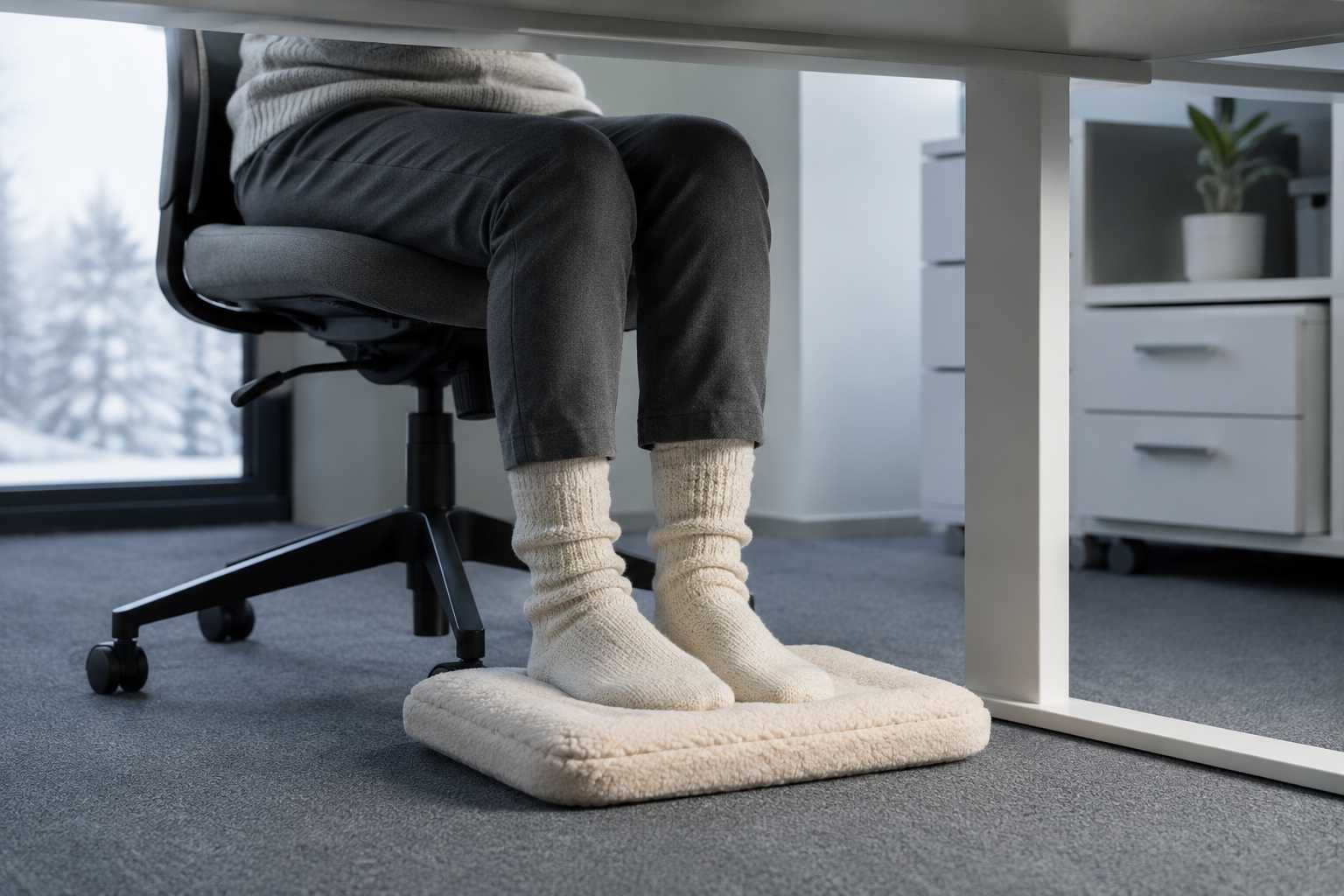
If you’ve ever sat at your desk with toes so cold you can barely concentrate, you’re not alone. Millions of office workers deal with the same problem every single day — especially in winter, when air conditioning and poor insulation turn workspaces into walk-in freezers.
Cold feet aren’t just uncomfortable. They’re distracting. And as it turns out, there’s real science behind why staying warm at your desk actually matters for getting work done.
Why Your Feet Get Cold at Your Desk (It’s Not Just the Temperature)
The room being cold is only part of the story. The bigger issue is what happens to your body when you sit still for hours.
When you’re sedentary, your large muscle groups — the glutes, hamstrings, and quads — stop contracting. Those muscles are your body’s main heat generators. With them essentially switched off, your core temperature starts to dip. Your body responds by redirecting warm blood away from your extremities to protect your vital organs, a process called peripheral vasoconstriction. The result? Your hands and feet are the first casualties.
Prolonged sitting also compresses blood vessels in your thighs and pelvis, which further restricts flow down to your legs and feet. The calf muscles, which normally act as a kind of pump to push blood back toward the heart, aren’t doing much when you’re planted in a chair.
Women often run cooler due to differences in metabolic rates and body composition compared to men.
Affecting up to 20% of women of childbearing age, Raynaud’s causes exaggerated vascular reactions to cold temperatures.
Why This Matters Beyond Comfort: Temperature and Cognitive Performance
Here’s something worth flagging to your facilities manager: thermal discomfort has a direct, measurable cost on work quality and error rates.
Cornell Study Finding: Research by Professor Alan Hedge found that when office temperatures dropped from 77°F (25°C) to 68°F (20°C), employee computer typing error rates jumped dramatically from 10% to 25%.
A separate 2019 study published in PLOS ONE by researchers Tom Chang and Agne Kajackaite tested 543 participants across various temperatures. They discovered that women’s performance on math and verbal tasks improved meaningfully as temperatures rose, leading researchers to conclude that overall workplace productivity improves at higher temperatures.
When people feel cold, they expend precious mental energy trying to warm up — rubbing hands, shifting around, and losing focus — rather than directing that bandwidth toward their primary work tasks.
Practical Ways to Keep Your Feet Warm in a Cold Office
1. Start with What’s on Your Feet
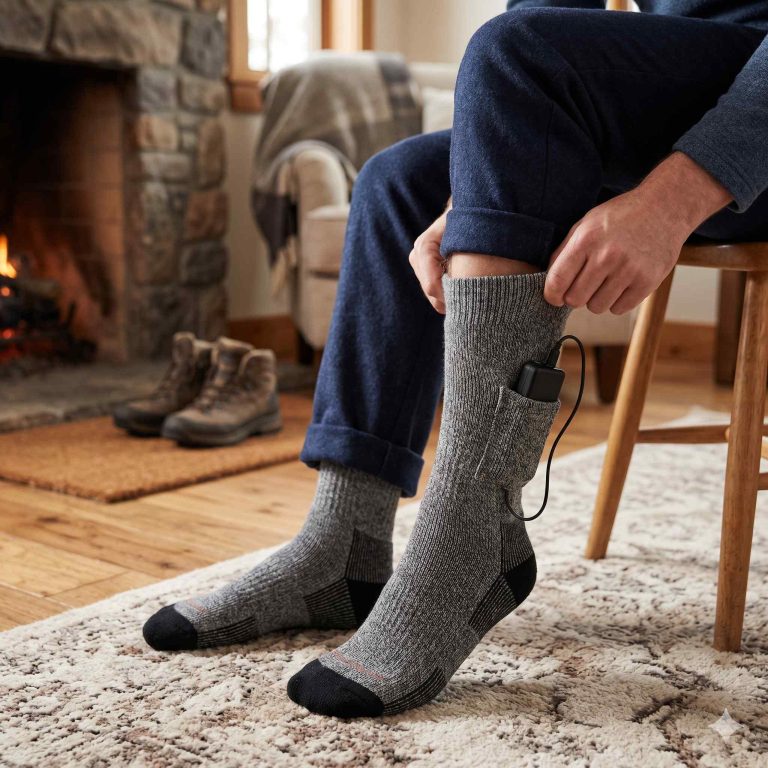
This is the most controllable variable in your whole setup. The single biggest upgrade most people can make is switching from cotton socks to wool, particularly merino wool.
Wool fibers have a natural crimp that creates tiny air pockets, trapping heat against your skin. More importantly, wool continues to insulate even when it gets slightly damp from perspiration — cotton, by contrast, absorbs moisture and loses its insulating ability, making feet colder over time.
Pairing quality wool socks with thicker-soled shoes or office-appropriate felt slippers isolates your feet from cold concrete or tile floors beneath your desk.
2. Use a Foot Warmer Under Your Desk
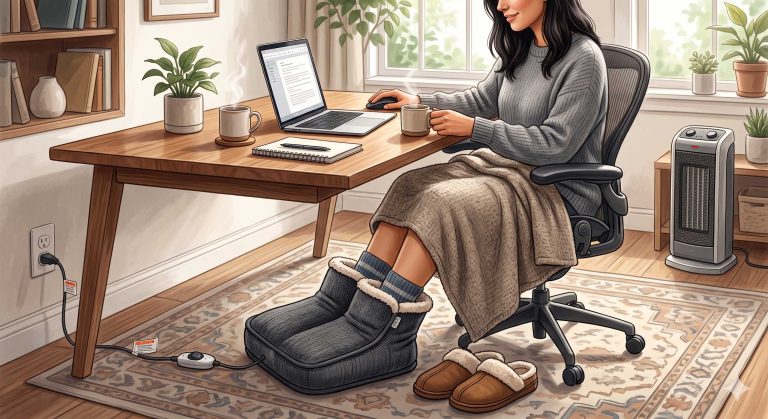
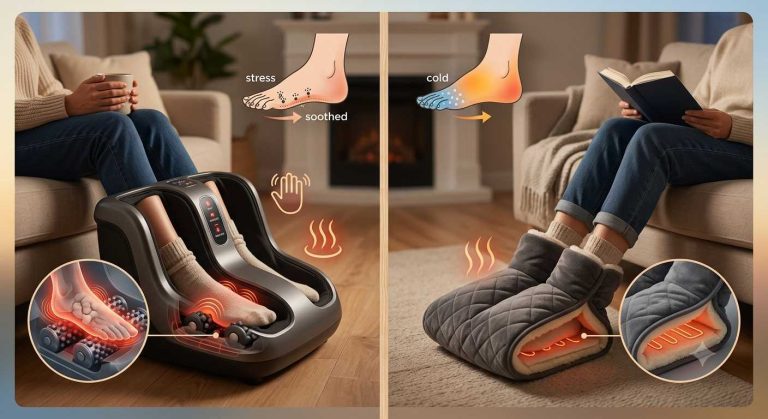
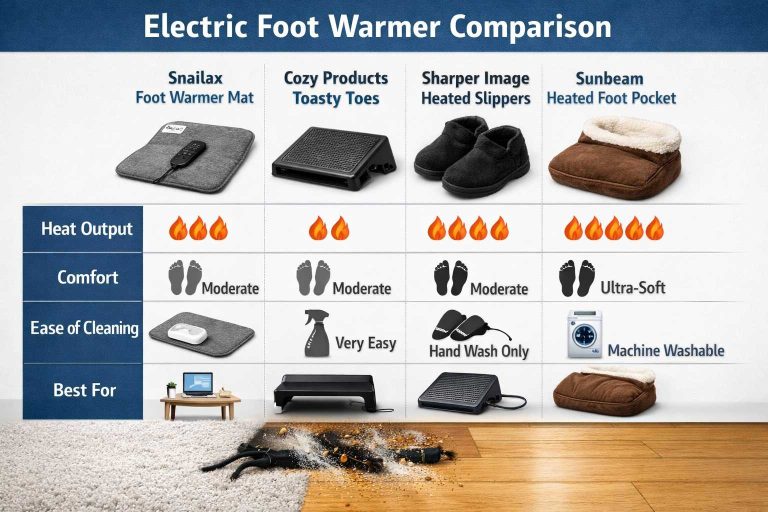
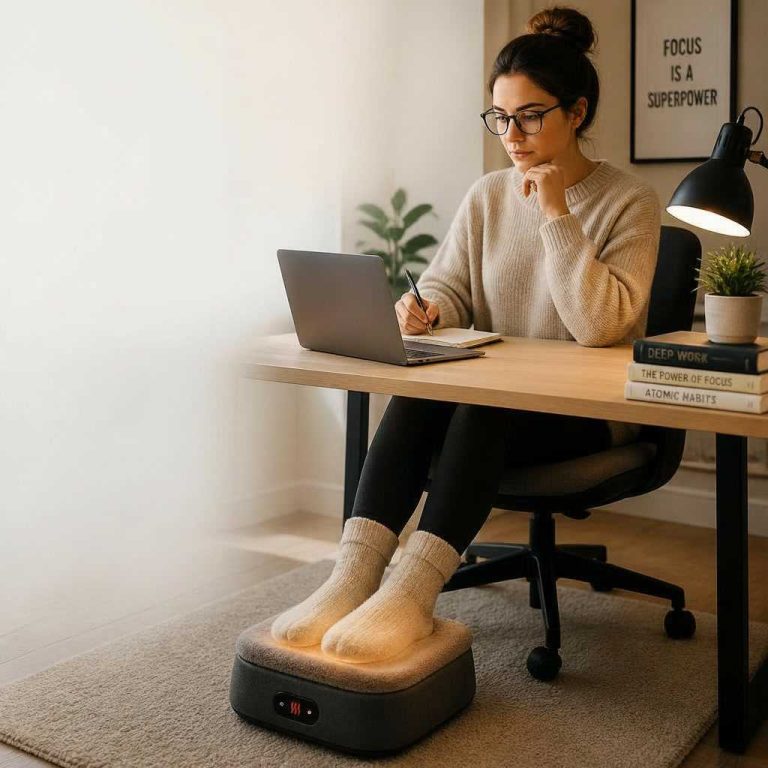
An electric foot warmer is probably the most direct solution. Researchers at UC Berkeley’s Center for the Built Environment studied targeted Personal Comfort Systems (PCS) and found that personal foot warmers operating at around 20 watts delivered meaningful thermal comfort at a fraction of the energy cost of a 1,500-watt space heater.
3. Move More Throughout the Day
Short movement breaks reactivate leg muscles and restore circulation. Cornell Ergonomics advocates the 20-8-2 rule:
- 20 Minutes: Sitting in a neutral posture
- 8 Minutes: Standing
- 2 Minutes: Moving or stretching
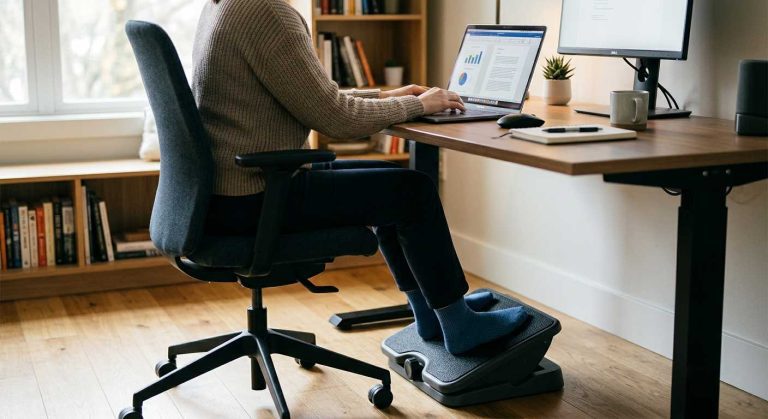
Even seated foot exercises like calf raises, ankle circles, and toe presses stimulate blood flow to combat sedentary circulatory slowdown.
4. Layer Your Lower Half, Not Just Your Core
Most people reach for a desk cardigan or blanket, but heating your torso doesn’t fix restricted circulation in your legs. Thermal underlayers, tights, or thermal leggings beneath trousers retain heat along the whole leg, improving blood flow down to the toes.
5. Address the Environment Where You Can
| Action | Primary Benefit |
|---|---|
| Desk Rug or Insulation Mat | Breaks direct contact between footwear and cold flooring. |
| Draft Management | Prevents floor-level cold air streams from blowing across your feet. |
| Low-Watt Personal Heater | Provides localized radiant warmth (check workplace safety policies first). |
Upgrade Your Desk Comfort
Explore specialized under-desk foot warmers and ergonomic accessories designed to optimize thermal comfort and focus.
Shop Under-Desk Foot WarmersKey Takeaways
- Sedentary sitting stops major muscle groups from generating heat, triggering peripheral vasoconstriction that cools hands and feet first.
- Cold office temperatures significantly increase typing error rates (up to 25%) and drain cognitive focus.
- Switching to merino wool socks provides active insulation that retains warmth even with minor moisture.
- Targeted personal foot warmers deliver personal comfort using a fraction of the power required by space heaters.
- Adopting movement frameworks like the 20-8-2 rule reactivates blood flow to eliminate cold extremities at the root cause.
Conclusion
Cold feet at the office aren’t just a minor annoyance — they’re a genuine distraction that can chip away at your focus and output. The good news is that most of the solutions are straightforward and inexpensive.
Start with the basics: better socks, smarter footwear, and short movement breaks throughout the day. Add a foot warmer under your desk if you can. Small changes to how you dress, move, and set up your workspace can make a cold office significantly more bearable — and keep you working at your best through the colder months.
Sources and Research References: Chang & Kajackaite (2019) PLOS ONE study on gender, temperature, and cognitive performance; Alan Hedge (2010) Cornell University ergonomics research on office temperature and typing errors; UC Berkeley Center for the Built Environment Personal Comfort Systems research; WHO Guidelines on Sedentary Behaviour & ANSI/HFES 100-2007 ergonomic standards; Medical News Today; Raynaud’s Association.