No Space Heaters Allowed? 5 Safe Ways to Keep Your Feet Warm at a Desk
Banned from using a traditional space heater at your desk? Here is why facilities policy forbids them—and 5 safe, low-wattage alternatives that facilities and IT will actually allow.
You settle in at your desk, pull out that trusty space heater from your bag, and plug it in. Three minutes later, someone from facilities is standing over you asking you to put it away. Sound familiar?
Office space heater bans are common, and they are not entirely without reason. While OSHA does not outright prohibit portable heaters in workplaces at the federal level, the agency’s General Duty Clause requires employers to eliminate recognized hazards. Many commercial leases and building insurance policies go further and ban them outright. A typical 1,500-watt space heater running on an already-loaded office circuit is a real electrical concern, not just a bureaucratic one.
But cold feet are a genuine distraction, and the office thermostat is rarely set with your specific workstation in mind. If the space heater ban has left you shivering, here are five approaches that actually work, including a few that most employers have no issue with at all.
Why Offices Ban Space Heaters (And What They’ll Allow Instead)
Before diving into alternatives, it helps to understand the reasoning. Traditional portable space heaters typically draw 750 to 1,500 watts of power. Office circuits, which often serve multiple computers, monitors, chargers, and other equipment simultaneously, can trip when a high-wattage heater is added into the mix.
Beyond the electrical load, there are fire code requirements to consider. The NFPA recommends that portable heaters maintain at least three feet of clearance from combustible materials, which is nearly impossible in a typical cubicle or shared desk setup. It is also why many building managers and landlords simply prohibit them entirely, to protect the property and avoid liability.
The Power Comparison: Low-wattage under-desk warmers operate at just 40 to 170 watts—a tiny fraction of a 1,500-watt space heater’s draw. Most facilities managers and IT departments never object to them when shown the spec sheet.
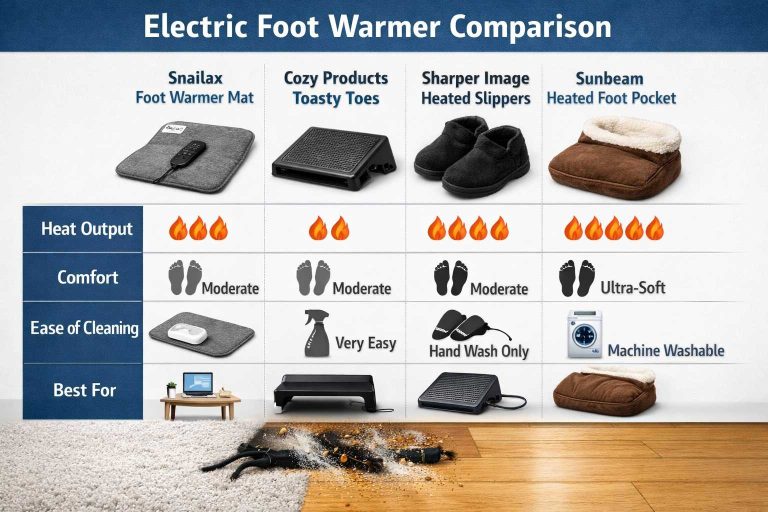
1. Heated Footrest or Foot Warmer Mat
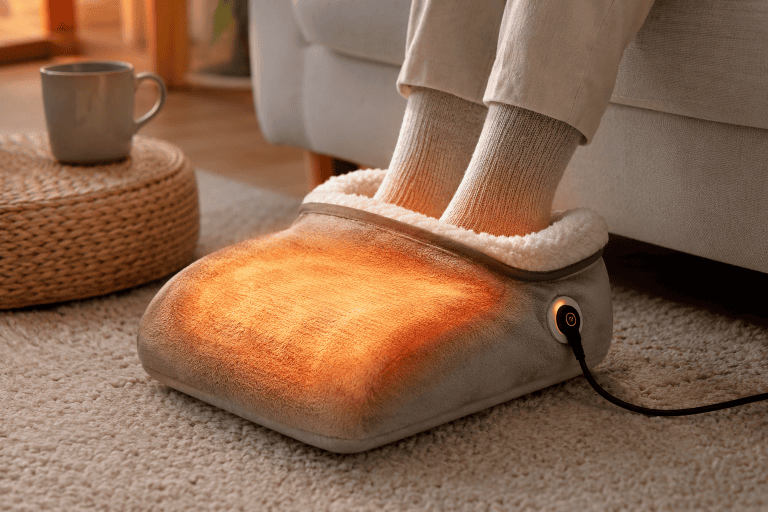
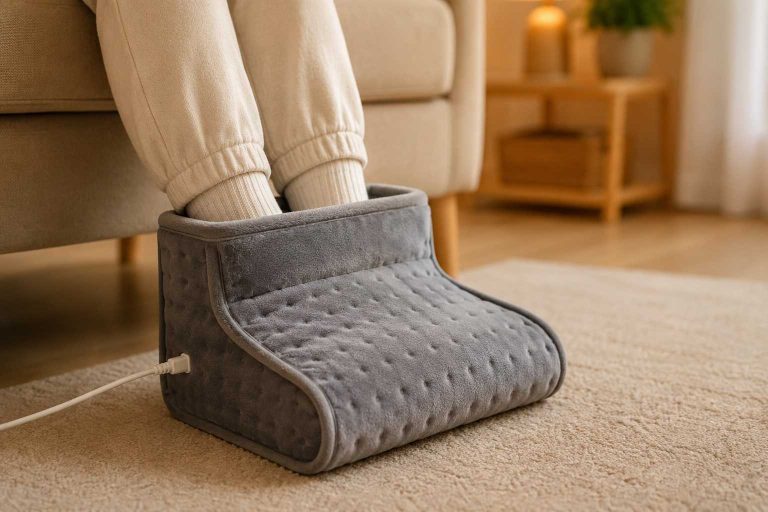
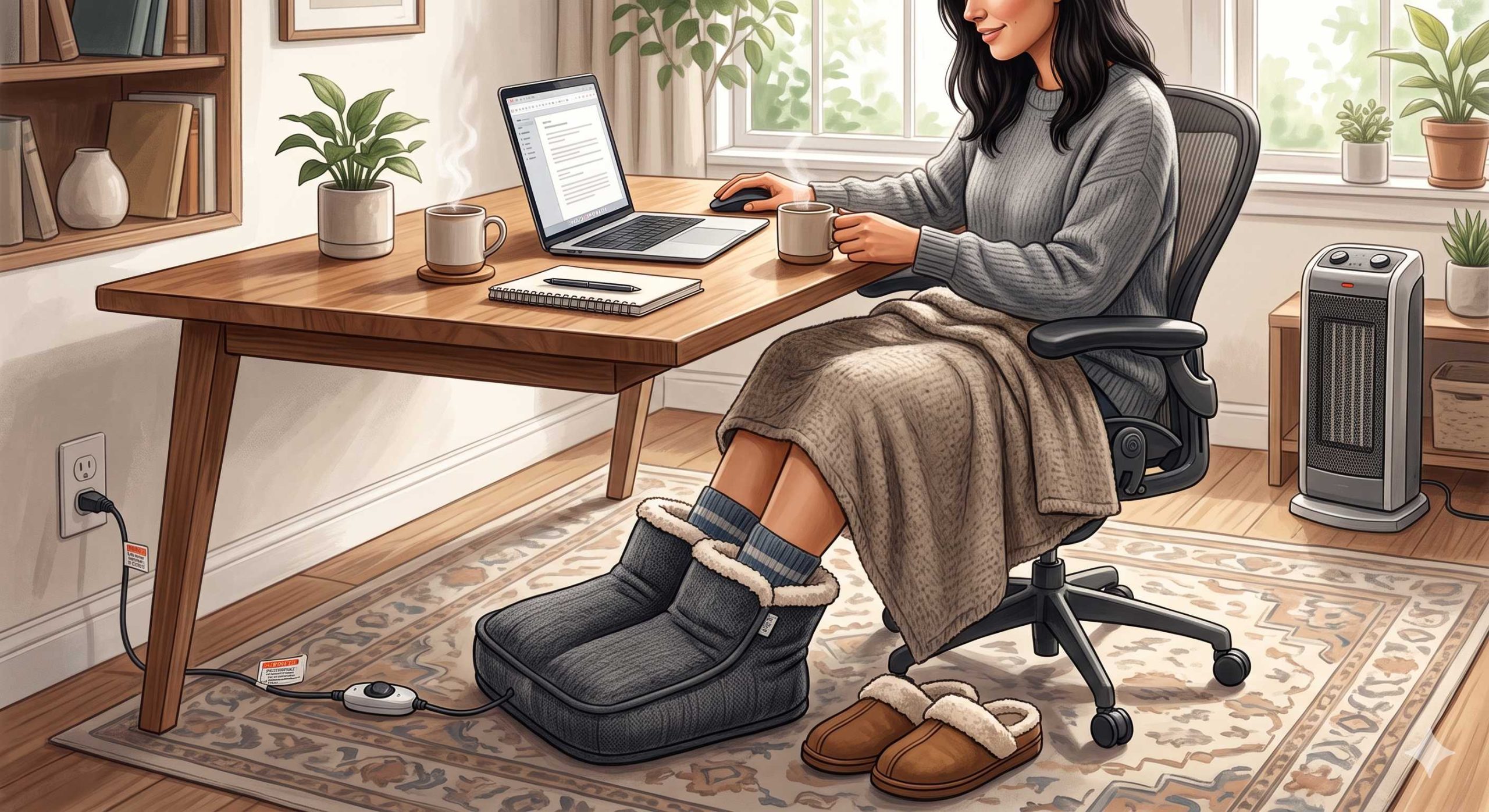
This is probably the most practical solution on the list. Heated footrest pads and mats sit flat on the floor under your desk, warming your feet through direct contact rather than heating the surrounding air. Most models draw between 40 and 80 watts, which is comparable to a laptop charger.
Many also come with features that make them genuinely low-risk: auto shut-off timers (typically between one and twelve hours), overheat protection, and cool-to-the-touch outer surfaces. Some combine the heating function with ergonomic footrest support and vibration massage, so they serve a dual purpose beyond just keeping the cold at bay.
Brands like Comfier, Snailax, and Beleduc offer models in this category, and they sit clearly outside the “space heater” definition that most office policies are targeting.
2. Under-Desk Radiant Panel Heater
Panel-style under-desk heaters work differently from footrest mats. Instead of contact heating, they emit radiant warmth toward your legs and feet without blowing air around. They typically fold flat for easy storage and most are quiet enough that you would not notice them running during a call.
Wattage on these tends to run a bit higher than foot mats, usually somewhere between 150 and 400 watts, but still considerably lower than a full-sized space heater. Some models, like the Whisper Heat panel, draw around 320 watts while still delivering enough warmth to cover both feet and lower legs.
Worth checking your office policy on this one specifically, since a panel heater is technically still a heater. But the low wattage and targeted design mean most IT and facilities teams will not object when they see the spec sheet.
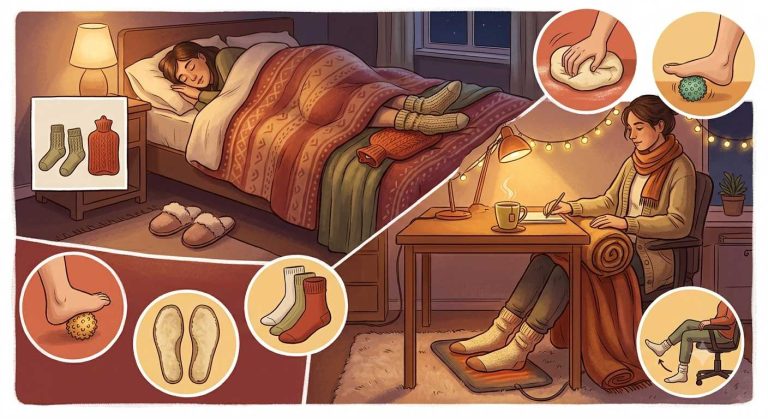
3. Thermal Desk Socks or Heated Insoles
Sometimes the simplest fix is the one you overlook. A good pair of thick thermal socks or merino wool socks can make a noticeable difference if your cold feet problem is moderate rather than severe. Wool is particularly effective at retaining warmth even when you’re sitting still.
If you want a step up from that, battery-powered heated insoles are available and slide into your regular work shoes. They run on rechargeable batteries and generate gentle warmth directly underfoot throughout the day. No plug, no cord, no electrical concerns. Nobody from facilities is going to stop you from wearing warm insoles.
4. Electric Lap Blanket or Heated Knee Throw
A small electric lap blanket plugs into a standard USB port or wall outlet and drapes across your legs, covering your lap and knees while keeping feet warmer as a byproduct. They typically draw somewhere between 30 and 60 watts, putting them comfortably in the “nobody will notice” category of power draw.
These are not foot warmers in the strict sense, but they address the same root problem: the lower half of your body losing warmth while you sit still for hours. If your cold feet are partly a circulation issue from sitting in one position too long, a lap blanket used alongside the occasional short walk can help more than a foot warmer alone.
5. Improve Airflow Underneath Your Desk
This one is less of a product recommendation and more of a quick environmental fix. Cold feet at a desk are often made worse by poor air circulation at floor level. Desks pressed against walls, enclosed under-desk panels, and heavy furniture can all create cold pockets near the floor while the rest of the room feels fine.
If you can, pull your chair away from the wall slightly and keep the area under your desk as clear as possible. It won’t solve the problem entirely, but it can take the edge off. Combine it with thermal socks and a foot warmer mat, and you will likely be comfortable through even the coldest months.
A Note on Talking to Your Employer
| Solution | Power Draw | Policy Risk Level |
|---|---|---|
| Thermal Socks / Heated Insoles | 0W (Battery) | Zero Risk (No policy needed) |
| USB Lap Blanket | 30W – 60W | Very Low (Laptop-level power) |
| Heated Footrest / Mat | 40W – 80W | Low (Safe, flat contact heating) |
| Radiant Panel Heater | 150W – 400W | Moderate (Requires spec sheet review) |
| Traditional Space Heater | 750W – 1,500W | Prohibited (High fire/circuit risk) |
If cold temperatures are genuinely affecting your ability to work, it is worth raising with your manager or HR. OSHA recommends indoor office temperatures be kept between 68 and 76 degrees Fahrenheit. This is not a legal requirement, but it does give you a reasonable reference point to have a productive conversation.
Most employers will not have a problem with a low-wattage foot warmer mat if you frame it correctly: it uses less power than a laptop, sits flat under your desk, and has an auto shut-off. Bringing the product’s spec sheet to the conversation tends to help.
Key Takeaways
- Space heaters are banned because 1,500-watt draws trip office circuits and violate 3-foot NFPA clearance rules.
- Low-wattage heated foot mats (40W-80W) sit flat and bypass traditional space heater restrictions.
- Radiant panel heaters (150W-400W) provide gentle leg warmth without blowing dust or consuming heavy wattage.
- Battery-powered heated insoles and merino wool socks offer personal warmth without needing outlet permission.
- Presenting a product’s low-wattage spec sheet to HR or facilities makes approval straightforward.
Wrapping Up
Being told no space heaters does not mean you have to be cold. Heated footrest mats and foot warmer pads are the most direct replacement, operating at a fraction of the wattage of a traditional heater and typically falling well outside whatever policy is being enforced. Radiant panel heaters offer a bit more coverage if you need it. And for low-lift, no-permission-needed options, thermal socks, heated insoles, and electric lap blankets cover a surprising amount of ground.
The goal is keeping your feet warm enough to stay comfortable and focused. With a bit of research, that’s easy to do without touching the office circuit breaker.
References and Resources: OSHA General Duty Clause; OSHA Indoor Temperature Recommendations; OSHA Field Safety and Health Manual (Chapter 6); OSHA Temporary Heating Devices Standard (1926.154); Axcet HR Solutions (2026); Workbox Workplace Guides (2026); Facilities Management Advisor; J.J. Keller Compliance Network (2026); CIARRA Appliances (2025).