Why Are My Feet Always Cold at My Desk?
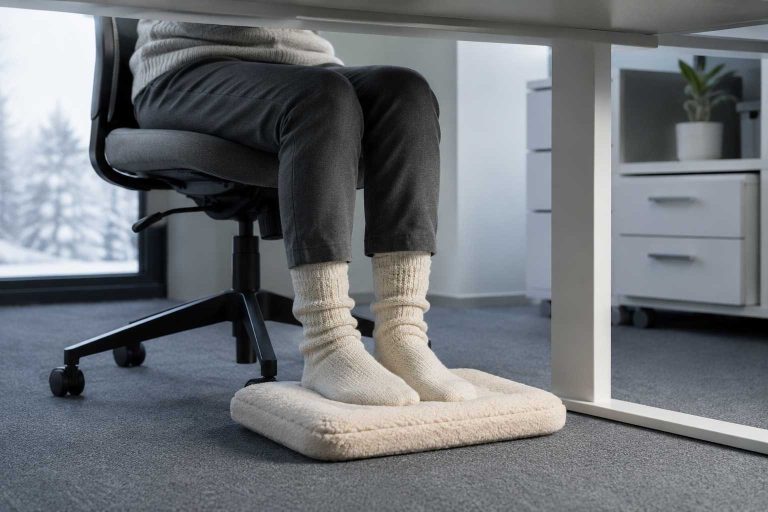
You sit down, get into a rhythm, and about an hour in, your feet are freezing. Doesn’t matter if it’s summer or winter, or that the rest of you feels fine. If this sounds familiar, you’re not imagining things, and there are clear physiological reasons it keeps happening.
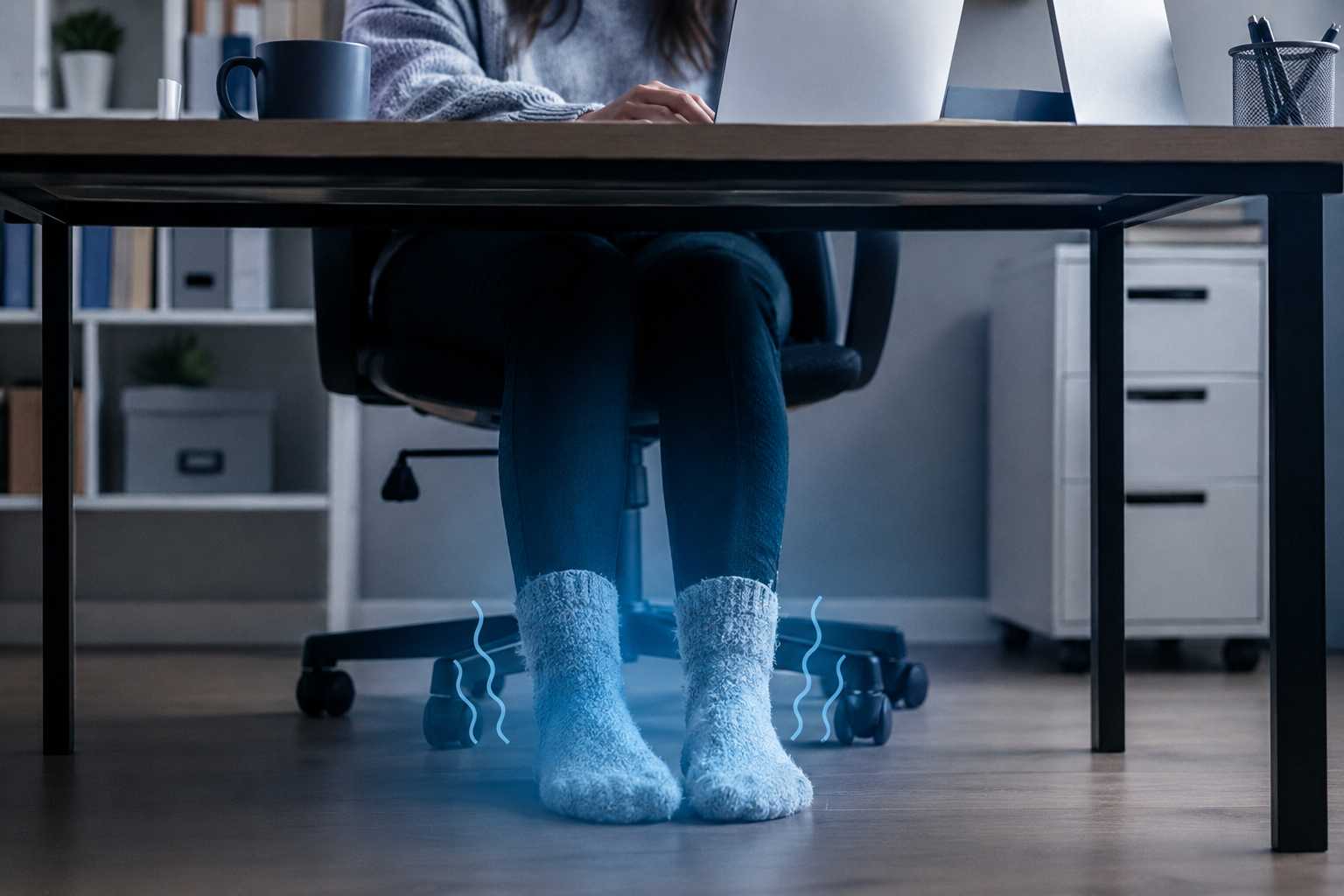
Short version: For most desk workers, cold feet come down to inactivity, posture, or stress, all of which are manageable. Persistent cold feet that don’t respond to movement or warmth are worth mentioning to a doctor.
Sitting Still Slows Down Blood Flow to Your Feet
This is the big one. When you sit at a desk for hours, your leg muscles aren’t doing much, and muscles play a bigger role in circulation than most people realize. Sedentary activity reduces muscular activity in the lower extremities, which decreases leg blood flow and increases blood pooling in the calf. Think of your calf muscles as a secondary pump for your circulatory system. When you walk, they squeeze veins and push blood back toward your heart. When you sit still, that pump essentially switches off.
Research published in Medical Science Monitor found that this reduction in blood flow results in low shear stress in the lower extremities, which may also lead to increased oxidative stress and impaired vascular endothelial function, meaning the blood vessels themselves become less responsive and efficient. Studies have shown that when active individuals adopt a sedentary lifestyle with extensive sitting and reduced daily steps, this dysfunction shows up primarily in the popliteal artery of the leg rather than in the upper extremities, which helps explain why feet and lower legs feel cold even when hands feel fine. This connection between sedentary time and reduced leg circulation is consistently noted across medical sources including Harvard Health and the Cleveland Clinic.
Posture and Desk Setup Can Make It Worse
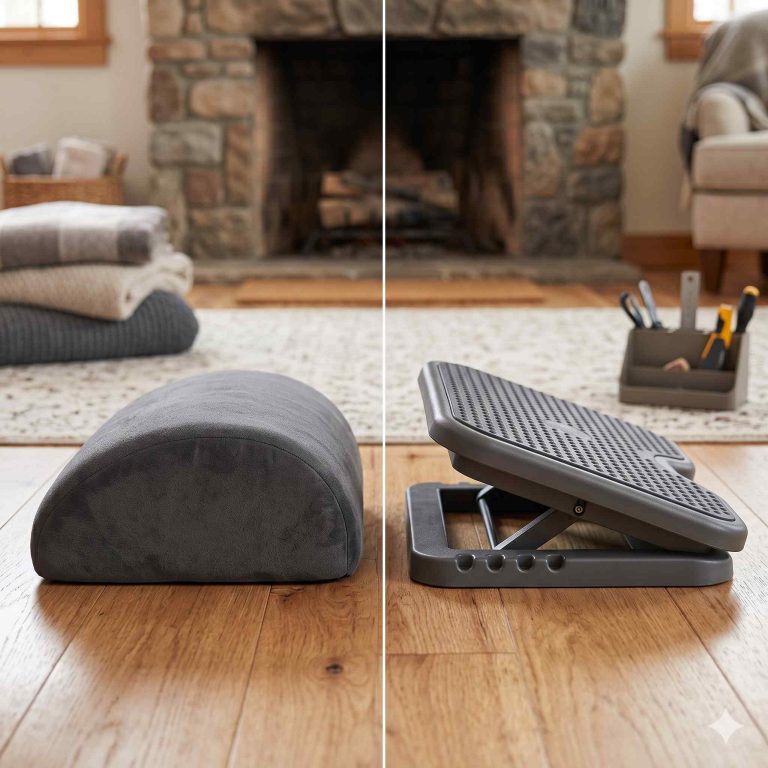
How you sit matters as much as the fact that you’re sitting. If your feet aren’t resting flat on the floor, the underside of your thighs can press against the seat edge and restrict blood flow through the femoral artery. A footrest helps, but an ill-fitting one can create pressure in the wrong spots too.
Sitting also changes the angle at which major arteries, including the femoral and popliteal arteries, run compared to standing or lying down. Bends within the arterial tree alter flow patterns, and turbulent blood flow may be amplified in these deformed segments of the lower extremities. In practice, a slightly slouched or awkward seated position can quietly restrict the blood supply reaching your feet, not dramatically, but enough to leave them persistently cold over a long workday.
Stress and Your Nervous System Play a Role Too
Work stress doesn’t stay in your head. When you’re anxious, under pressure, or stuck in a difficult meeting, your sympathetic nervous system responds by constricting blood vessels near the skin’s surface. Adrenaline causes peripheral blood vessels to constrict, reducing blood flow to the outermost areas of the body. This response reserves energy and prepares the body for harm, but in a modern desk environment, where stress is common and physical threats are not, it can leave feet and hands cold more often than it helps.
For some people, this response is amplified. Raynaud’s phenomenon is usually triggered by cold temperatures, anxiety, or stress, and occurs because blood vessels go into a temporary spasm that blocks blood flow. It’s more common than many people realize, often starts between ages 15 and 25, is most common in people assigned female at birth, and can cause fingers or toes to turn pale or white, then blue, during stress or cold exposure. If your feet go noticeably pale, blue-tinged, or numb, especially under stress, it’s worth bringing up with a doctor to rule out Raynaud’s or a related condition.
When Cold Feet Might Signal Something More
For most desk workers, cold feet come down to inactivity and posture. But persistent cold feet that don’t respond to warming up, movement, or a better chair are sometimes worth investigating.
The main medical causes of cold feet are decreased circulation and nerve damage (neuropathy). One cause of decreased circulation is atherosclerosis, where arteries are narrowed by fatty deposits that impede blood flow in the limbs. Other contributing factors include hypothyroidism, where an underactive thyroid slows metabolism and reduces heat production, anemia, and diabetes-related circulation issues. People with diabetes or who smoke are at greatest risk for poor circulation, as are those over age 50. If cold feet come with pain, color changes, numbness, or swelling, or simply never warm up no matter what you do, that’s a reasonable reason to see a doctor.
Practical Things That Actually Help
- Move more, even at your desk Short walking breaks or light stretching help prevent blood from pooling in your extremities. A two-minute walk every 30 minutes is often enough to meaningfully improve lower limb circulation.
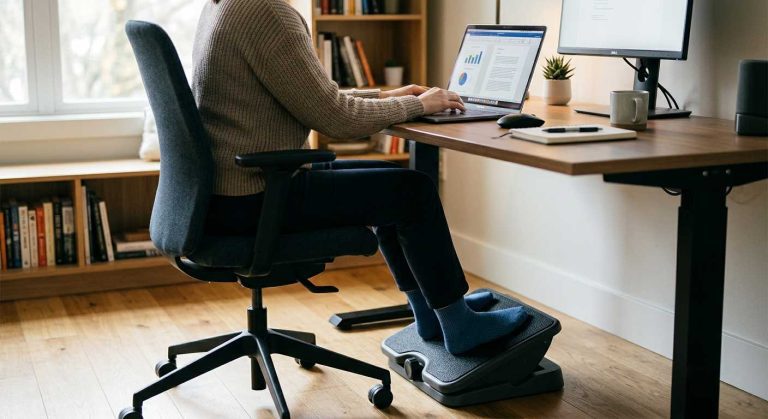
- Check your chair and foot position Feet should rest flat on the floor or on a footrest, without the seat pressing into the backs of your thighs, keeping the femoral artery less compressed.
- Try simple foot exercises Ankle circles, toe flexes, and seated calf raises activate the muscles that drive blood back toward the heart. No need to stand up.
- Stay warm from the core Keeping your torso warm supports overall circulation. A draft-free space and warm upper-body layers reduce how much heat your body pulls away from your extremities.
Keep Your Feet Comfortable
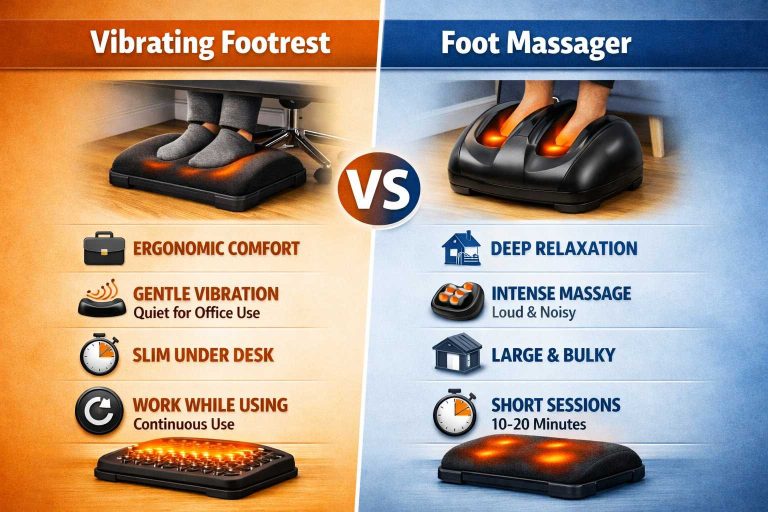
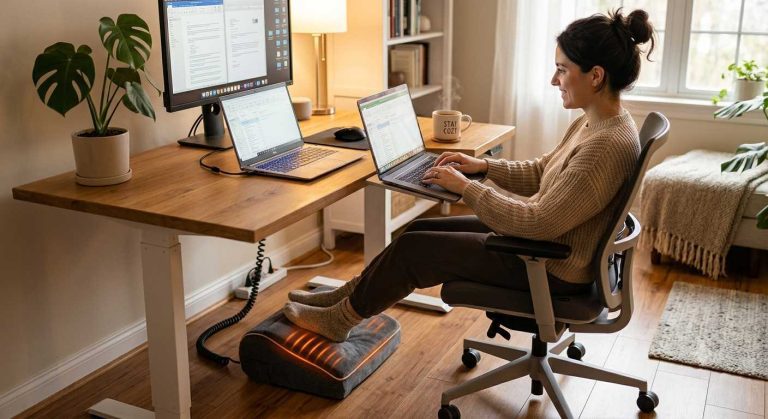
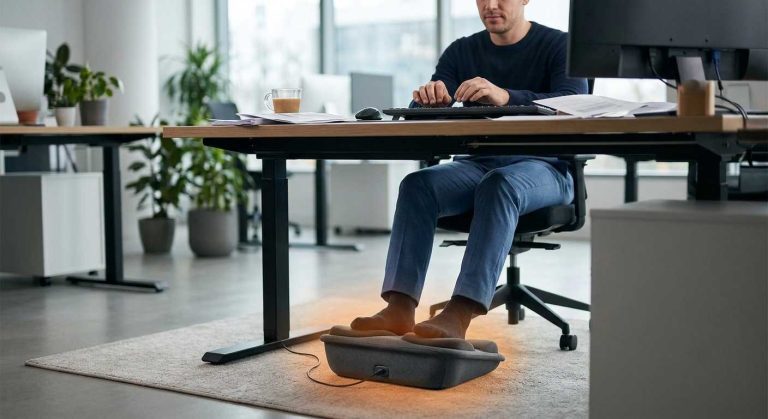
For long desk hours where movement breaks aren’t always practical, a low-level heated footrest keeps feet at a comfortable temperature.
Shop Heated FootrestsThe Takeaway
Cold feet at your desk usually come down to reduced blood flow caused by prolonged stillness, posture, or stress, and in most cases, that’s manageable. Moving regularly, setting up your workstation properly, and staying aware of stress levels addresses the root causes for most desk workers. If none of those changes help, or other symptoms show up alongside the cold feet, it’s worth checking in with a healthcare provider. Cold feet are common, but persistent ones can occasionally be a signal worth paying attention to.
Quick Questions
Why do my feet get cold at my desk even in summer?
It’s usually about circulation, not room temperature. Sitting still reduces the calf muscle’s role as a secondary circulatory pump, which can leave feet cold regardless of season.
Can stress alone cause cold feet?
Yes. The body’s stress response constricts blood vessels near the skin’s surface, which can reduce blood flow to the feet and hands during anxious or high-pressure moments.
When should I see a doctor about cold feet?
If cold feet come with pain, color changes, numbness, or swelling, or never warm up regardless of movement or warmth, it’s worth bringing up with a healthcare provider.
Sources & Research References
- Thosar, S.S. et al. “Sitting and Endothelial Dysfunction: The Role of Shear Stress.” Medical Science Monitor, Vol. 18, RA173–RA180, 2012. Read study
- Padilla, J. et al. “Prolonged Sitting Leg Vasculopathy: Contributing Factors and Clinical Implications.” American Journal of Physiology — Heart and Circulatory Physiology, 2017. Read study
- Morishima, T. et al. “Sitting Leg Vasculopathy: Potential Adaptations Beyond the Endothelium.” American Journal of Physiology — Heart and Circulatory Physiology, 2024. Read study
- “Causes of Cold Feet.” Harvard Health Publishing, 2022. Read article
- “Cold Feet.” Cleveland Clinic Health Library, 2023. Read overview
- “Cold Feet: Causes and Remedies.” Medical News Today, 2025. Read article
- Garner, R. and Kumari, R. “Raynaud Disease.” StatPearls / NCBI Bookshelf, updated 2023. Read entry
- “Raynaud’s Phenomenon.” Johns Hopkins Medicine Health Library, 2025. Read overview
- “Raynaud’s Phenomenon.” NHS Inform (Scotland), 2026. Read overview
- “Buerger-Allen Exercises and Peripheral Circulation in Sedentary Office Workers.” Istanbul Gelisim University, ClinicalTrials.gov, NCT07588893, 2025. View registration