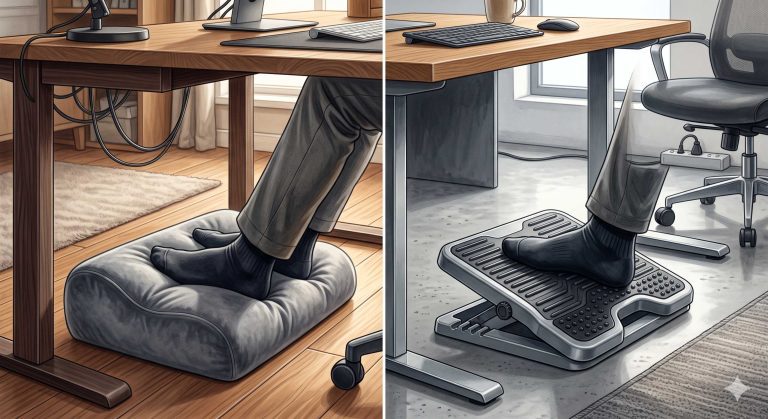
Vibrating Footrests vs. Foot Massagers: Don’t Make the Wrong Choice for the Office
They both vibrate, go under your feet, and look almost identical in photos. But mixing them up can leave you with a disruptive office noise hazard or a device too weak for home recovery.
They both vibrate. They both go under your feet. And at first glance, the product photos look almost identical. So it’s no surprise that people regularly buy the wrong one.
A vibrating footrest and a foot massager are built for different jobs, different settings, and honestly, different times of day. Mixing them up leads to one of two outcomes: you either bring something to the office that’s loud, disruptive, and too intense to use for more than ten minutes, or you end up at home after a long day with something that’s too gentle to actually do anything.
Here’s how to tell them apart, and how to figure out which one you actually need.
The Core Difference: What Each One Is Designed to Do
The confusion starts because the word “vibration” gets applied to both categories. But the type of vibration matters enormously.
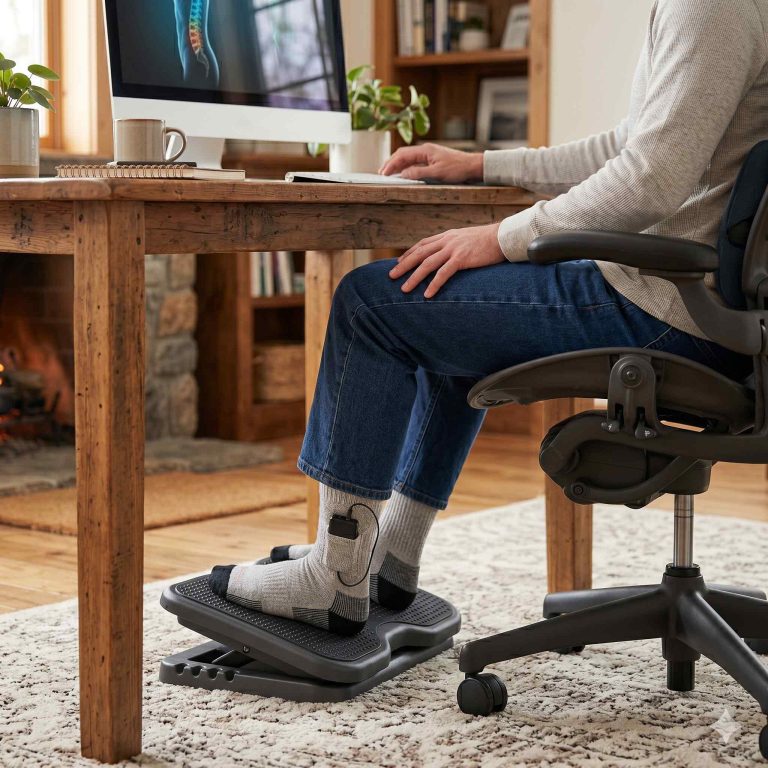
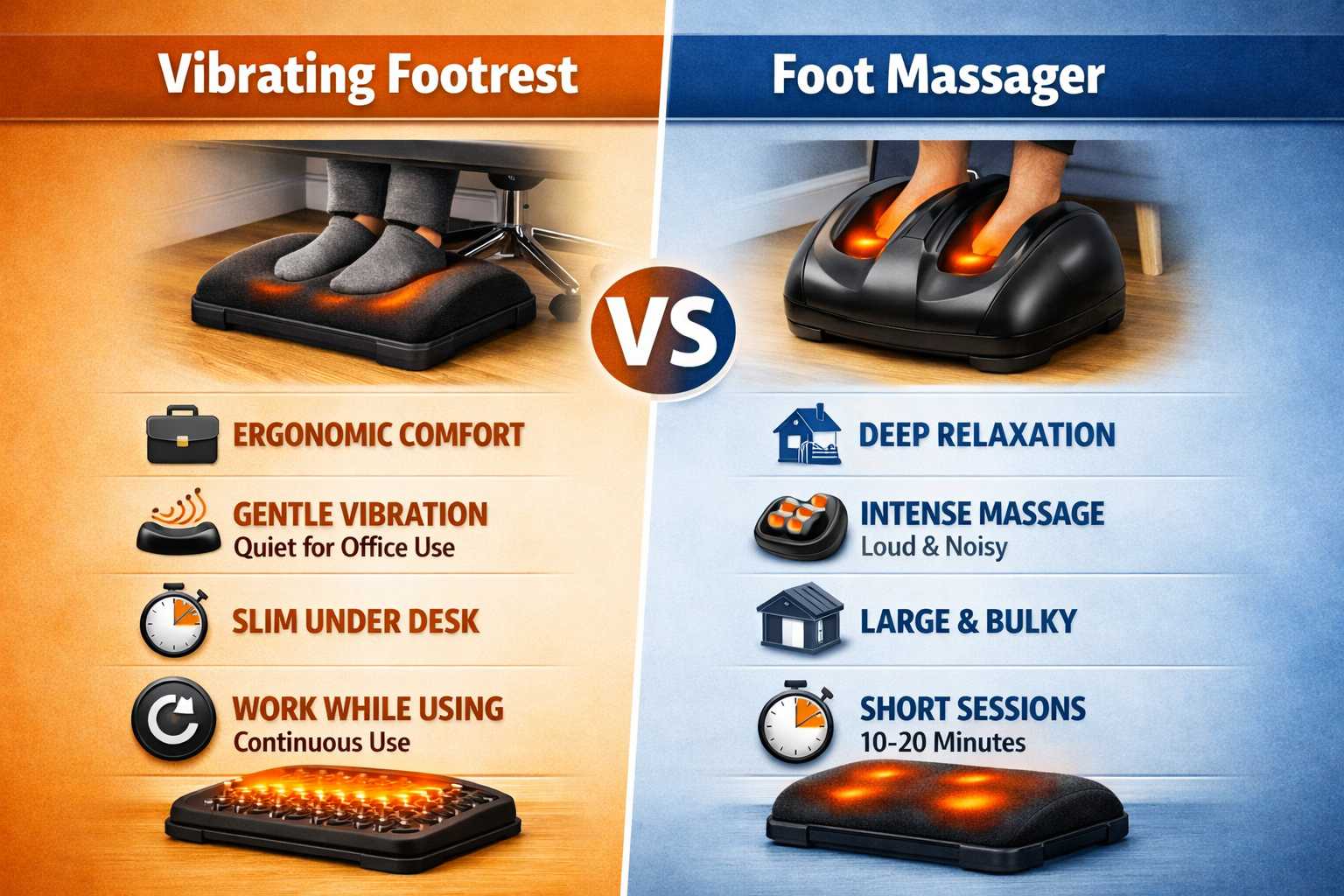
Vibrating Footrest: Delivers broad, gentle, continuous low-intensity stimulation to promote circulation and relieve surface tension quietly during long work hours.
Foot Massager: Uses rotating Shiatsu nodes or oscillating platforms for deep-tissue kneading to actively work calf and arch muscle groups during 15–30 minute sessions.
A vibrating footrest acts like a low hum your feet sit on for hours—it is not something you actively engage with. A deep-tissue foot massager is a recovery tool meant for post-work sessions, evenings, or weekends. That intense kneading level is genuinely uncomfortable to sustain for a full workday, and the mechanical noise would quickly disrupt a shared office.
Why a Vibrating Footrest Works for the Office
The real purpose of the vibration feature in a desk footrest is to keep your lower limbs from going completely static for hours on end. By gently stimulating the feet, dynamic footrests improve circulation in the legs, reducing the risk of deep vein thrombosis and leg swelling.
Office Design Goal: Desk footrests feature near-silent motors designed to run continuously at low intensity without demanding your attention. You can type, attend meetings, or read while it operates silently underfoot.
Besides improving blood flow, a desk footrest helps reduce back strain, align posture, and keep your sitting position anchored into your chair’s backrest. However, it will not relieve plantar fasciitis or loosen tight calves like a deep-tissue Shiatsu session.
Why a Foot Massager Belongs at Home, Not Under Your Desk
Deep-tissue foot massagers are built for intensity and focus. Kneading rollers use rotating nodes to compress tissue and target specific pressure points. Because of their mechanical power, they are significantly louder and less suitable for shared office environments.
In an office setting, you’d face several practical issues:
- Concentration Interference: Intense kneading is difficult to sit through while focusing on complex work tasks.
- Bulky Footprint: Larger motor housings make them difficult to tuck under a standard desk cleanly.
- Short Duty Cycles: Designed for targeted 15-to-30-minute sessions once or twice daily, rather than all-day continuous running.
Evening use is where these devices earn their value. After a day on your feet or a long commute, a proper massager delivers targeted relief that a desk footrest simply wasn’t built to provide.
What If You Want Both?
Some hybrid products combine functions, offering a heated and vibrating footrest alongside a separate roller or massaging mode. These work well if you understand their limits:
- Work Modes: Use the gentle, quiet vibration settings during desk hours for background circulation.
- Relax Modes: Save the rollers and high-intensity massage modes for after you clock off.
Running high-intensity massage modes continuously for an eight-hour shift will wear out the motor prematurely and quickly feel overwhelming underfoot.
A Simple Guide to Picking the Right One
| Selection Criteria | Vibrating Footrest | Deep-Tissue Foot Massager |
|---|---|---|
| Primary Goal | Posture support & background circulation | Post-work muscle recovery & fatigue relief |
| Operating Environment | Shared office or home workspace | Home living room, bedroom, or lounge |
| Noise Level | Near-silent / low hum | Moderate motor / node mechanical sound |
| Usage Duration | Continuous (4 to 8+ hours) | Short sessions (15 to 30 minutes) |
| Intensity Style | Gentle surface vibration | Firm Shiatsu kneading or oscillation |
Choose a vibrating footrest if:
- You sit at a desk for more than four hours a day
- You want gentle, continuous circulation stimulation without distraction
- You share a workspace where noise levels matter
- You need a low-wattage device built to run safely for hours
Choose a foot massager if:
- You want active recovery and post-work pain relief
- You deal with foot fatigue from prolonged standing, exercise, or long drives
- You have 15 to 30 minutes in the evening to dedicate to a session
- Deep-tissue pressure matters more to you than background desk convenience
Key Takeaways
- Vibrating footrests are quiet, low-intensity ergonomic aids designed for continuous background desk use.
- Foot massagers use intense Shiatsu nodes or oscillating plates built for short, 15-to-30-minute recovery sessions.
- Massagers are too loud, bulky, and intense for shared office environments or focused desk work.
- Vibrating footrests improve leg blood flow and anchor seated posture without causing distraction.
- If using dual-function products, reserve low-vibration settings for work hours and deep rollers for post-work relaxation.
Conclusion
The vibrating footrest and the foot massager are easy to mix up but genuinely different tools. One is a quiet, low-key ergonomic aid for long desk days. The other is a more active recovery device that belongs in your after-hours routine. Getting clear on which problem you’re trying to solve before buying will save you the disappointment of a product that works fine, just not for what you had in mind.
References and Resources: Peak Primal Wellness: Best Foot Massagers 2026; MedMassager: Therapeutic Foot Massager: Oscillation vs. Vibration; Humanscale: Seven Health Benefits of Using a Footrest; Kensington: Benefits of Under Desk Foot Rests; GotoParc Blog; Ublives; WebMD: Health Benefits of a Foot Massage.