Memory Foam vs. Hard Plastic Footrests: Which Is Better for Your Desk?
When your feet dangle at your desk, a footrest fixes the posture gap. Discover how hard plastic platforms and memory foam cushions perform differently depending on your footwear, movement habits, and work environment.
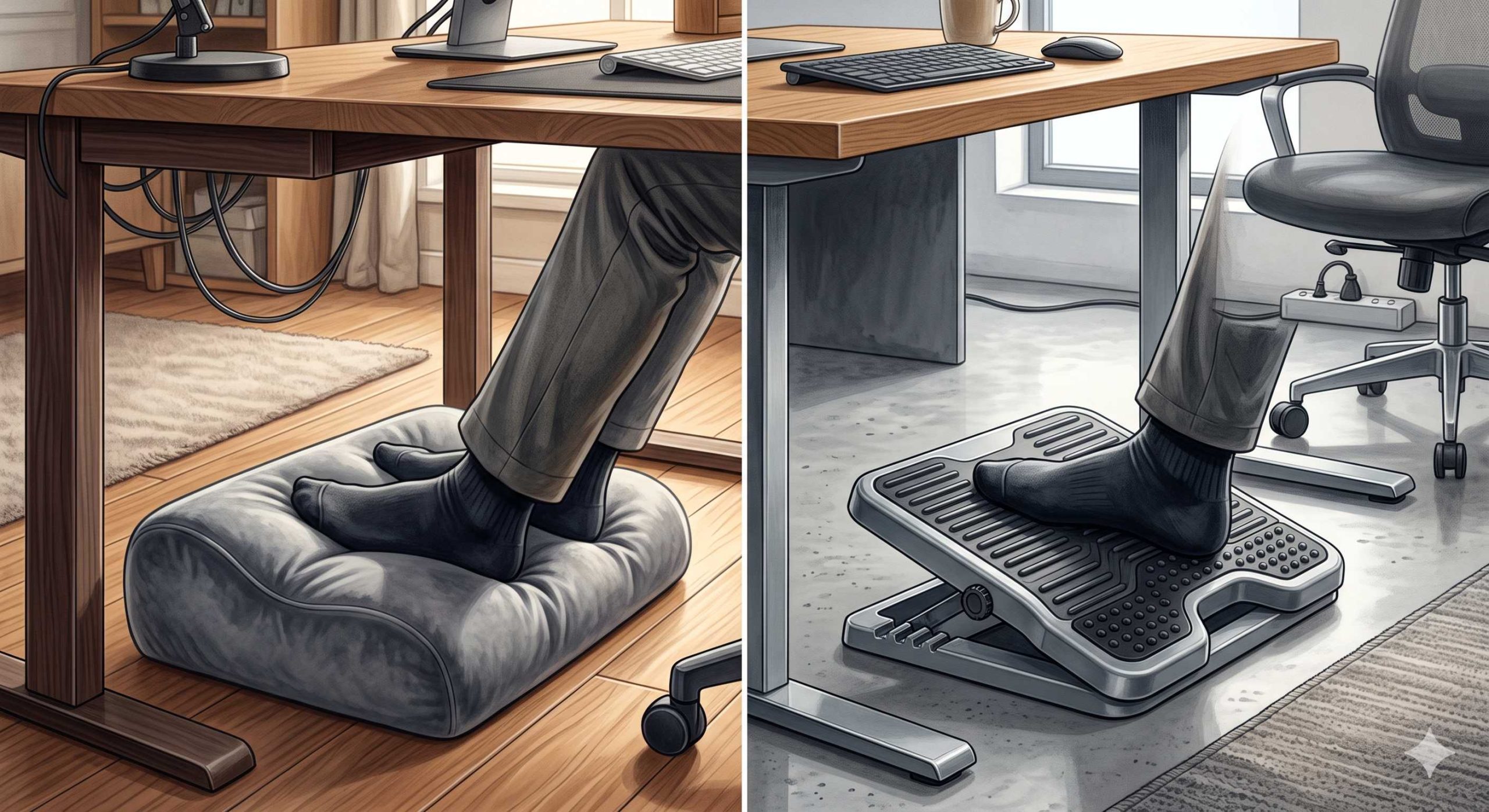
There’s a moment most desk workers recognize: you shift in your chair, your feet are dangling slightly, and something just feels off. A footrest fixes that. But once you start shopping, you’ll notice the market splits pretty clearly into two camps: memory foam cushions and hard plastic platforms. They look like they solve the same problem, but the experience of using them is quite different.
This article breaks down the key differences between the two, focusing on how each one actually feels underfoot, when one type makes more sense than the other, and what kind of desk worker each is built for.
What Hard Plastic Footrests Actually Do Well
Hard plastic footrests tend to get dismissed as the budget option, but that’s not entirely fair. The rigid surface is a feature, not a flaw, for certain use cases.
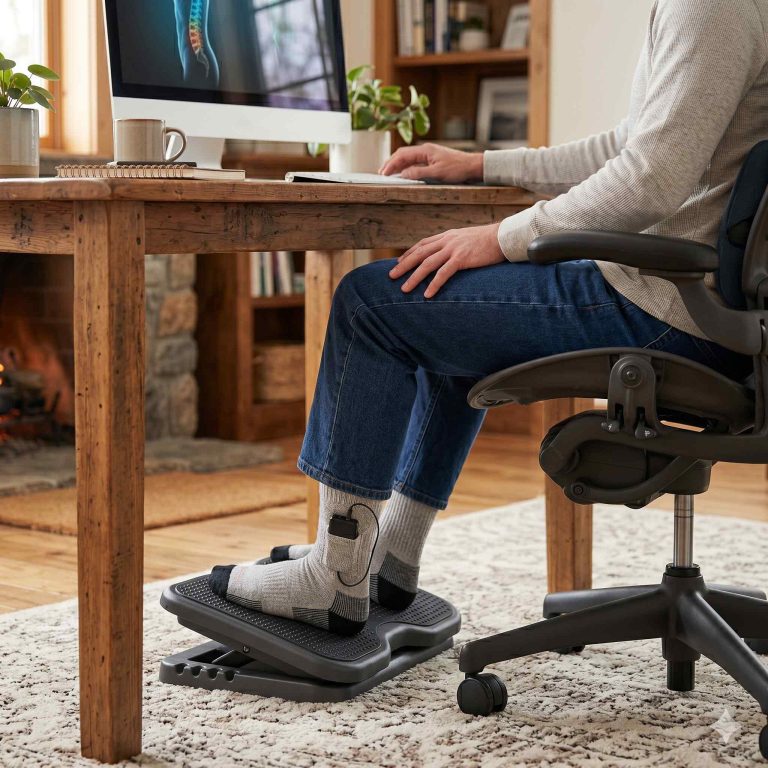
The biggest advantage of a structured plastic platform is active movement. Many models are designed with a rocking or tilting function, and the firm base makes that movement predictable and responsive. When you rock your feet, the platform actually rocks with you in a consistent way, which keeps your legs and lower calves engaged rather than static.
Ergonomic Insight: Research published in Applied Ergonomics notes that dynamic foot positioning during computer work supports better seated posture overall. Rocking plastic platforms provide the firm leverage needed to easily introduce micro-movements throughout long workdays.
Hard plastic platforms also hold their shape indefinitely with no compression or flattening over time. Cleaning is straightforward—a quick wipe-down with no fabric covers to wash. However, hard plastic without padding feels unforgiving on bare or sock-clad feet, making it much better suited for shoe-wearers.
What Memory Foam and Plush Footrests Do Differently
Memory foam footrests occupy a different niche entirely. The material responds to body heat and pressure, shaping itself to your feet rather than forcing your feet to adapt to a rigid surface.
For home office setups where shoes come off, a plush or memory foam surface is noticeably more comfortable. The material is warm underfoot, distributes pressure evenly, and doesn’t press hard into arches. Some models from brands like Everlasting Comfort and Snailax even add heated surface options for extra warmth.
Memory foam footrests are also lightweight and portable, easily moving between rooms or underneath couches. On the flip side, foam can compress with heavy daily use over many months, and its rocking motion is much softer and less defined than a rigid plastic base.
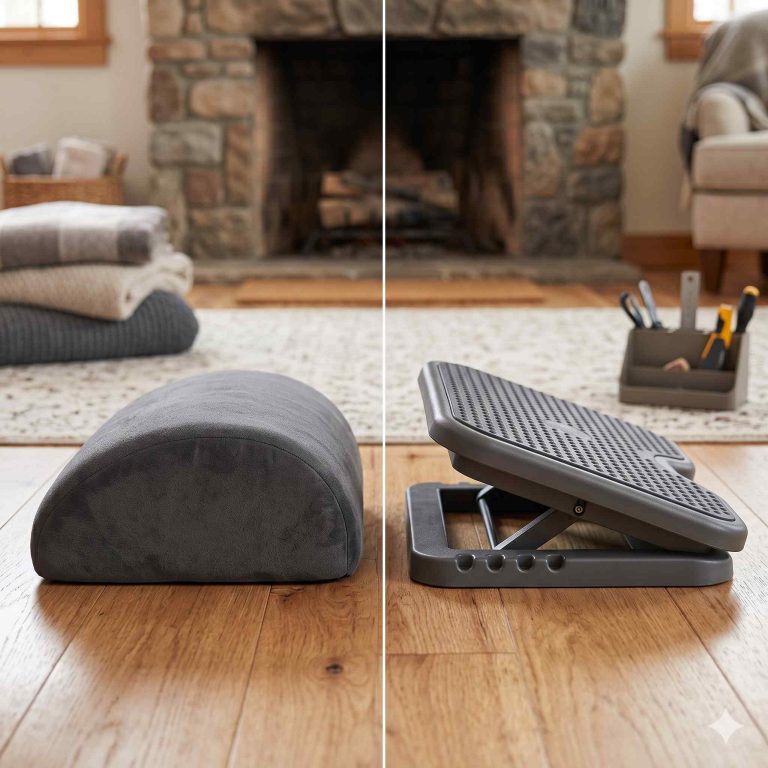
Active & Durable: Responsive rocking motion, zero surface compression, easy to wipe clean, ideal for wearing shoes in corporate offices.
Soft & Pressure-Relieving: Conforms to foot contours, warm tactile feel, removable/washable covers, ideal for socks or bare feet at home.
Side-by-Side: How They Compare on the Things That Matter
| Decision Factor | Hard Plastic Platform | Memory Foam Cushion |
|---|---|---|
| Footwear Preference | Best with shoes or boots | Best with socks or bare feet |
| Rocking / Movement | Responsive, firm leverage for active rocking | Soft, gentle, less defined movement |
| Long-Term Durability | Maintains rigid form indefinitely | May compress slightly over heavy long-term use |
| Maintenance | Wipe clean with a damp cloth | Removable, machine-washable fabric covers |
| Best Environment | Corporate offices, shared desks, high-use areas | Home offices, cozy work nooks, multi-room setups |
When Hard Plastic Makes More Sense
Hard plastic is the stronger fit if you spend most of your day in shoes, work in a shared or professional office setting, or actively want to rock your feet during the day as a way of keeping your legs moving. The structured surface supports that motion in a way that feels purposeful rather than passive.
Brands like HUANUO are frequently recommended in this category for their adjustable, structured platforms. It’s worth noting that ergonomics professionals advise avoiding extremely cheap plastic models, as low-quality plastic can become brittle and crack under foot pressure. A sturdy mid-range plastic model will easily hold up for years.
When Memory Foam or Plush Makes More Sense
Memory foam wins in home office contexts where comfort and a relaxed feel matter more than a clinical look. Plush options like heated or high-density foam footrests offer a warm, pressure-relieving surface that plastic alternatives cannot match.
If you work long hours shoeless and find your heels or arches get sore, the pressure distribution of memory foam makes a real difference by molding to the shape of your feet and spreading weight evenly. Plus, the removable, washable covers keep things fresh over extended sock-foot or barefoot use.
Key Takeaways
- Hard plastic footrests provide firm leverage for responsive rocking, keeping calves engaged during long office workdays.
- Memory foam molds to foot contours, distributing pressure evenly to reduce heel, arch, and toe soreness when working shoeless.
- Hard plastic maintains its shape indefinitely and wipes clean, making it ideal for corporate environments where shoes are worn.
- Memory foam features washable fabric covers and lightweight portability, perfect for home office setups.
- Choose hard plastic for active rocking and shoe compatibility; choose memory foam for plush, warm, barefoot comfort.
Conclusion
Neither type is objectively better. They’re built for different people and different ways of working.
If you want a footrest that supports active movement, holds up in a professional environment, and works well with shoes, a hard plastic platform with a rocking function is a solid choice. If you want something that feels warm and comfortable during long shoeless work sessions at home, memory foam is the more natural fit.
Ask yourself what your typical workday looks like—and what you wear on your feet—and the right choice will be clear.
References and Resources: Ergonomics Health Association; No More Pain Ergonomics; ErgoGlobal; Worksite International; E3 Consulting; Dr. Body Gadget; Popular Science; ScienceDirect (Applied Ergonomics, 2021).