The Best Heated Under-Desk Footrests for WFH Setups
If your home office gets cold by mid-morning, or you find yourself constantly shifting in your chair trying to get comfortable, a heated under-desk footrest might be the one thing your setup is missing. It sounds simple, but the combination of ergonomic support and active heat addresses two separate problems at once.
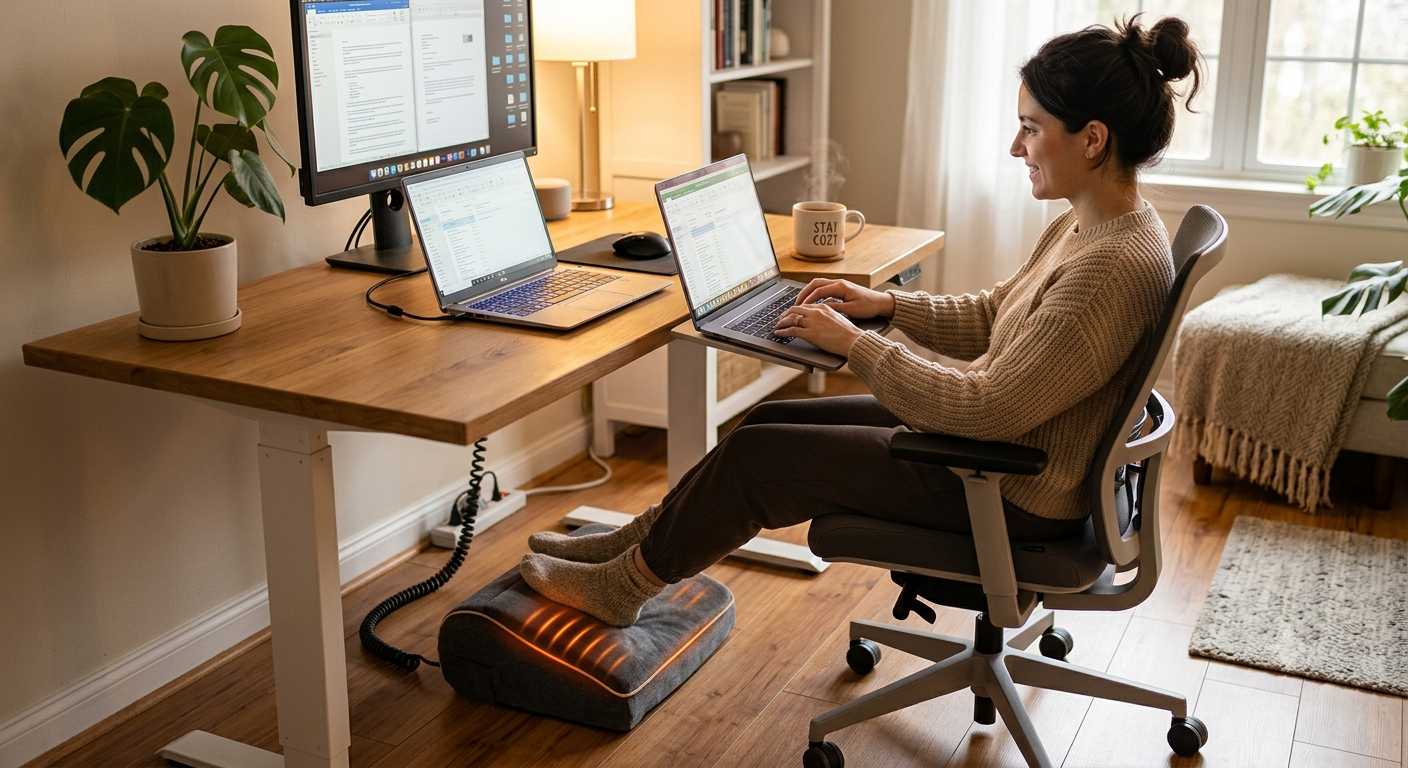
This guide breaks down what to look for, why the footrest type actually matters, and how heated models compare across the two main build styles.
Quick take: Posture the main issue? Go rigid and adjustable. Cold feet or general comfort the priority? Go memory foam with active heat.
Why Foot Support Matters More Than Most People Realize
Most people set up a desk, buy a decent chair, and call it done. The feet get overlooked. But your feet form the foundation of your entire seated posture, and when they dangle or rest on a hard floor without support, the effects work their way upward.
When your feet lack stable support, your pelvis tends to tilt backward. That shift flattens the lumbar curve, putting more strain on the lower back muscles and spinal structures. Research consistently points to proper foot positioning, whether flat on the floor or on a supported surface, as important for pelvic stability and reduced spinal load. One study published in Applied Ergonomics (2021) found that using a footrest led to measurable improvements in back posture during computer tasks.
Beyond posture, sitting for long hours with unsupported feet restricts blood flow in the lower legs. Pressure from chair edges on the backs of the thighs compounds this, part of why so many desk workers notice swelling or numbness toward the end of the day. A heated footrest adds another layer here: warmth encourages the widening of blood vessels, which helps support circulation in the feet and lower legs during sedentary work. For people who run cold, especially in air-conditioned home offices, this alone can make a real difference in comfort and focus.
Comparing the Two Build Styles
Hard Plastic Heated Models
Hard-shell or rigid plastic footrests with built-in heating panels prioritize postural control over cushioning comfort. Products like the Toasty Toes Heated Footrest use a flat, angled hard surface with radiant heat beneath. Because there’s no give in the surface, the angle stays fixed, holding your knees and hips in a relatively consistent position throughout the day. Many models support multiple incline positions to suit different chair heights.
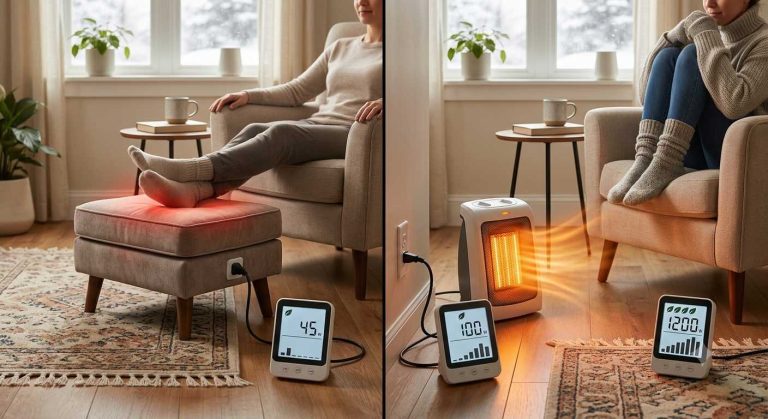
Heat output on hard-shell models typically uses radiant conduction through the panel itself. The Toasty Toes, for example, runs around 105 watts, a fraction of a typical space heater, warming the feet and surrounding under-desk air without the fire risk of an open-coil heater.
Memory Foam & Plush Models
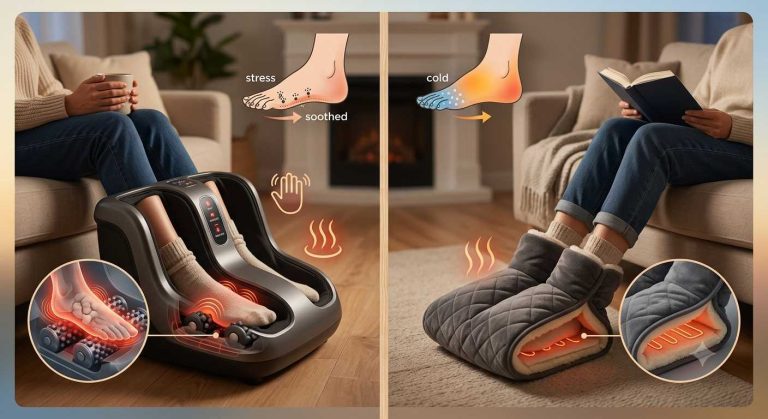
Soft footrests, typically built from high-density memory foam with a plush or fleece cover, approach the problem from the opposite direction, prioritizing cushioned comfort with heating woven into or beneath the fabric. The Snailax AL-535N and similar Comfier models fall into this category, often featuring a wrapped heating layer with multiple heat settings, vibration massage, and adjustable height using removable foam layers. The Comfier CF-5420, for instance, reaches low and high heat settings within about a minute, and many users note the warmth feels more immediate and enveloping compared to a hard-panel model.
The memory foam conforms to the feet, reducing pressure points across the sole. For people who sit barefoot at home, this texture difference is noticeable, and the plush material distributes warmth more evenly since it contacts more of the foot at once. That said, soft footrests have less structural rigidity. Foam compresses somewhat over time, which can change the effective height, and these models tend to be bulkier and harder to wipe clean, though most covers are machine washable.
What to Actually Look For Before Buying
- Adjustable height Should match your chair and desk setup. Most models offer two or three height tiers using removable inserts or fold-out legs.
- Heat settings & safety cutoffs Look for at least two heat levels and a timer, most electric footrests now include 1H/2H/4H options. Auto-shutoff is a safety requirement, not a bonus feature.
- Non-slip base Hard floors are slippery. A rubberized or textured base keeps the footrest from sliding forward as you shift weight throughout the day.
- Wattage vs. actual warmth Higher wattage doesn’t always mean more useful heat. A 70W heating mat under foam can feel warmer than a 150W open panel because heat is retained rather than radiated outward. Check reviews for warmth consistency rather than relying on wattage alone.
Choosing Between the Two Styles
Here’s the honest answer: it comes down to what bothers you most about your current setup.
| Your Main Issue | Better Fit |
|---|---|
| Posture, back strain, staying neutral for long sessions | Rigid plastic model with a fixed, adjustable angle |
| Cold feet, foot fatigue, overall WFH comfort | Memory foam model with active heating |
If your main issue is posture, the consistency of a rigid surface keeps your feet in the same position for hours, which is the whole point of posture support. If it’s cold feet or comfort during long WFH days, the enveloping warmth and cushioned surface of a foam model will feel more satisfying, and the difference becomes clear around hour three of a cold afternoon. Some people buy both and rotate them seasonally. That’s not as unusual as it sounds.
Final Thoughts
A heated under-desk footrest is a small addition that handles two things at once: it keeps your posture grounded and your feet warm during hours when both tend to drift. Neither problem is dramatic on its own, but together they account for a significant amount of the low-grade discomfort that accumulates across a work-from-home day.
Start by identifying your main friction point. If it’s posture and alignment, lean toward a firm, adjustable platform. If it’s warmth and soft comfort, go for a memory foam model with a proper heat element and auto-shutoff. Either way, it’s a relatively small investment for something you’ll use every single day.
Quick Questions
Which type of heated footrest is better for posture?
A rigid, hard-shell model with a fixed angle tends to hold your feet in a consistent position better than a foam model, which is better suited to posture-focused use.
Does higher wattage mean better warmth?
Not necessarily. A lower-wattage heating mat under foam can retain heat better than a higher-wattage open panel, so it’s worth checking reviews for warmth consistency rather than wattage alone.
Is auto-shutoff really necessary?
Yes, it’s considered a safety requirement rather than an optional feature on any electric footrest.
References & Resources
- Fenety, A., Putnam, C., & Walker, J. M. (2000). “In-chair movement: validity, reliability, and implications for measuring sitting discomfort.” Applied Ergonomics, 31(4), 383–393.
- Redfern, M. S., & Cham, R. (2000). “The influence of flooring on standing comfort and fatigue.” AIHAJ, 61(5), 700–708.
- Anderson, G. B. J., & Tichenor, C. J. (2007). “A patient-centered approach to back pain: Practical suggestions for ergonomic workstation adjustments.”
- World Health Organization. (2020). WHO Guidelines on Physical Activity and Sedentary Behaviour. WHO Press. Read guidelines
- ISO 11226:2000. “Ergonomics — Evaluation of static working postures.” International Organization for Standardization.
- Zhu, L., et al. (2021). “The effects of using a footrest during computer tasks varying in complexity and temporal demands: A postural and electromyographic analysis.” Applied Ergonomics, 97, 103559. DOI: 10.1016/j.apergo.2021.103559
- Humanscale. “Seven health benefits of using a footrest at your workstation.” Read article
- Secretlab. (2023). “3 benefits of an ergonomic footrest.” Read article