Choosing the Best Heated Foot Warmer for Seniors: What Features Matter Most
Cold feet get harder to ignore with age. Circulation slows, sensitivity changes, and suddenly no amount of thick socks seems to cut it through a winter evening. A heated foot warmer can genuinely help, but picking the right one for an older adult takes more thought than grabbing whatever’s on sale.
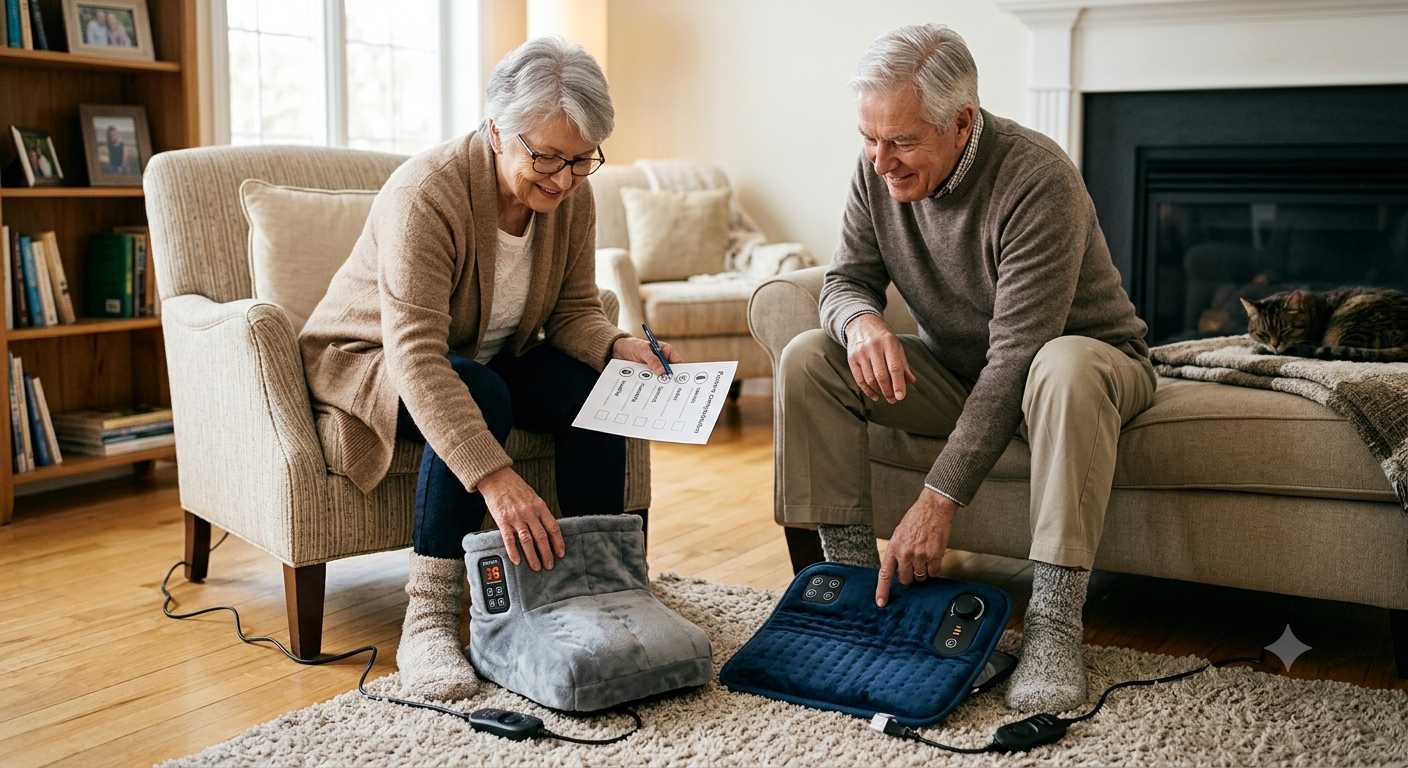
This guide covers the features that matter most when choosing a heated foot warmer for seniors, with a focus on safety, ease of use, and the practical details that often get overlooked.
Why Seniors Have Different Needs Than Younger Buyers
It’s worth starting here, because the gap between a foot warmer that’s “fine for most people” and one that’s genuinely suitable for older adults is wider than most product listings acknowledge.
Aging brings real physiological changes. Circulation in the lower limbs tends to slow over time, a big reason feet feel cold in the first place. Skin also becomes thinner and more sensitive, which means what feels like gentle warmth to a younger person can cause discomfort or even a burn to someone with reduced sensitivity, particularly those living with diabetes or peripheral neuropathy. People with neuropathy or reduced sensitivity in the feet may not notice if a warmer is running too hot, which increases burn risk. That’s not a reason to avoid foot warmers entirely, it’s a reason to choose one with the right safeguards built in.
Mobility is the other factor. Reaching down to adjust controls, fiddle with cords, or plug and unplug a device can be genuinely awkward for someone with limited flexibility or balance concerns. Falls are the leading cause of injury-related death among adults 65 and older, and even small physical tasks that require bending over or crouching can add unnecessary risk. The best foot warmers for seniors reduce that need as much as possible.
The Most Important Safety Feature: Auto Shut-Off
If there’s one feature that matters above everything else, it’s an automatic shut-off timer. This is non-negotiable.
An auto shut-off prevents overheating and potential fire hazards by turning the device off after a set period, typically between one and three hours, offering peace of mind during naps or situations where the user might fall asleep. Many seniors use foot warmers while resting in the evening, and it’s easy to doze off. A warmer that runs indefinitely is a meaningful safety risk.
Look for models with at least a two-hour auto shut-off and built-in overheat protection. Some models offer adjustable timers, letting the user set a shorter or longer window depending on their routine, a nice bonus, though even a fixed two-hour cut-off covers most situations. Overheat protection is a related but separate feature, a sensor-based system that cuts power if the internal temperature gets too high, regardless of the timer setting. Together, auto shut-off and overheat protection cover the two most likely failure points.
Controls That Don’t Require Bending Down
This is where a lot of otherwise decent foot warmers fall short for older users. A device might have every safety feature imaginable, but if the controls are on the unit itself, the user has to lean forward or bend down every time they want to adjust the temperature or turn it off. For seniors, that’s not just inconvenient, it’s a real mobility and balance concern.
Remote Control
Lets the user adjust settings from their chair without moving much at all. Look for models with large, clearly labeled buttons, important for anyone with reduced vision or dexterity.
Foot-Operated Switch
Usually a flat pad or button near the base of the unit that can be pressed with the foot rather than the hand, removing the need to reach down at all.
When evaluating controls, also check the font size and contrast on any labels or displays. Large, high-contrast text makes a real difference for users with even mild vision changes.
Cord Length and Low-Voltage Design
Cords are a fall hazard. It’s a simple point, but easy to overlook when focused on heating performance or features. A cord that runs across a floor, or one that’s too short and creates tension near the device, can become a trip hazard. Look for warmers with cords long enough to reach an outlet without stretching, and consider whether the cord can be routed along a baseboard or kept out of foot traffic areas.
On the voltage side, low operating voltages such as 5V to 12V USB or battery-powered options are among the safest choices for elderly users. Most plug-in foot warmers operate at standard household voltage but use heating elements designed to cap at safe surface temperatures. PTC (Positive Temperature Coefficient) self-regulating heating elements are a notable safety advancement, since they reduce their own resistance as they warm up, naturally limiting how hot they can get, a passive safety mechanism that doesn’t rely on sensors or timers working correctly.
Soft Materials and a Proper Fit
Warmth matters, but so does what the warmer is actually touching. Inner linings made from plush fleece, cotton, or bamboo fabric provide gentle contact with sensitive skin, reducing irritation, especially relevant for older adults whose skin tends to be more delicate.
The fit matters too. A warmer that’s loose lets heat escape and may shift around. One that’s too tight can restrict circulation, which defeats part of the purpose. Many models use a boot or muff-style design that accommodates a range of foot sizes, and some include an open-back design that makes them easier to get into and out of without help. For regular use, a removable, machine-washable cover is a practical plus, it keeps the interior hygienic without requiring the whole unit to be handled carefully around water.
Safety Certifications Worth Looking For
Before buying, check that the product carries a recognized safety certification. Certifications such as UL, ETL, or CE indicate the device has been tested to meet established safety standards. These aren’t guarantees, but they’re a meaningful signal that the product has been through independent safety testing rather than just self-certified by the manufacturer. Products without any certification, particularly from unfamiliar brands at very low price points, carry more uncertainty about whether safety features perform as advertised.
A few practical notes before you buy: Check the return policy, since what works well for one senior may not suit another. If the person has diabetes, neuropathy, or any condition affecting circulation or sensation in their feet, it’s worth speaking with their doctor before using any electric heating device regularly, since they may not feel excessive heat, which increases the risk of burns. For households with cognitive concerns, a caregiver may want to set up the warmer each session rather than leaving it for fully independent use.
Finding the Right Balance
The best heated foot warmer for a senior isn’t necessarily the one with the most features or the highest heat output. It’s the one that stays safe during unsupervised use, doesn’t require awkward reaching or bending to operate, and provides consistent, gentle warmth without fuss.
Auto shut-off and overheat protection handle the safety side. A remote control or foot-switch handles the usability side. Soft materials and a quality certification round it out. Start there, and you’ll narrow the field considerably.
Quick Questions
What’s the single most important feature to look for?
Auto shut-off. It prevents overheating and provides safety if the user falls asleep while using the device.
Why do controls matter so much for seniors specifically?
Bending down to reach controls on the unit itself is a real mobility and balance concern. A remote control or foot-operated switch removes that need.
Should someone with diabetes or neuropathy use a heated foot warmer?
It’s worth speaking with their doctor first, since reduced sensitivity in the feet can make it harder to notice if a warmer is running too hot.
References & Resources
- Centers for Disease Control and Prevention. (2026). “Older Adult Falls Data.” cdc.gov
- Centers for Disease Control and Prevention. (2026). “Facts About Falls.” cdc.gov
- Comfort a Life. (2025). “15 Best Foot Warmers for Seniors That Keep Cold Feet Cozy and Comfortable.” comfortalife.com
- Alibaba Product Insights. (2026). “Foot Warmers For Elderly Overview.” alibaba.com
- Accio. (2025). “Best Foot Warmers For Elderly: Safe & Comfortable Heating Solutions.” accio.com
- Kent Do Healthy Beauty. (2026). “Cold Feet During Winter? Top 7 Foot Warmers That Actually Work.” kentdohealthybeauty.com