
How to Layer Throw Blankets Like a Designer: 5 Easy Rules
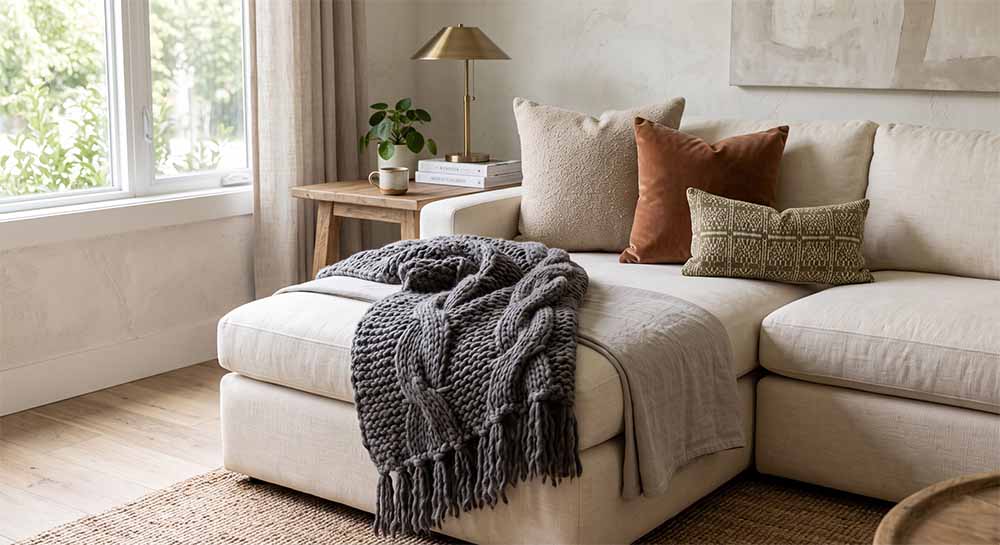
The Art of Layering: Combine structured linen folds with a soft, draped chunky knit to add depth and warmth to neutral seating.
Get This Look →A throw blanket is one of the quickest ways to change the mood of a room. Yet, when most people toss a throw over the back of a couch, it often ends up looking messy rather than chic.
Interior designers use specific techniques to make throw blankets look intentionally styled, soft, and inviting. The good news is that you do not need expensive furniture or a professional stylist to get the same look. You just need a clear understanding of texture, color, and placement.
Here is a practical guide to styling throw blankets around your home like a pro.
1. Mix Textures to Add Instant Depth
If your styling feels flat, the issue is usually texture, not color. Combining different fabric weights and weaves creates visual contrast, making a space look rich and cozy.
When selecting throw blankets, try pairing two contrasting materials together:
- Chunky Knits with Smooth Linens: Great for Scandinavian or modern organic spaces. The heavy weight of a wool knit grounds the light, airy feel of linen.
- Faux Fur with Woven Cotton: Perfect for cold seasons. Faux fur brings high visual weight, while woven cotton keeps the drape clean.
- Fringed Bouclé with Velvet or Leather: Bouclé adds tactile warmth, balancing out the sleek surface of leather or velvet cushions.
2. Play with Color and Scale
Layering works best when your blankets complement the rest of the room’s color palette. You do not need bold patterns to make an impact, but you do need contrast.
Monochromatic Layering
Use two blankets in different tones of the same color family. For example, pair a deep charcoal throw with a light heather-grey blanket over a neutral sofa. This creates a refined, subtle depth without cluttering the eye.
Contrast Layering
If your sofa or bedding is a neutral tone like cream or tan, use a throw blanket in a deep accent color. Rust, moss green, navy, or dark mustard work particularly well to draw the eye to a specific focal point.
Pattern Matching
If one blanket features a pattern, such as plaid or stripes, pair it with a solid-colored throw. Let the patterned blanket sit underneath or drape behind the solid blanket to keep the look balanced.
Get the Designer Look at Home
Curated throw blanket pairings to recreate these exact layering combinations.
3. Master the Three Core Placement Methods
Designers rely on three reliable methods for positioning throws. Choose the technique that matches the energy of your space.
The Structured Fold
This method offers a clean, tailored look that works well in formal living rooms or modern interiors.
- Fold the throw lengthwise into thirds or quarters.
- Lay it neatly over the back of the sofa, letting it run straight down over the seat cushion.
- Tuck the edge slightly between the cushions for a crisp finish.
The Casual Corner Drape
This approach looks relaxed and lived-in while remaining intentional.
- Pinch the throw blanket near the center point.
- Hold it up so it hangs naturally in loose folds.
- Drape it over one corner of an armrest, letting the fringe or hem pool slightly onto the floor or seat.
The Foot-of-the-Bed Waterfall
This technique instantly elevates a bedroom, giving it a high-end hotel finish.
- Fold a large, heavy-knit blanket in half lengthwise.
- Stretch it horizontally across the bottom third of the bed.
- Layer a smaller, lighter throw over top at an angle, letting it cascade down one side of the bed frame.
4. How to Style Throws on Different Furniture
On a Sofa or Sectional
Sectionals have a lot of surface area, so a single thin blanket can get lost. Layer a wide, solid base blanket flat across the chaise corner. Then, layer a textured, fringe-bottom throw draped casually over the back corner directly above it.
On an Accent Chair
An accent chair needs just one strong layering moment. Fold a throw blanket in half lengthwise and drape it over the backrest, slanting it slightly toward one side. Place a decorative pillow directly in front of the blanket to hold the drape in place.
On the Bed
Start with your standard bedding and duvet. Fold a soft throw across the end of the bed to anchor the footboard. To make it look styled, pull the top mattress corner up slightly and let the blanket spill over the side rail.
5. Pair Blankets with the Right Pillows
A throw blanket should rarely sit alone. Pairing your throws with decorative pillows completes the layered look.
- Anchor with pillows: Place your main accent pillow over the top portion of a draped blanket. This holds the blanket in place and creates a unified cluster.
- Vary the shapes: Use a lumbar pillow in front of a square pillow on top of a folded throw. The mix of shapes keeps the arrangement dynamic.
- Keep the ratio balanced: For a standard three-seater couch, two throw blankets and three to four pillows create a full, comfortable look without overcrowding the seating area.
Simple Rules to Remember
- Always work in odd numbers when grouping pillows and throws.
- Let fringe and tassels hang downwards to guide the eye vertically.
- Avoid tight folds if you want your home to feel soft and welcoming.
- Match blanket size to furniture size so small chairs are not overwhelmed by thick, heavy quilts.