What Is a Graphene Heated Footrest, and Does It Actually Heat Up Faster?
Cold feet under your desk make it hard to focus through winter. Learn the science behind graphene heating elements, how they compare to carbon fiber and traditional wire heating, and why warm-up speed matters.
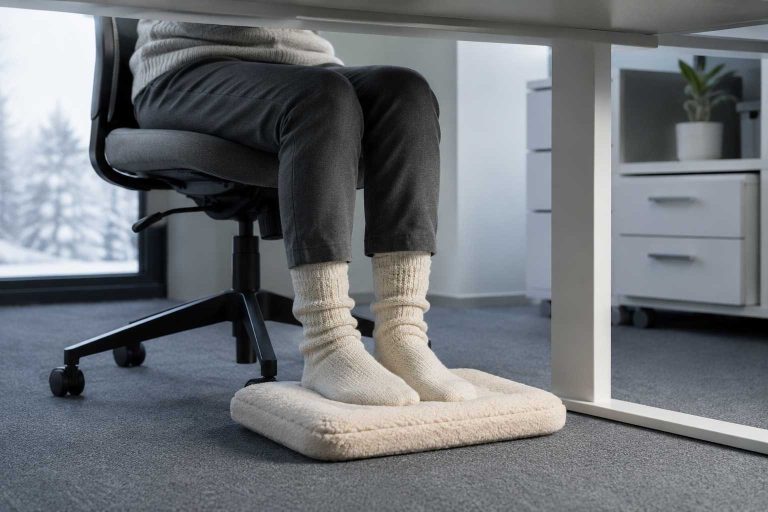
If you work from home through winter, cold feet under your desk are a real daily problem. Not the “wear thicker socks” kind of cold. The bone-deep kind that makes it hard to focus. That’s exactly where a heated footrest comes in, and lately, a lot of options are being marketed with terms like “graphene heating element” or “carbon fiber technology.”
But what do those words actually mean? And does a graphene heated footrest genuinely warm up faster than a regular one? This article breaks down the science in plain terms, looks at how these heating elements compare, and explains what actually matters when you’re shopping for one.
What Exactly Is a Graphene Heating Element?
Graphene is a material made from a single layer of carbon atoms arranged in a flat honeycomb pattern. It was first isolated by researchers at the University of Manchester in 2004, work that later earned a Nobel Prize in Physics. Since then, it’s been studied extensively for its remarkable properties.
Remarkable Conductivity: Peer-reviewed research places the thermal conductivity of suspended graphene between 2,600 and 5,300 W/mK at room temperature—higher than any other known material. This allows it to move and spread heat across its surface nearly instantaneously.
When used as a heating element, graphene works through resistive heating: electricity passes through the material, generating heat. Because of how well graphene spreads that heat, you don’t end up with hot spots in one corner and cold patches elsewhere. The warmth radiates uniformly across the entire surface.
In a heated footrest, graphene typically takes the form of a thin film, sitting beneath a soft fabric layer to distribute heat evenly across the footbed.
How Does Graphene Compare to Carbon Fiber and Traditional Wire Heating?
There are three main heating technologies you’ll find in foot warmers and heated footrests:
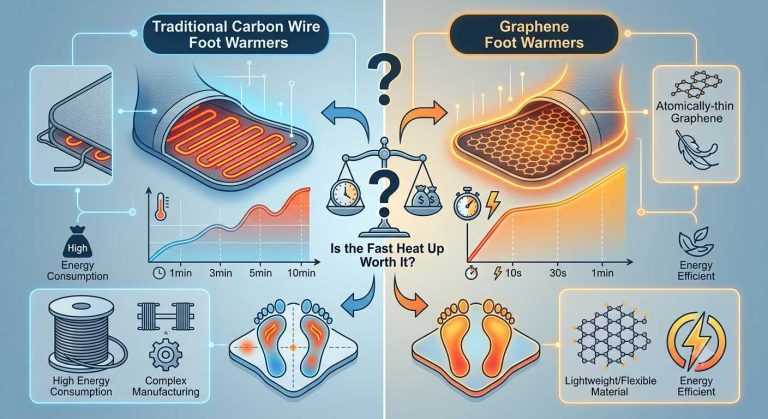
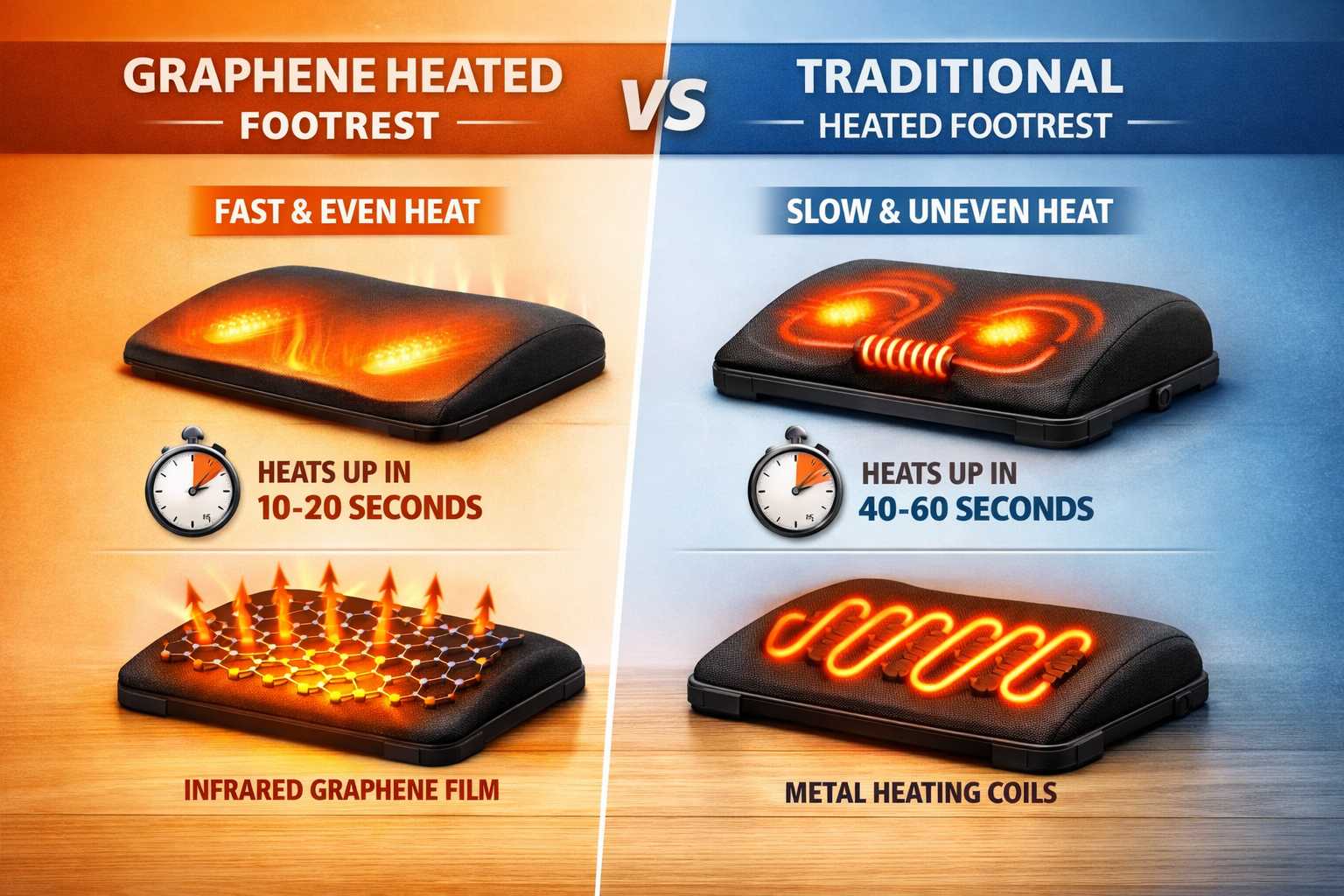
Slow & Uneven: Metal wires carry current. Heat follows the wire path, creating linear warm lines rather than surface-wide warmth. Takes 5+ minutes to reach target temperatures.
Flexible & Efficient: Conducts heat faster than metal wire and offers ~30% energy savings over traditional wire elements. Reaches operating warmth in roughly 3 to 5 minutes.
Graphene heating film pushes performance further. Because graphene functions as a flat, continuous panel rather than a grid of wires, it heats the entire surface simultaneously.
| Heating Technology | Time to Reach ~50°C | Heat Uniformity | Relative Energy Efficiency |
|---|---|---|---|
| Traditional Wire | 5+ minutes | Uneven (Linear hot spots) | Baseline |
| Carbon Fiber | 3 to 5 minutes | Good (Flexible grid coverage) | ~30% more efficient than wire |
| Graphene Film | ~60 seconds (or less) | Excellent (Continuous surface heat) | ~20% more efficient than carbon fiber |
Why Heat-Up Speed Actually Matters
On a freezing winter morning, waiting several minutes for a heating element to warm up means sitting in discomfort during the start of your workday. With a graphene heated footrest, warmth is near-immediate—some elements reach operational temperature in under 10 seconds.
You are unlikely to turn on an under-desk footrest 30 minutes before you sit down. You want to sit, plug in, and feel warmth immediately. Fast heat-up removes an annoying daily friction point.
What About Safety?
Electrical safety is a natural priority for any under-desk heating device used for long hours. Modern quality heated footrests include multiple layers of built-in protection:
- Overheat Protection: Thermal sensors cut power automatically if temperatures exceed safe limits.
- Auto Shut-Off Timers: Automatically powers off after 90 to 120 minutes of continuous use.
- Certifications: Look for ETL or FCC certifications indicating compliance with established safety standards.
- Lower Operating Temperatures: Because graphene radiates heat across a continuous surface, it delivers effective thermal comfort without needing to run extremely hot in concentrated areas.
Is a Graphene Heated Footrest Worth It?
Compared to a basic wire-based foot warmer, a graphene option heats up substantially faster, delivers even surface warmth, and uses less electricity over time. The primary trade-off is price, as graphene film is more costly to manufacture than wire or carbon fiber.
If you spend hours at a desk during winter and suffer from cold feet, the combination of instant heat-up speed, uniform warmth, and energy efficiency makes a strong case for graphene. For lighter or occasional use, a quality carbon fiber footrest offers a solid middle ground at a lower price point.
Key Takeaways
- Graphene’s exceptional thermal conductivity (2,600–5,300 W/mK) allows it to distribute heat faster and more evenly than any other material.
- Graphene film reaches operational warmth in approximately 60 seconds, compared to 3–5 minutes for carbon fiber and longer for wire.
- Continuous panel design eliminates linear hot spots and cold corners, providing uniform warmth across the entire footbed.
- Graphene provides roughly 20% greater energy efficiency than carbon fiber heating elements.
- Modern units feature built-in overheat protection, auto shut-off timers, and safety certifications for worry-free desk use.
Conclusion
A graphene heated footrest isn’t just marketing language. The material has genuinely exceptional thermal properties that translate into real differences in how quickly and evenly warmth reaches your feet. Whether you choose graphene or carbon fiber, both represent a major upgrade over traditional wire heating elements.
References and Resources: Balandin et al. (2008) “Superior Thermal Conductivity of Single-Layer Graphene” (Nano Letters); NCBI “Temperature Dependence of Thermal Conductivity of Monolayer Graphene” (Nanomaterials 2022); GraphenePioneer; IOP Science “Graphene Related Materials for Thermal Management” (2019); ZMS Cable; Safwear AI (2026); Aura Heaters.