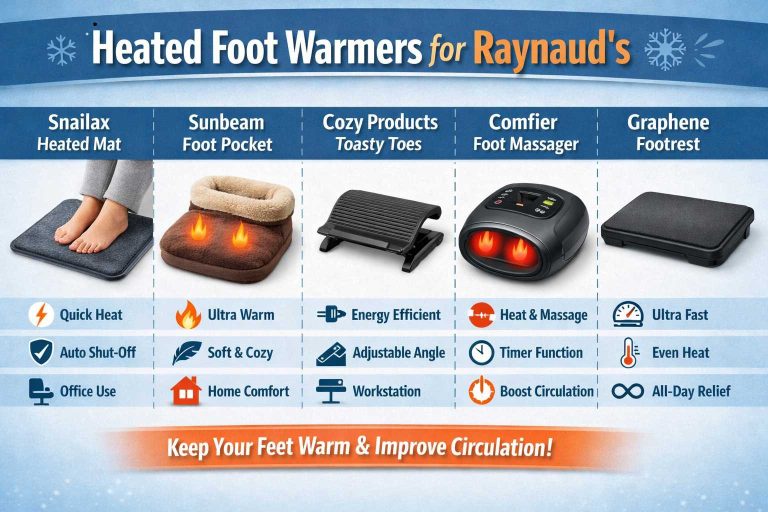
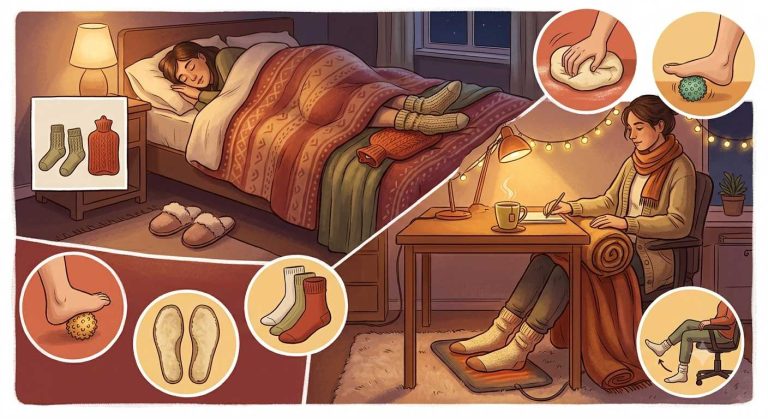
How to Choose the Right Electric Foot Warmer
Cold feet can genuinely wear you down by mid-afternoon, whether you work from home, sit at a desk for long stretches, or just run cold in general. The right electric foot warmer helps. The wrong one ends up too hot, too bulky, or barely warm enough to matter.
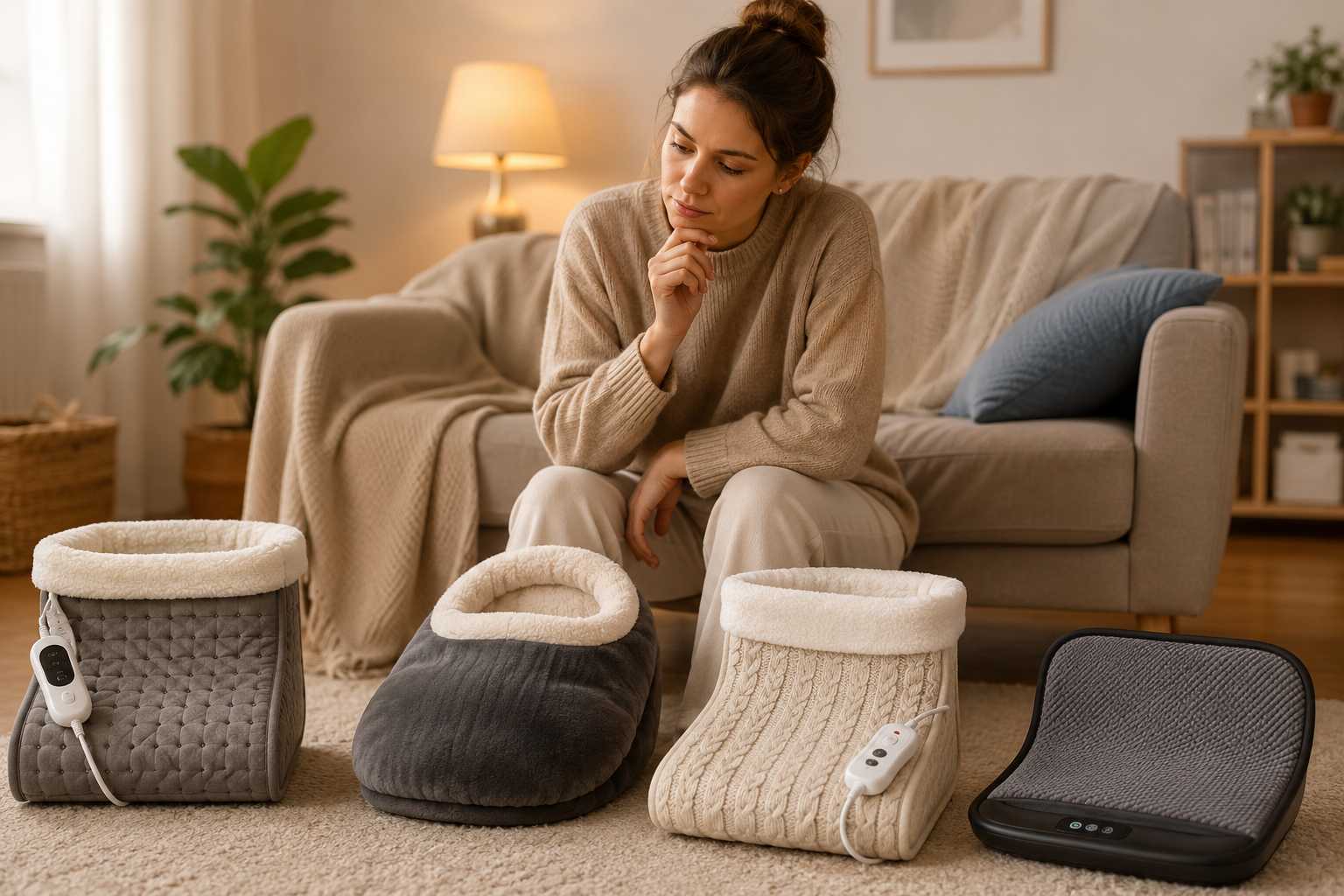
This guide walks through the main things worth considering before you buy, from style and heating method to safety certifications and materials. Whether you want something to tuck under your desk or a cozy boot-style option for the couch, there is a right fit for your situation.
Quick answer: Start with where you’ll use it. Desk-bound most of the day? Look at flat pads. Settling into the couch or bed? A boot-style or split warmer will suit you better.
The Main Styles, and What Each One Is Good For
Electric Flat Pad
Plugs into a regular outlet, sits on the floor, and adjusts with a built-in thermostat. A solid choice if you usually stay in one spot while you work or relax.
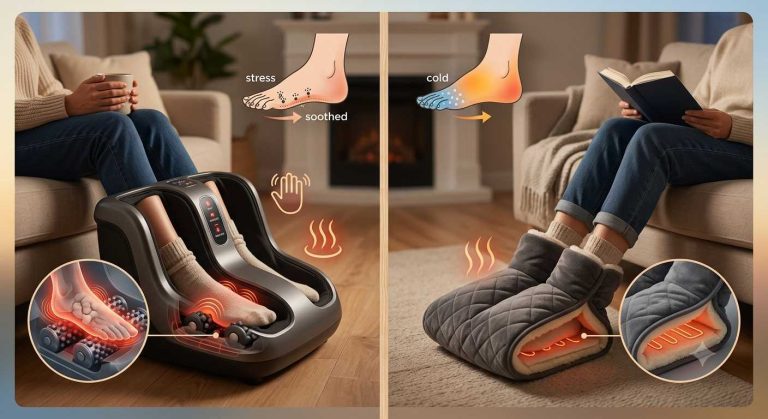
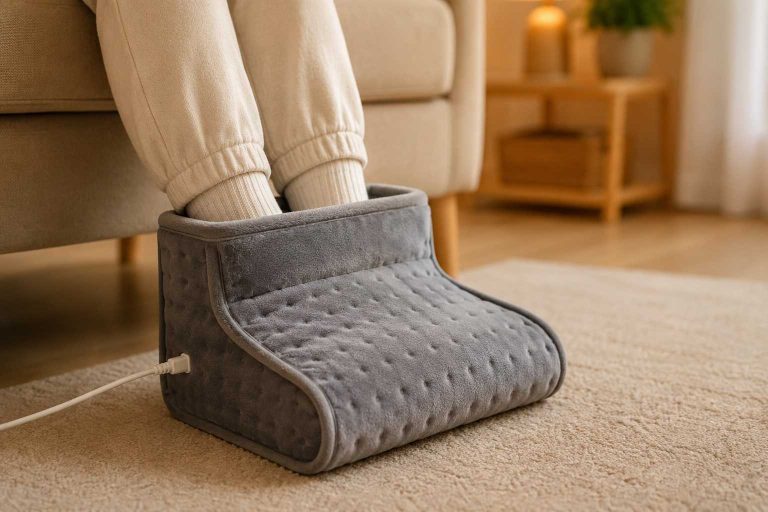
Boot-Style Warmer
Wraps around the foot and ankle, sealing out drafts for more even coverage than a flat pad offers. The trade-off is a cord that keeps you close to the outlet.
Split Design
Each foot gets its own independent chamber, allowing a fuller range of motion. Works well for lounging or moving between rooms without feeling locked in.
Microwavable Options
Good for travel or a quick warm-up, though they typically hold heat for only 20 to 45 minutes, not a full workday.
Heat Settings Matter More Than You’d Think
A foot warmer without adjustable temperature is a gamble. What feels comfortable at first can quickly become too much, especially if you have sensitive skin or tend to sit still for long stretches.
Most electric foot warmers come with three to five heating levels, letting you adjust based on how cold it is and how your feet feel. Models with six or ten settings give you more room to find the right balance.
Pay attention to the maximum temperature too. Some models reach up to 149°F, which can feel too intense for everyday use without a buffer layer like socks. A good habit regardless of model: keep socks on and check in with how your feet feel every hour or so.
Safety Features to Look For
- Auto shut-off Most decent models cut off after two to four hours. Some offer up to eight, useful for overnight warmth.
- Safety certification UL or ETL certification means the product has been tested against electrical safety standards.
- Overheat protection Quality models regulate temperature to avoid overheating. Cheaper, uncertified models sometimes skip this entirely, so check before buying.
Materials and Washability
The inside of your foot warmer matters as much as the heating element. If it is scratchy, too stiff, or traps odors, you won’t want to use it long.
Common inner materials include fleece, velvet, and sherpa-style fabrics. Fleece tends to be soft and breathable, while sherpa adds a bit more plush. Comfort really comes down to personal preference, but it’s worth avoiding a liner that gets damp and doesn’t dry easily.
Washability is easy to overlook until it’s too late. Look for a removable liner or a machine-washable model. Some have washable exteriors but non-washable internal heating pads, so check the specifics before assuming the whole unit can go in the machine.
Cord length is a smaller but practical detail. A 10-foot cord gives more flexibility to position the warmer on a sofa or under a desk without sitting right next to the outlet. Shorter cords are a common frustration in reviews.
Think About Where You’ll Actually Use It
| Where You’ll Use It | Best Fit |
|---|---|
| At a desk most of the day | Flat pad or under-desk mat, out of the way for hours |
| On your feet but stationary (office, kitchen) | Floor mat designed for use with shoes on |
| Couch or bed | Boot-style or split warmer that stays on as you shift positions |
If you’re buying for someone managing a health condition, some models are designed with gentle, low-intensity heat in mind. It’s worth checking with a healthcare provider before using any heated device regularly if there’s an underlying condition.
Find Your Fit
Browse electric foot warmers filtered by style, heat settings, and safety certification.
Shop Electric Foot WarmersPulling It Together
The right electric foot warmer comes down to a few clear questions: where will you use it, how long do you need it on at a time, and how much control do you want over the temperature? From there, prioritizing safety certifications, adjustable heat settings, and a washable design gets you most of the way to a good pick.
Shop with those filters in mind, check recent reviews for real-world feedback on heat distribution and durability, and you’ll be in a much better position than scrolling through listings hoping something looks warm enough.
Quick Questions
How many heat settings should I look for?
Three to five covers most needs. Six or more gives finer control if you like to fine-tune the temperature.
Is a boot-style warmer better than a flat pad?
It depends on where you’ll use it. Flat pads suit desk use, while boot-style warmers suit the couch or bed, where you’re more likely to shift positions.
What should I check before assuming a model is machine washable?
Look closely at the specifics. Some models have washable exteriors but a non-washable internal heating pad.