The Best Heated Foot Warmers for Raynaud’s Disease and Chronic Cold Feet
There’s cold feet, and then there’s Raynaud’s cold feet. Discover why deep, envelope-style plush foot warmers prevent vasospasms and keep blood flowing consistently.
There’s cold feet, and then there’s Raynaud’s cold feet. If you’ve ever watched your toes turn white, then blue, then throb painfully red as they warm back up, you already know the difference. That progression isn’t just discomfort. It’s your blood vessels shutting down.
Raynaud’s phenomenon is a condition where the small blood vessels in your extremities overreact to cold temperatures or stress, temporarily cutting off circulation. According to the Arthritis Foundation, somewhere between 4 and 15 percent of Americans live with Raynaud’s, and the majority never seek formal treatment. For many, managing it comes down to one basic strategy: keeping feet consistently warm before an episode has a chance to start.
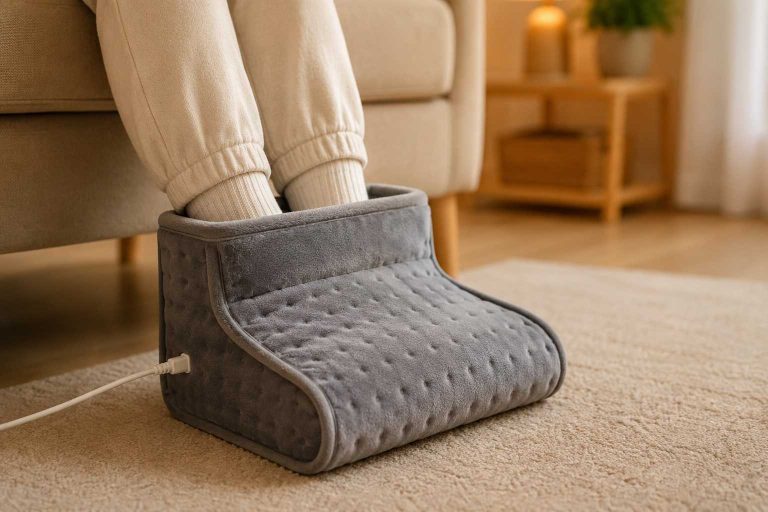
That’s where a good heated foot warmer comes in. Not a thin heating pad, not a pair of thick socks alone—the kind with a deep plush pocket that wraps around your entire foot, seals in warmth, and holds it there.
Why Cold Feet Hit Differently With Raynaud’s
Not every heated product is built the same. A flat heating pad resting under your feet does something. But a foot warmer with an envelope-style pocket does something else entirely.
The difference is heat retention. When your feet are enclosed on all sides by warming material, the warmth builds and stays. Open-top designs lose heat quickly, especially in cooler rooms. For Raynaud’s specifically, where the goal is to prevent a vessel spasm rather than recover from one, that steady, surrounding warmth matters a lot.
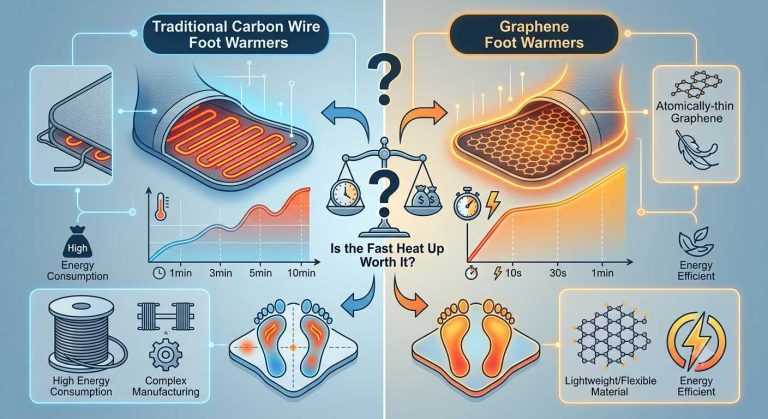
Preventative Thermal Care: The primary goal with Raynaud’s is maintaining surrounding warmth to stop vasospasms before they trigger, rather than rapidly reheating extremities after numbness has already set in.
What Makes a Foot Warmer Actually Work for Raynaud’s
- Double-Sided Heating Elements: Better foot warmers place wires on both the top and bottom of the foot pocket, wrapping feet in 360-degree warmth. Models like Diweez and Juhaoyi units reach temperatures up to 149°F with customizable timer settings.
- Plush, Skin-Friendly Linings: Fleece, flannel, and velveteen trap heat against the skin while preventing irritation for individuals with sensitive skin.
- Adjustable Heat Settings: Multi-level temperature controls allow fine adjustments ranging from gentle background warmth to higher thermal recovery levels.
- Auto Shut-Off & Timers: Essential safety features for overnight use or resting, with timers running from 4 to 8 hours.
- Washable Covers: Zipper-detachable, machine-washable outer layers keep frequently used foot warmers clean and hygienic.
Key Options Worth Knowing About
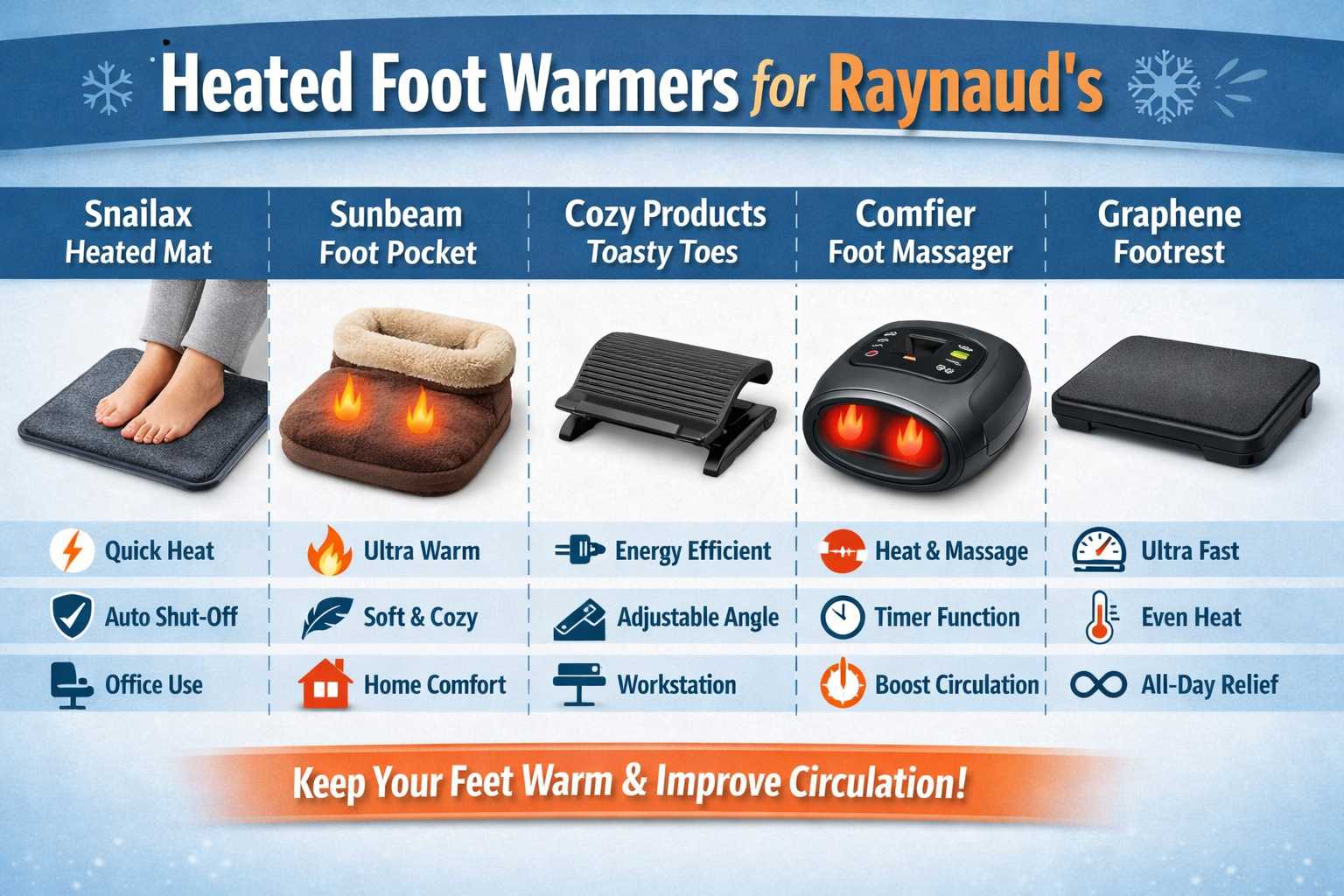
Delivers continuous, high-wattage heat without battery constraints. Roomy envelopes fit up to size 15 feet, ideal for stationary desk work or recliners.
Ankle-covering booties with integrated rechargeable batteries (e.g., Volt Heated Slippers) allow free indoor/outdoor movement without cord restrictions.
Extended heating pads that stretch from the feet up toward the calves, warming lower leg vasculature to support overall leg circulation.
Why Warming Slowly Is Essential
Aggressive, sudden heat isn’t always better. Rapid temperature shifts can shock cold tissues, potentially causing chilblains—painful, itchy skin inflammations. The goal with Raynaud’s is gradual, sustained thermal delivery that keeps blood flowing steadily.
Envelope-style plush warmers excel here. The surrounding fabric acts as a gentle buffer, warming the trapped air evenly rather than pressing harsh heating elements directly against sensitive skin.
Core Temperature Strategy: Cleveland Clinic notes that keeping your core warm is essential. If your torso gets cold, your body automatically diverts blood away from extremities to protect vital organs. Layer torso clothing alongside foot warmers.
Age-Related Circulation & Easy-to-Use Features
Circulation naturally declines with age, leaving many older adults with chronically cold feet even without a Raynaud’s diagnosis. For older users, ease of use is just as critical as heating performance:
| Design Feature | Benefit for Older Adults / Raynaud’s Care |
|---|---|
| Wide Envelope Openings | Easy foot insertion without awkward maneuvering or ankle strain. |
| Soft, Non-Irritating Fabrics | Protects sensitive skin or areas with reduced diabetic sensation. |
| Large-Button Controllers | Simple temperature and auto shut-off timer adjustments. |
| Sock-Layering Space | Allows wearing thermal socks inside the pocket to trap heat next to the skin. |
Key Takeaways
- Raynaud’s causes small blood vessels in toes to overreact and constrict; keeping feet warm prevents episodes before they start.
- Enclosed, envelope-style foot warmers trap surrounding heat significantly better than flat, open-air heating pads.
- Look for double-sided heating (top and bottom), plush linings, multi-level controls, and multi-hour auto shut-off timers.
- Gradual, sustained warmth is safer than sudden high heat, which can shock cold tissues and cause chilblains.
- Pairing foot warmers with warm core layers helps prevent the body from redirecting peripheral blood flow away from extremities.
Finding What Works for You
Managing Raynaud’s or chronic cold feet is rarely a single-product fix. An electric heated foot warmer with a plush enclosing pocket is one of the most practical investments you can make for daily comfort—whether at your desk, on the couch, or winding down for sleep.
Even a simple envelope-style model with solid heat retention will easily outperform layering multiple pairs of standard wool socks. If cold feet are disrupting your daily routine, an enclosed heated foot pocket provides the steady, surrounding warmth your body needs.
References and Resources: Arthritis Foundation – Raynaud’s Phenomenon; Cleveland Clinic – Raynaud’s Overview & Cold Weather Tips; Yale Medicine – Raynaud Syndrome; UPMC HealthBeat; Raynaud’s Association – Warm Toe Solutions & Volt Slippers Review; NIH/PMC – Prevalence of Primary Raynaud’s Phenomenon; My Chicago Foot Expert.