Will It Scratch Hardwood? How to Choose an Under-Desk Foot Rest for Your Flooring
Protect your hardwood finish while stopping annoying carpet slide. Learn how different base materials interact with hardwood, tile, and low-pile carpet before buying an under-desk foot rest.
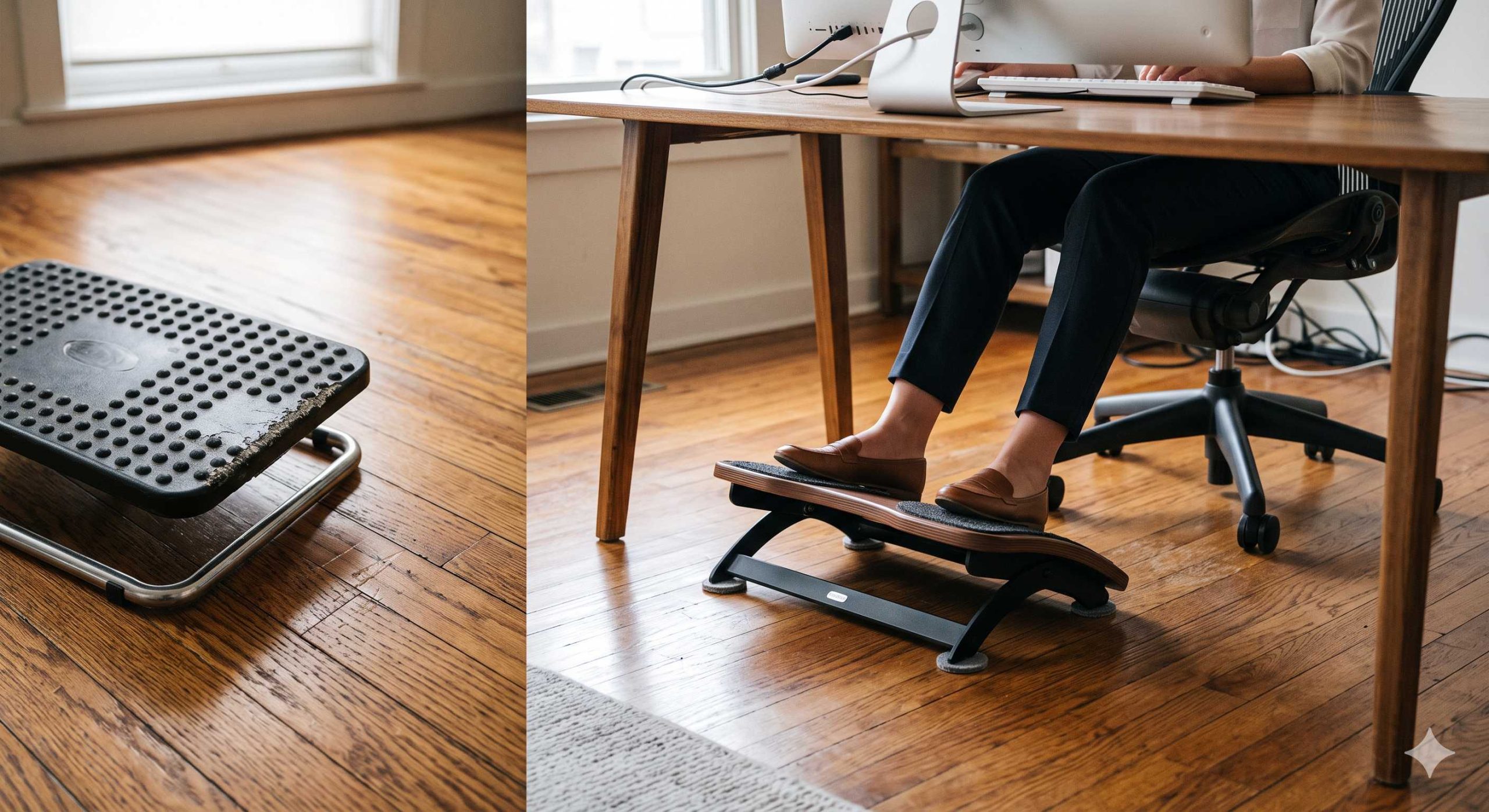
If you have hardwood floors at home, you already know the anxiety. Every new piece of furniture is a potential threat. So when you’re shopping for an under-desk foot rest, it’s reasonable to stop and ask: will this thing scratch my floors? And equally frustrating for office workers on corporate carpet: will it just slide forward every time I put my feet down?
These are fair concerns. The wrong foot rest can leave scuff marks on a finish you paid a lot to maintain, or become useless on low-pile carpet because it creeps away from you every twenty minutes. This guide covers what to look for, what to avoid, and how different base materials behave on different floor types.
Why the Base Material Matters More Than You Think
The part of the foot rest that touches your floor is where most of the damage happens — or doesn’t. There are a few common base materials you’ll encounter, and they don’t all behave the same way.
Hard Plastic Bases: Creates direct friction against wood finishes. Even small lateral shifts under foot pressure can score or scratch hardwood over time.
Rubber Feet & Strips: Soft contact points that restrict lateral sliding. Keeps units stable, though low-quality rubber can leave faint scuffs on delicate finishes.
Felt-Padded Bases: Allows smooth, non-scratching contact. However, felt traps dust and grit over time, which can turn into abrasive sandpaper if not cleaned.
Heavy Wooden & Beaded Bases: Units over 4 lbs with textured rubber beads or strips create friction against carpet fibers to prevent forward creeping.
What to Look For on Hardwood
When shopping for a foot rest specifically for hardwood, a few key construction details are worth checking before you buy:
- Inspect Contact Points: Avoid foot rests with small plastic nubs on the base. Look for continuous rubber strips, rubberized corner pads, or a felt lining that distributes weight softly across a wider surface area.
- Prioritize Unit Weight: Heavier foot rests (such as solid wood or bamboo models) shift around less under pressure. Less sliding means fewer friction events that cause scuffs.
- Keep Base Area Clean: Trapped grit and dirt under any base act like sandpaper against polyurethane finishes. Periodically sweep under your foot rest and wipe down its base.
- Add a Protective Mat Layer: Placing a thin, natural rubber anti-fatigue mat underneath adds an extra shield without altering your ergonomic setup height.
Material Tip: Natural rubber matting is generally safer than synthetic foam underlays, as synthetic materials can degrade over time and react with wood finishes.
The Carpet Problem: Why Your Foot Rest Keeps Sliding Away
Low-pile office carpet looks like it should grip objects, but it is actually a slippery surface for lightweight foam or smooth-bottomed plastic foot rests. Passive foot pressure easily pushes these lightweight units forward throughout the workday.
To stop carpet creep, two factors matter most:
- Weight: Heavier models (4 lbs or more) resist sliding much better than 1-lb foam wedges.
- Base Texture: Rubberized strips or studded rubber patterns grip carpet fibers far more effectively than smooth rubber or plain foam.
If your current foot rest slides, place a small rubber-backed rug or non-slip mat underneath it to anchor the unit without buying a replacement.
Floor Type, Material, and the Right Foot Rest to Match
| Floor Type | Best Base Material | What to Avoid | Stability Strategy |
|---|---|---|---|
| Hardwood Floors | Wood/bamboo with rubber feet; felt-lined bases | Bare hard plastic bases or small plastic nubs | Select heavier units (3+ lbs) and clean under base regularly |
| Laminate or Tile | Rubberized pads or non-slip rubber strips | Smooth plastic or slick foam undersides | Rely on rubber grip to prevent slipping on smooth surfaces |
| Low-Pile Carpet | Heavy wooden/metal frames; beaded rubber bases | Lightweight foam cushions without non-slip studs | Use weight (4+ lbs) and aggressive base texturing |
| High-Pile Carpet | Universal compatibility (foam, plastic, wood) | None (carpet pile provides natural cushion & grip) | Carpet fibers naturally anchor almost any foot rest |
A Few Things Worth Knowing Before You Buy
Always read user reviews specifically for floor damage and sliding issues. While product listings frequently claim “non-slip” or “floor-safe,” real-world reviews from people with your specific flooring type will highlight if a base actually holds up.
If you choose a rocking or tilting foot rest, keep in mind that its base moves continuously. Ensure the contact points are soft rubber or felt to handle that repeated friction without scoring delicate floor finishes.
Key Takeaways
- Hard plastic bases are the primary cause of hardwood scratches and should be avoided on uncarpeted floors.
- Rubber feet and felt linings offer the safest contact for hardwood, though felt must be kept clean to prevent grit buildup.
- Heavier foot rests (4+ lbs) reduce shifting, preventing scratch-inducing friction and stopping carpet creep.
- Low-pile corporate carpet requires rubberized studs or textured strips to prevent the foot rest from sliding forward.
- Positioning tilted foot rests against desk legs or using a natural rubber under-mat stops slipping on slick finishes.
Conclusion
Floor anxiety is real, but it’s completely manageable. Hard plastic bases are the main thing to avoid on hardwood, while rubber and clean felt are your best allies. For carpeted workspaces, weight and aggressive base texturing are your strongest defenses against constant sliding.
Checking base construction before purchasing ensures you get an under-desk foot rest that protects your flooring while providing long-term ergonomic support.
References and Resources: RugPadUSA: Floor Protectors Guide; The Flooring Girl: Hardwood Floor Furniture Protectors; 50Floor: Protecting Wood Floors from Office Chairs; Empire Today: Floor Scratch Prevention; Ambient BP; StrongTek; Gearorbit (2026); Dr. Body Gadget (2026).