Best Heated Foot Warmers Under $30: Can Cheap Models Keep Up?
Cold feet are genuinely miserable, but premium foot warmers can cost $60 to $100+. Do entry-level models under $30 actually work, or are they a waste of money?
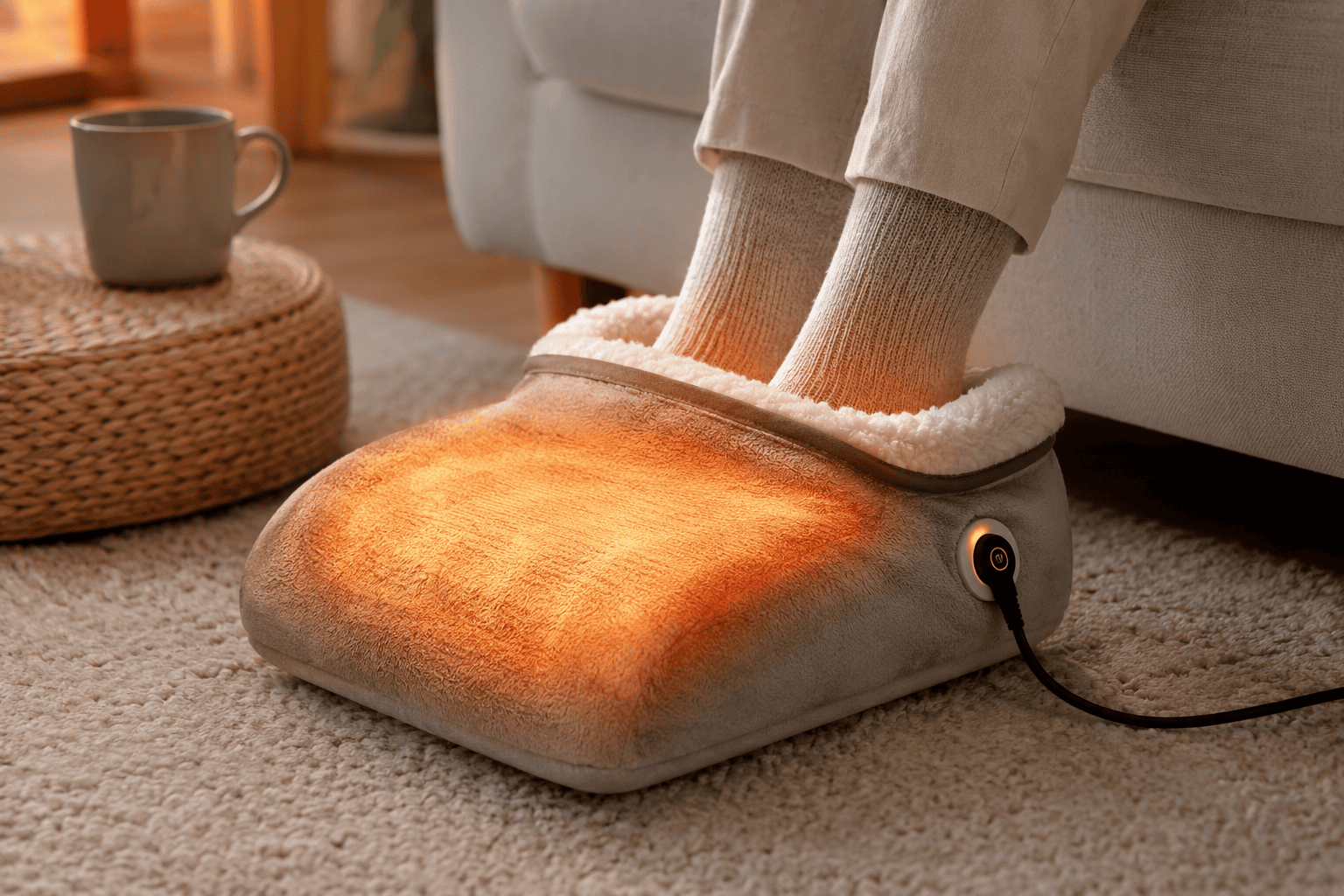
Honest answer? It depends on what you need. This guide takes a close look at entry-level heated foot warmers in the under-$30 range, how they stack up on features that actually matter, and where pricier alternatives genuinely pull ahead.
What You Actually Get Under $30
The budget heated foot warmer market is dominated by pocket-style fleece or flannel pads, along with a few basic slipper designs. Most plug into a standard wall outlet via a short cord, offer two or three heat settings, and top out around 140°F to 149°F on their highest setting.
The warming performance at this price is often more respectable than expected. A flannel dual-pocket design does a reasonable job of trapping warm air around both feet and cutting down on cold drafts. That kind of enclosed design tends to outperform basic open mats for indoor desk use.
maximum temperatures reached by most budget pocket-style foot warmers, delivering respectable localized warmth despite low price points.
Auto-shutoff is increasingly common even on cheap models, usually set to cut power after two hours. That’s a meaningful safety feature, not just a marketing checkbox. Budget picks that carry an ETL or UL certification have been independently tested to meet nationally recognized electrical safety standards, making that mark crucial to look for on the packaging.
The Durability Question
This is where the gap between cheap and premium becomes clearest, and it’s worth being direct about it.
Budget fleece foot warmers tend to use lighter-weight fabric, often in the 150 to 200 GSM range. The fleece is usually soft at first but can pill or go rough after repeated machine washing. The zipper mechanism on removable covers, where one exists, often starts to loosen after a season of heavy use.
Heating wires on uncertified models are a concern too. The connection point where the heating element meets the plug controller is a common failure point on low-quality units. Stiffer cords on budget models are more prone to developing internal breaks over time if bent or pinched repeatedly.
The Durability Bottom Line: A certified budget warmer can last 1 to 2 seasons with careful handling. Premium $60+ models use thicker materials, flexible wiring, and self-regulating PTC elements built to last 3 to 4+ winters.
Budget vs. Premium: A Practical Comparison
Best For: Occasional sessions at a desk or couch, casual gifts, guest rooms, or getting through 1–2 winter seasons with basic single-sided bottom heat.
Best For: Daily multi-hour desk use, double-sided top-and-bottom heating, sensitive skin needing precise temperature controls, and multi-year durability.
One specific difference worth noting: premium models often include double-sided heating elements, warming both the soles and tops of your feet simultaneously. That delivers noticeably more even warmth than a single pad underneath, a feature rarely found under $30.
Features to Check on Any Budget Pick
If you’re shopping in the under-$30 range, verify these key details before buying:
- Safety Certification: Look for ETL or UL marks from OSHA-recognized testing laboratories to ensure electrical and fire safety.
- Auto-Shutoff Timer: A 2-hour automatic shut-off protects against overheating and saves electricity.
- Washable Cover: A removable, machine-washable liner helps keep plush fabrics clean and free of sweat odor over time.
- Cord Length: Check the cord length before buying, as budget models often use short cords (under 6 feet) that require an extension lead.
So, Can Cheap Models Keep Up?
For occasional use, a certified, fleece pocket-style warmer in the $20 to $30 range does a solid job. The warmth is real, the convenience is there, and if the auto-shutoff and safety certification boxes are ticked, it’s a reasonable buy.
For daily, heavy-use situations, or if you want consistent warmth across both sides of your feet, the budget category is more of a starting point than a destination. A mid-range or premium pick brings a more durable build and superior heating technology that pays off over time.
Quick Questions
Are cheap $20 heated foot warmers safe to use?
Yes, provided they feature independent safety certifications (such as ETL or UL) and an automatic shut-off timer. Avoid uncertified budget models without clear safety testing marks.
Do budget foot warmers heat the top and bottom of your feet?
Most models under $30 only heat from the bottom (single-sided). Double-sided heating pockets that warm both the soles and tops of your feet are typically found on premium $50+ units.
How long does a budget heated foot warmer typically last?
With careful use and gentle washing, a certified budget model usually lasts 1 to 2 winter seasons before fabric wear or cord stiffness becomes an issue.
Always verify safety testing seals (ETL/UL) and check manufacturer user guides for specific washing and operation instructions before use.
References & Resources
- Intertek. “ETL Listed Mark.” intertek.com
- UL Solutions. “Underwriters Laboratories Safety Certification Standards.” ul.com
- RackSolutions. “UL vs ETL Certifications: What’s the Difference?” racksolutions.com
- WellWhisk. “Best Electric Foot Warmer Overview.” wellwhisk.com
- MomJunction. “Best Foot Warmers (Podiatrist-Reviewed).” momjunction.com
- Footwind. “Best Electric Foot Warmers of 2025.” footwind.net