Heated Footrest vs. Space Heater: Which One Actually Saves You Money?
Most people reach for a space heater the moment temperatures drop. Swapping your 1,500W space heater for a 50W heated footrest can cut your winter desk heating bill by over 95%.
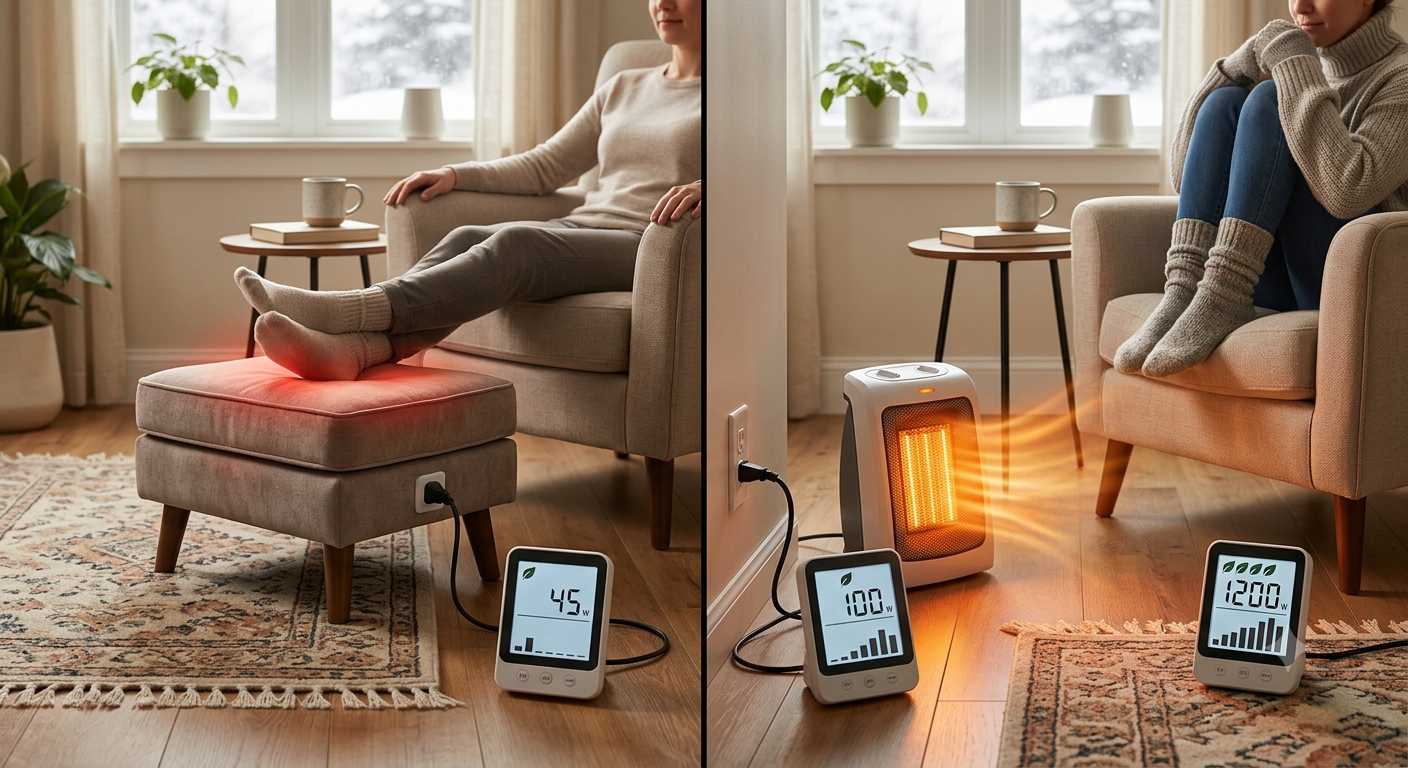
There is an option that a lot of people overlook: a heated footrest. It sounds almost too modest to make a dent, but when you run the numbers on a heated footrest versus a space heater, the difference is striking. This article breaks down exactly how much each one costs to run using real wattage figures and current electricity rates.
The Wattage Gap Is Enormous
This is where the comparison starts. A standard space heater draws around 1,500 watts of power. That is the default for most residential models, though some go as high as 1,800W. A heated footrest or electric foot warmer, on the other hand, typically draws somewhere between 40W and 80W, with 50W being a common midpoint.
more electricity used by a standard 1,500W space heater every hour compared to a 50W heated foot warmer.
That is not a small difference. A 1,500W space heater uses 30 times more electricity than a 50W foot warmer every single hour it runs. Once you absorb that fact, everything else in this comparison makes sense.
The Real Cost Per Hour and Month
At an average US electricity rate of $0.18 per kWh, the hourly math is straightforward:
- Space Heater (1,500W): 1.5 kWh × $0.18 = $0.27 per hour
- Heated Footrest (50W): 0.05 kWh × $0.18 = $0.009 per hour (less than one cent)
In practical terms, running your space heater for a single hour costs more than running a heated foot warmer for an entire 30-hour stretch. Across a typical work month (8 hours/day for 30 days):
360 kWh × $0.18 = $64.80 per month
12 kWh × $0.18 = $2.16 per month
Seasonal Savings: Swapping a space heater for a heated footrest saves roughly $62.64 per month, yielding nearly $250 in savings across a four-month winter season.
Does a Foot Warmer Actually Keep You Warm Enough?
A space heater warms a whole room, whereas a heated footrest warms you directly. When you sit at a desk or couch for long stretches, your feet and lower legs are almost certainly your coldest points. Warming them directly raises your overall perceived warmth, as your body regulates core temperature partly through blood flow in your extremities.
The most cost-effective approach for many households is strategic hybrid use: run a 50W foot warmer during working hours or relaxation time, and reserve space heaters for bringing an entire room up to temperature quickly when moving around.
Other Costs and Safety Factors
Beyond utility bills, a few practical differences stand out:
- Purchase Price: Decent heated footrests start around $30 to $60, making their upfront cost virtually identical to entry-level space heaters.
- Fire Safety: According to the CPSC, space heaters cause ~1,700 home fires annually in the US. Low-wattage foot warmers operate at much lower power levels, drastically reducing thermal risk.
- Portability & Setup: Foot warmers are compact, easily sliding under desks or tucking into storage bags when not in use.
Conclusion
If your goal is to stay comfortable while keeping winter energy costs down, a heated footrest is hard to beat for desk or couch use. At under a cent per hour to run, it delivers targeted warmth at a fraction of the cost of running a space heater all day long.
Quick Questions
How much does it cost to run a heated footrest for a month?
Running a typical 50W heated footrest for 8 hours a day costs roughly $2.16 per month, based on an average electricity rate of $0.18 per kWh.
Can a heated footrest replace a space heater entirely?
For sedentary activities like desk work, reading, or watching TV, yes. However, a space heater is still required if you need to raise the ambient temperature of an entire room.
Why does warming my feet make my whole body feel warmer?
Your body regulates core temperature in part through blood flow in your extremities. Direct heat on the feet dilates blood vessels, circulating warm blood back toward your body core and raising perceived warmth.
Electrical rates vary by state and utility provider. Check your local kWh rate on your monthly energy statement for exact cost calculations.
References & Resources
- US Energy Information Administration (EIA). “Electric Power Monthly: Residential Rates.” eia.gov
- Electric Choice. “Electricity Prices by State.” electricchoice.com
- HomeGuide. “Cost to Run a Space Heater.” homeguide.com
- Inspire Clean Energy. “How Much Does It Cost to Run a Space Heater?” inspirecleanenergy.com
- National Energy Assistance Directors Association (NEADA). “Energy Price Update.” neada.org
- US Consumer Product Safety Commission (CPSC). “Space Heater Safety Guidelines.” cpsc.gov