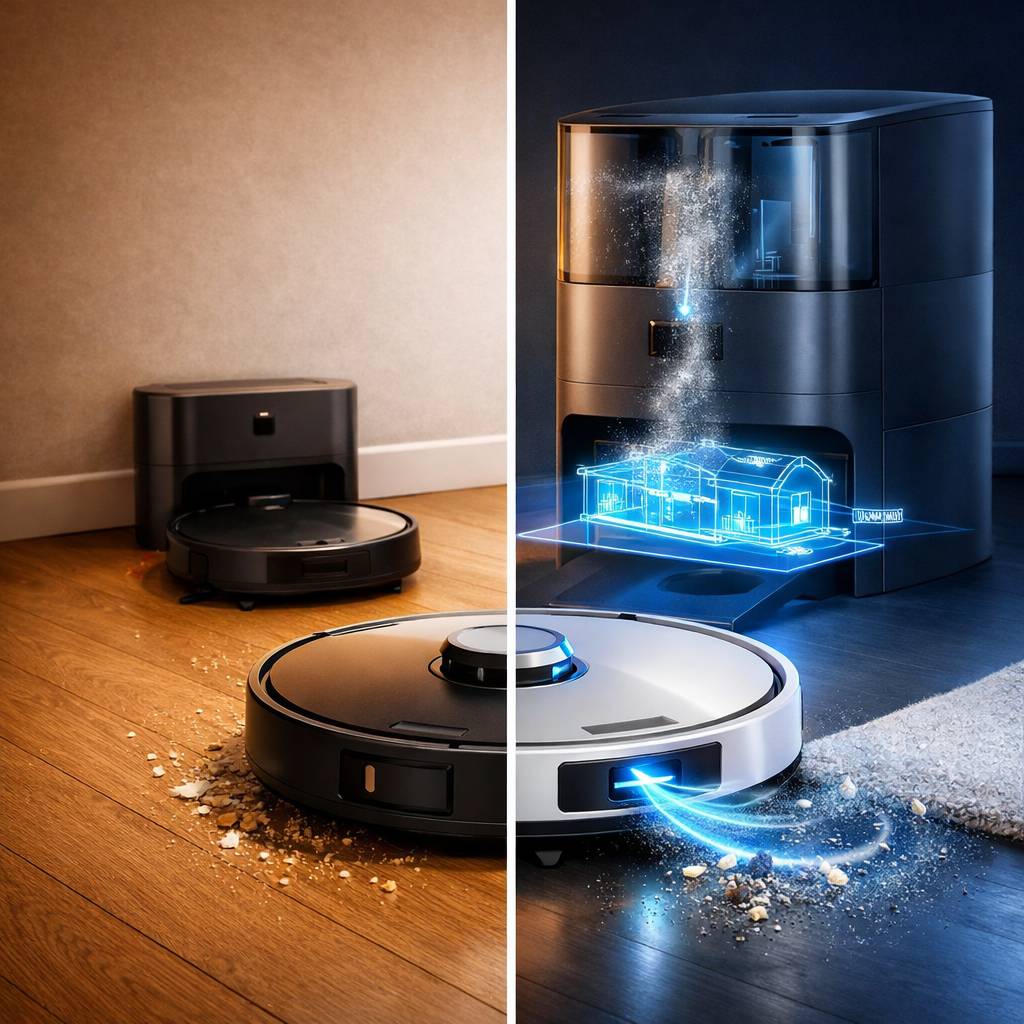
There’s a moment most people have when shopping for a robot vacuum. You spot a model for $150, then scroll a little further and see one for $900. They both clean floors. They both work while you sit on the couch. So what on earth explains that $750 difference?
It’s a fair question, and the answer isn’t as simple as “you get what you pay for.” Sometimes you do. Sometimes you’re paying for features you’ll never actually use. This article breaks down what separates budget robot vacuums from the expensive ones, so you can figure out which camp you actually belong in.
What You’re Actually Paying For at the Higher Price Point
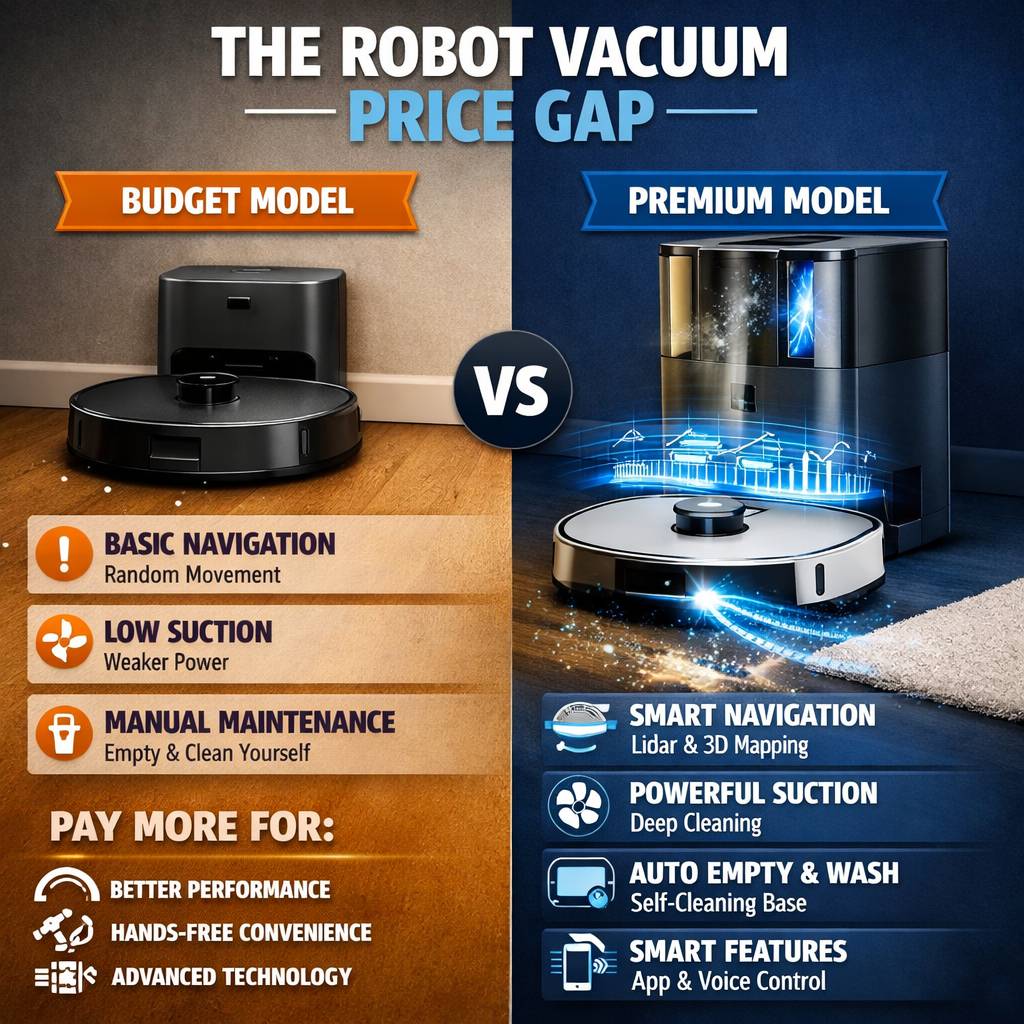
The biggest jumps in price tend to come from a handful of specific technologies. Navigation is probably the most significant. Budget models often use random or bump-and-bounce navigation, which means they cover your floors eventually but not efficiently. Premium models use LiDAR or structured light sensors to build a real map of your home. They plan routes, avoid redundancy, and can clean specific rooms on command.
Self-emptying bases are another major cost driver. Models like the Roborock S8 MaxV Ultra or the Dreame X40 Master include a dock that empties the dustbin automatically after each run, washes the mop pads, refills the water tank, and dries everything out. That’s a lot of hardware, and it comes at a price. But if you genuinely hate maintenance, it changes the ownership experience considerably.
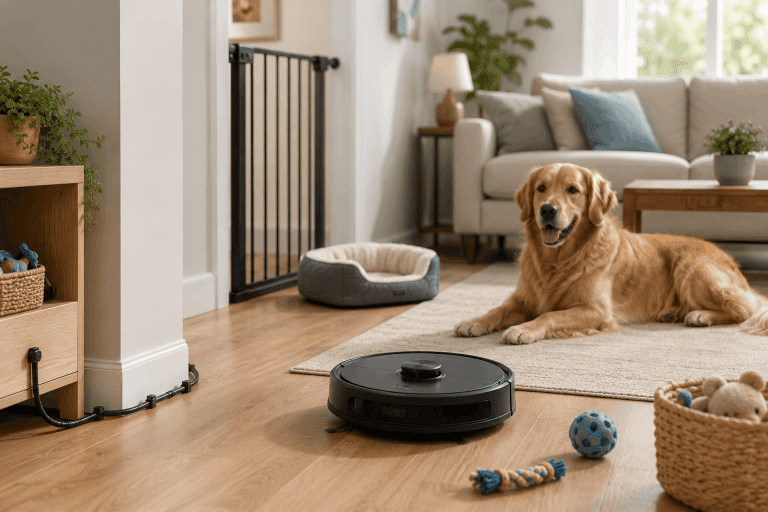
Object avoidance is the third big differentiator. High-end vacuums use cameras and AI to detect and steer around shoes, pet toys, cables, and even pet waste. Budget models? They’ll just run straight into your charging cable and drag it across the room.
Where Budget Models Hold Their Own
Here’s something the robot vacuum marketing doesn’t want you to focus on: for simple, small spaces with smooth floors and minimal clutter, a $200 robot vacuum does a genuinely good job.
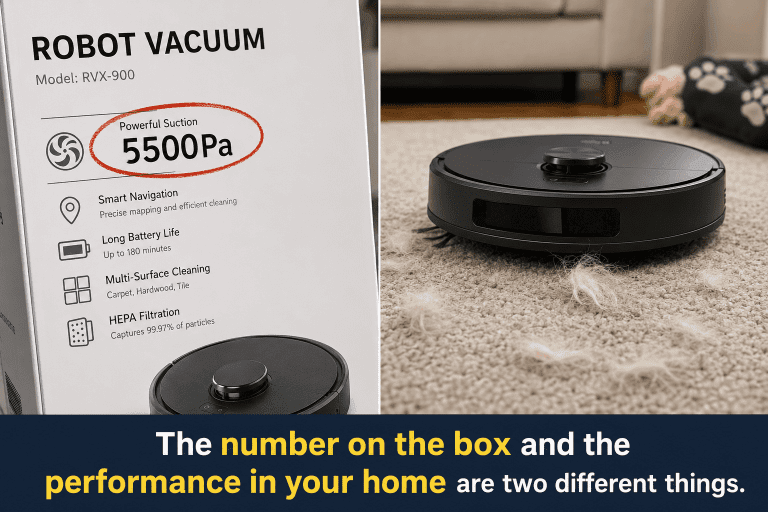
If you live in a studio apartment, have mostly hard floors, no pets, and you tidy up before running the vacuum anyway, a mid-range model covers the basics without drama. Suction power on entry-level models has improved a lot in the last few years. Even robots in the $150-$250 range can handle everyday dust and debris reasonably well.
The problems with budget models tend to be about convenience, not cleaning capability. They get stuck more often. They need emptying after every run. Their maps (if they have them at all) are less reliable. They’re more likely to miss spots or bump into furniture repeatedly. For some people, none of that is a dealbreaker.
The Features That Sound Great But Rarely Matter
A few premium features tend to get hyped in product listings but end up being less useful in real life.
Multi-floor mapping sounds impressive, but if you have a single-storey home or you’re not going to carry the robot between floors anyway, it’s irrelevant to you. Carpet detection and auto boost modes are useful for homes with mixed flooring, but if you only have hard floors, you’re paying for a feature that never activates.
Voice assistant compatibility is another one. Yes, you can ask Alexa to start the vacuum. But most people just use the app or set a schedule. The voice integration works well when it works, but it’s rarely someone’s primary reason for buying.
That doesn’t mean these features are bad. It just means they only deliver value in specific households. Before assuming a feature justifies a higher price, it’s worth asking: will I actually use this?
When the Expensive Option Genuinely Makes Sense
There are real situations where spending more pays off.
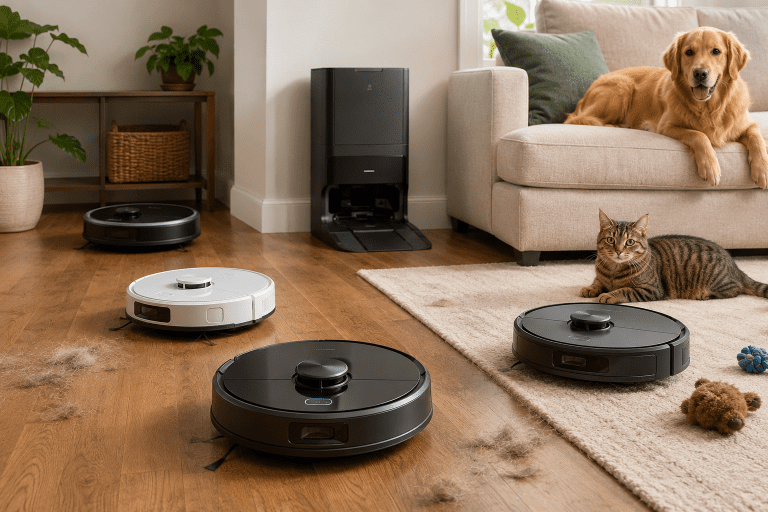
Pet owners are at the top of that list. Homes with shedding animals benefit significantly from better suction, rubber roller brushes (which tangle less than bristle brushes), and frequent cleaning cycles. A robot that empties itself means it can run daily without you needing to empty the bin before every session.
Large homes also benefit from better navigation and longer battery life. A cheap robot with poor mapping will take multiple cleaning sessions to cover 2,000+ square feet and probably miss sections each time. A well-mapped premium model handles it in one efficient run.
High-pile carpet is another genuine differentiator. Cheaper robot vacuums usually have a tough time getting across thick rugs. They lose suction or just get stuck. Higher-end models with powerful motors and smarter sensors handle carpets way better.
The Honest Conclusion
Expensive robot vacuums are better, generally speaking. But “better” doesn’t automatically mean “worth it for you.”
The features that justify a premium price, like self-emptying bases, reliable obstacle avoidance, and accurate mapping, are features that solve real problems for specific households. If you don’t have those problems, you might be happier spending $300 on a solid mid-range model than $900 on a flagship that does more than you need.
A useful starting point is to think about your biggest frustrations with cleaning, rather than your biggest wish list. Really, the best robot vacuum is the one that takes care of your specific needs—not just the one with the flashiest features.
If you’re still on the fence, check out our picks broken down by floor type and budget. We’ve already done the homework, so you don’t have to dive into endless specs yourself.