Snailax SL-52A2RC-2 Shiatsu Foot Massager with Heat: Deep Kneading Comfort for Tired Feet


The right product depends a lot on how and where you plan to use it. A heated footrest for a home office desk is a different buying decision than something you want parked in front of the couch, and what works for a senior looking for easy controls is not necessarily the same pick as something a student needs for a dorm room setup. This section organizes everything by use case so you can skip the guesswork and go straight to what actually fits your situation. Whether you are kitting out a gaming setup, looking for a gift, or just want something to make your workday more comfortable, browse the category that matches and find the right product from there.
Schema, or a custom HTML/code block, or the theme header). Google requires the schema text to match the visible answers, so keep both in sync. 3. The visible HTML is intentionally unstyled so it inherits the Kadence theme. -->
Yes, for typical daily use. Heated footrests are low-wattage warming devices, and reputable models include adjustable heat settings, overheat protection, and automatic shut-off timers. For daily use, choose a model with a recognized safety listing (such as ETL or UL), keep it on a flat surface, avoid covering it with thick blankets that trap heat, and unplug it when not in use. Since the warmth sits against your feet for long stretches, follow the manufacturer’s guidance on session length and avoid running the highest setting for hours directly against bare skin.
No. Most heated footrests draw roughly 50 to 100 watts, comparable to a heating pad or a couple of light bulbs, and far less than a space heater or oven. At the US average residential electricity rate of about 18 to 19 cents per kilowatt-hour as of early 2026, running a 90-watt footrest for eight hours a day costs roughly 13 cents per day, or about $4 a month. Lower settings and smaller pads cost even less.
It is not recommended to leave one running unattended all day. Many models include an automatic shut-off precisely because continuous unattended operation is not advised. For all-day desk comfort, pick a model with an auto shut-off timer, switch it off during breaks, and never leave it running when you leave the room or go to sleep. Treat it like any plug-in heating device: convenient while you are present, not for round-the-clock background heating.
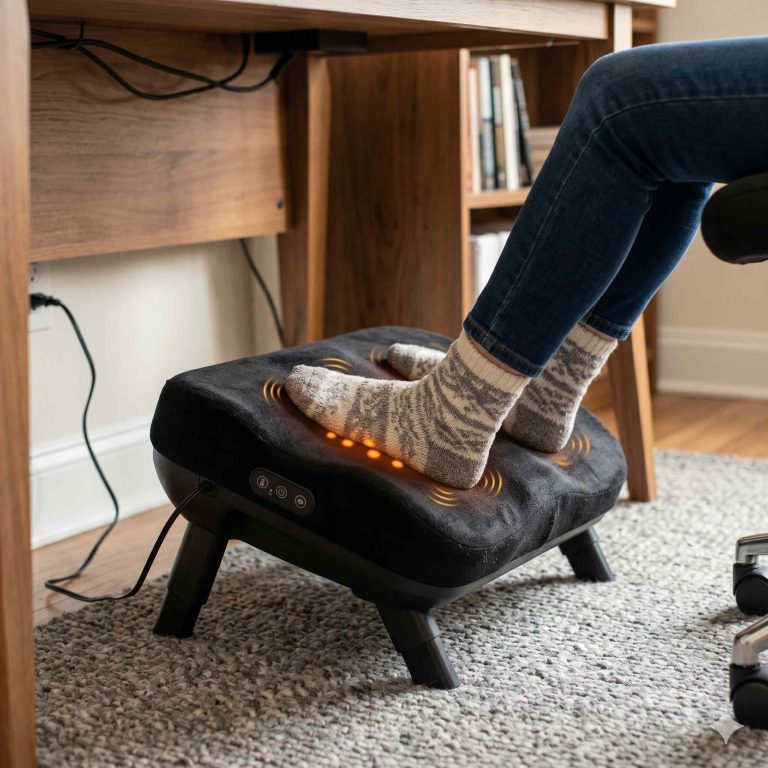
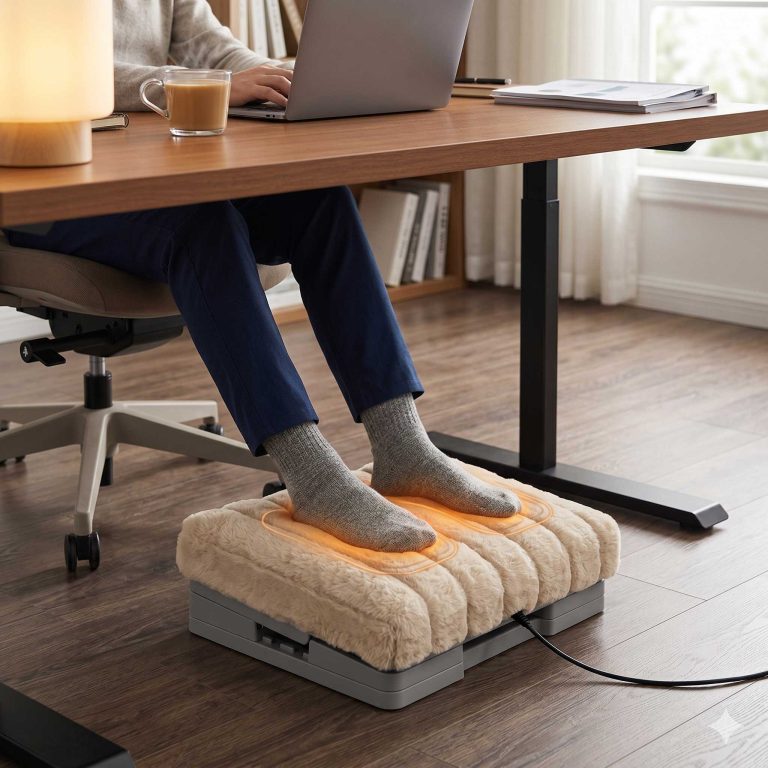
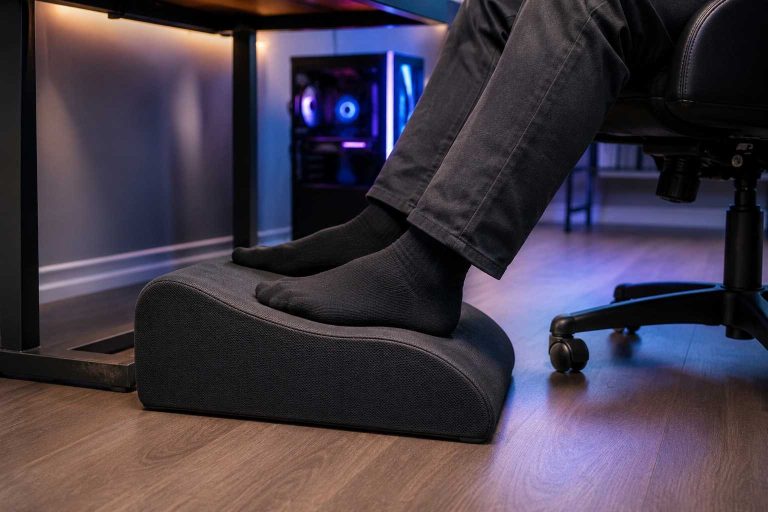
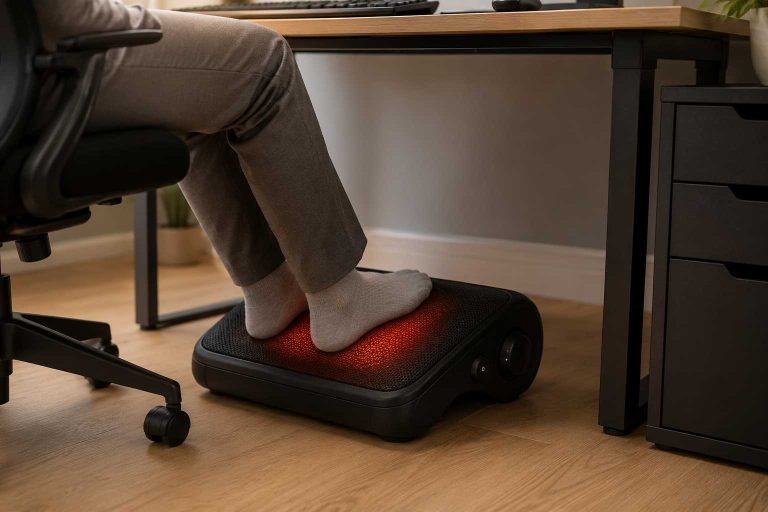
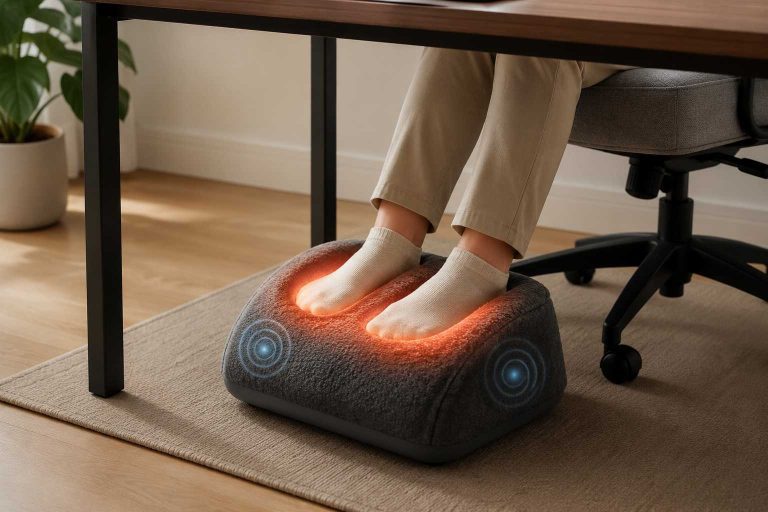
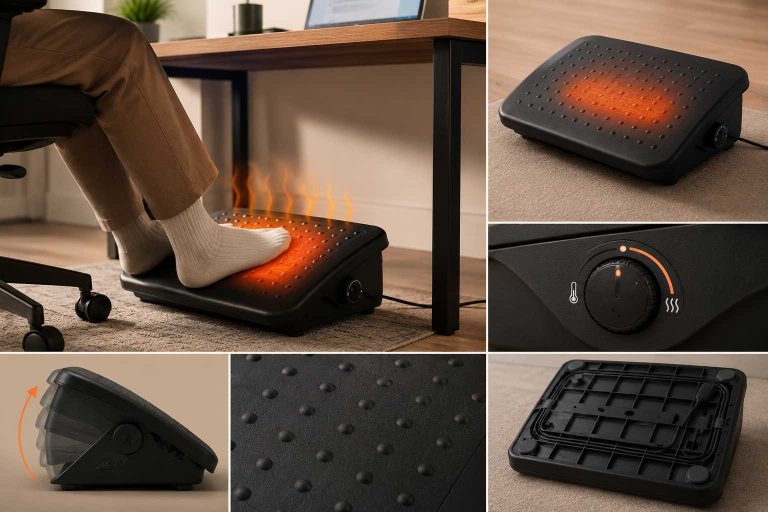
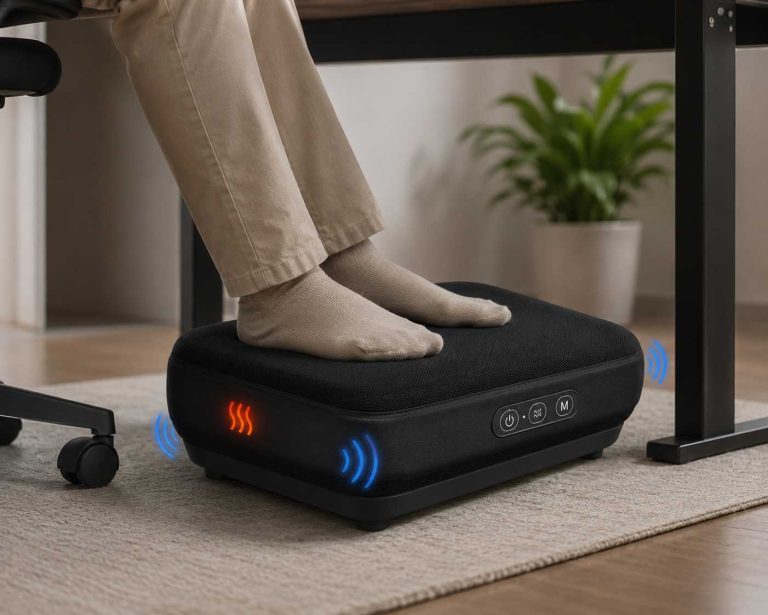
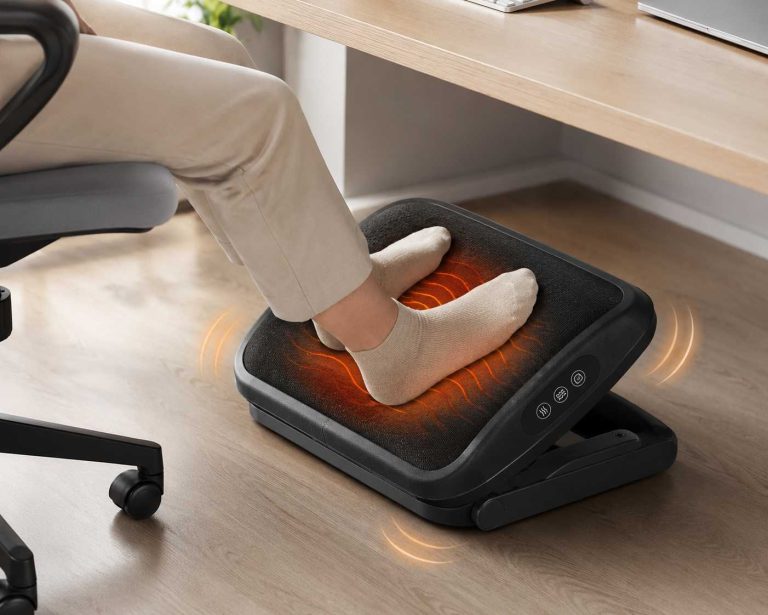
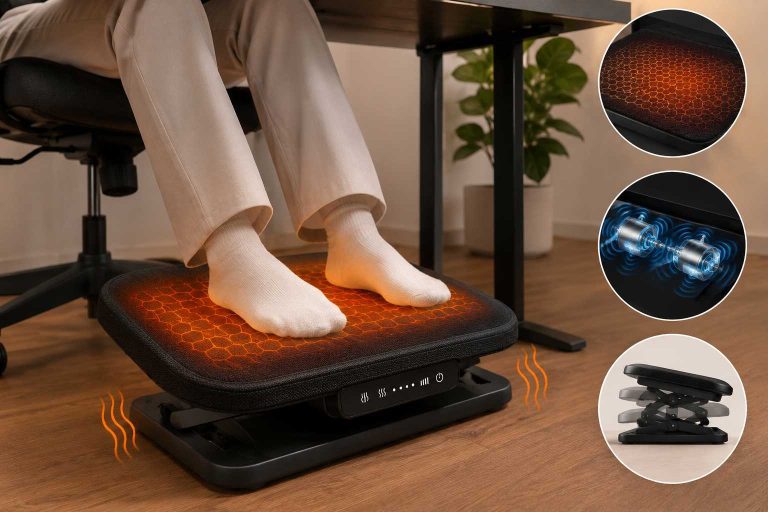
For many desk workers, yes. They deliver targeted warmth to your feet without heating the whole room, they run quietly, and they cost only a few dollars a month to operate. The main things to weigh are desk clearance, cord reach to an outlet, and whether you prefer a firm footrest platform or a soft cushioned pad. If cold feet are your main complaint at work, a heated footrest is an inexpensive, low-energy option.
Most are designed to feel comfortably warm rather than hot, and many offer multiple settings so you can adjust to preference. There is no single correct temperature, but a good footrest warms gently and steadily without becoming uncomfortable to touch. The low or medium setting is usually enough for everyday use. Higher settings are best used briefly rather than for hours of continuous contact, and prolonged skin contact at the highest setting should be avoided. If a unit ever feels too hot to rest your feet on comfortably, lower the setting or switch it off.
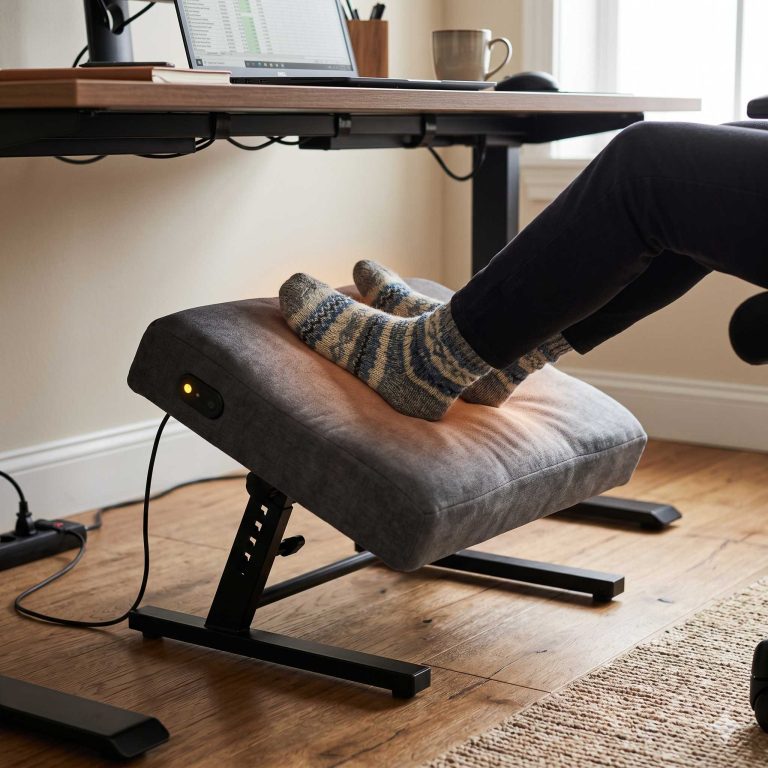
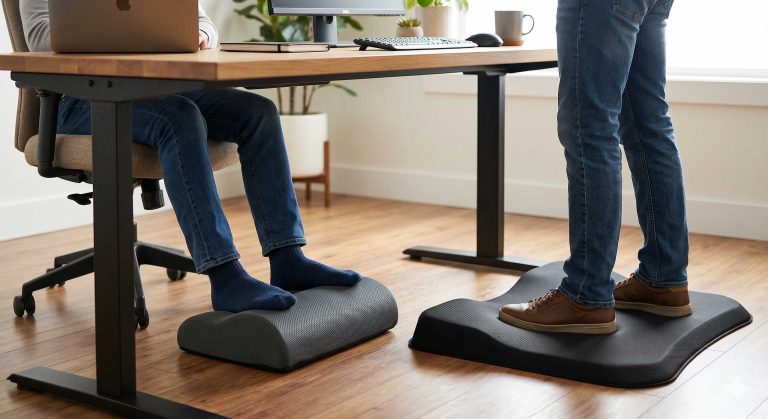
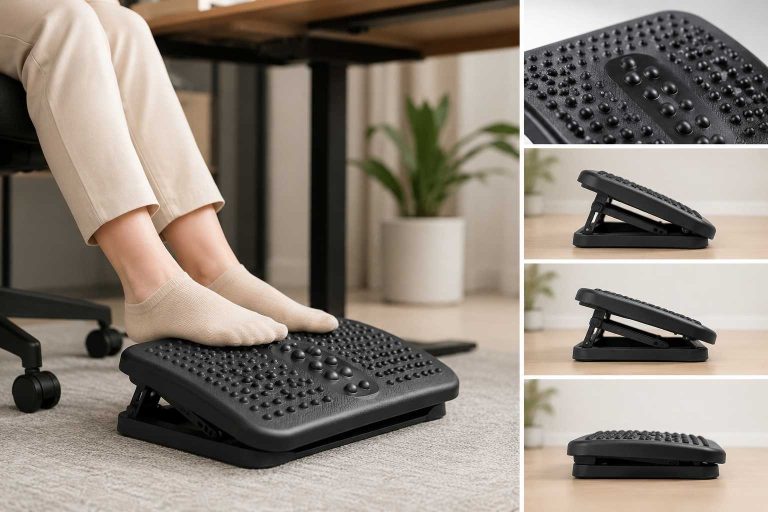
It depends on the style. A flat platform footrest works well at a seated desk but is less useful when you stand, since your feet leave it. If you alternate between sitting and standing, a heated foot mat you can step on and off is more practical than a tilted footrest designed for seated posture. Check the dimensions, confirm the cord reaches your outlet across the wider footprint of a standing desk, and for mostly-standing setups consider an anti-fatigue style heated mat instead.
They serve different purposes. A space heater warms the air in a room and typically draws 750 to 1,500 watts, while a heated footrest warms only your feet at roughly 50 to 100 watts. At the US average rate, running a 1,500-watt space heater for eight hours can cost around $2 a day, roughly 15 to 20 times more than a heated footrest used the same way. For warming your feet at a desk, a footrest is far cheaper and more targeted; for raising the temperature of a whole room, a space heater is the right tool.
{
"@context": "https://schema.org",
"@type": "FAQPage",
"mainEntity": [
{
"@type": "Question",
"name": "Are heated footrests safe to use daily?",
"acceptedAnswer": {
"@type": "Answer",
"text": "Yes, for typical daily use. Heated footrests are low-wattage warming devices, and reputable models include adjustable heat settings, overheat protection, and automatic shut-off timers. For daily use, choose a model with a recognized safety listing (such as ETL or UL), keep it on a flat surface, avoid covering it with thick blankets that trap heat, and unplug it when not in use. Since the warmth sits against your feet for long stretches, follow the manufacturer's guidance on session length and avoid running the highest setting for hours directly against bare skin."
}
},
{
"@type": "Question",
"name": "Do heated footrests use a lot of electricity?",
"acceptedAnswer": {
"@type": "Answer",
"text": "No. Most heated footrests draw roughly 50 to 100 watts, comparable to a heating pad or a couple of light bulbs, and far less than a space heater or oven. At the US average residential electricity rate of about 18 to 19 cents per kilowatt-hour as of early 2026, running a 90-watt footrest for eight hours a day costs roughly 13 cents per day, or about $4 a month. Lower settings and smaller pads cost even less."
}
},
{
"@type": "Question",
"name": "Can you leave a heated footrest on all day?",
"acceptedAnswer": {
"@type": "Answer",
"text": "It is not recommended to leave one running unattended all day. Many models include an automatic shut-off precisely because continuous unattended operation is not advised. For all-day desk comfort, pick a model with an auto shut-off timer, switch it off during breaks, and never leave it running when you leave the room or go to sleep. Treat it like any plug-in heating device: convenient while you are present, not for round-the-clock background heating."
}
},
{
"@type": "Question",
"name": "Are heated footrests worth it for office use?",
"acceptedAnswer": {
"@type": "Answer",
"text": "For many desk workers, yes. They deliver targeted warmth to your feet without heating the whole room, they run quietly, and they cost only a few dollars a month to operate. The main things to weigh are desk clearance, cord reach to an outlet, and whether you prefer a firm footrest platform or a soft cushioned pad. If cold feet are your main complaint at work, a heated footrest is an inexpensive, low-energy option."
}
},
{
"@type": "Question",
"name": "What temperature should a heated footrest reach?",
"acceptedAnswer": {
"@type": "Answer",
"text": "Most are designed to feel comfortably warm rather than hot, and many offer multiple settings so you can adjust to preference. There is no single correct temperature, but a good footrest warms gently and steadily without becoming uncomfortable to touch. The low or medium setting is usually enough for everyday use. Higher settings are best used briefly rather than for hours of continuous contact, and prolonged skin contact at the highest setting should be avoided. If a unit ever feels too hot to rest your feet on comfortably, lower the setting or switch it off."
}
},
{
"@type": "Question",
"name": "Are heated footrests suitable under standing desks?",
"acceptedAnswer": {
"@type": "Answer",
"text": "It depends on the style. A flat platform footrest works well at a seated desk but is less useful when you stand, since your feet leave it. If you alternate between sitting and standing, a heated foot mat you can step on and off is more practical than a tilted footrest designed for seated posture. Check the dimensions, confirm the cord reaches your outlet across the wider footprint of a standing desk, and for mostly-standing setups consider an anti-fatigue style heated mat instead."
}
},
{
"@type": "Question",
"name": "How do heated footrests compare with space heaters?",
"acceptedAnswer": {
"@type": "Answer",
"text": "They serve different purposes. A space heater warms the air in a room and typically draws 750 to 1,500 watts, while a heated footrest warms only your feet at roughly 50 to 100 watts. At the US average rate, running a 1,500-watt space heater for eight hours can cost around $2 a day, roughly 15 to 20 times more than a heated footrest used the same way. For warming your feet at a desk, a footrest is far cheaper and more targeted; for raising the temperature of a whole room, a space heater is the right tool."
}
}
]
}