Memory Foam vs. Adjustable Plastic: The Ultimate Footrest Showdown
Not all footrests are built the same. From adaptive foam cushions to hard-shelled plastic platforms, understanding the material trade-offs is essential to finding the right fit for your desk setup.
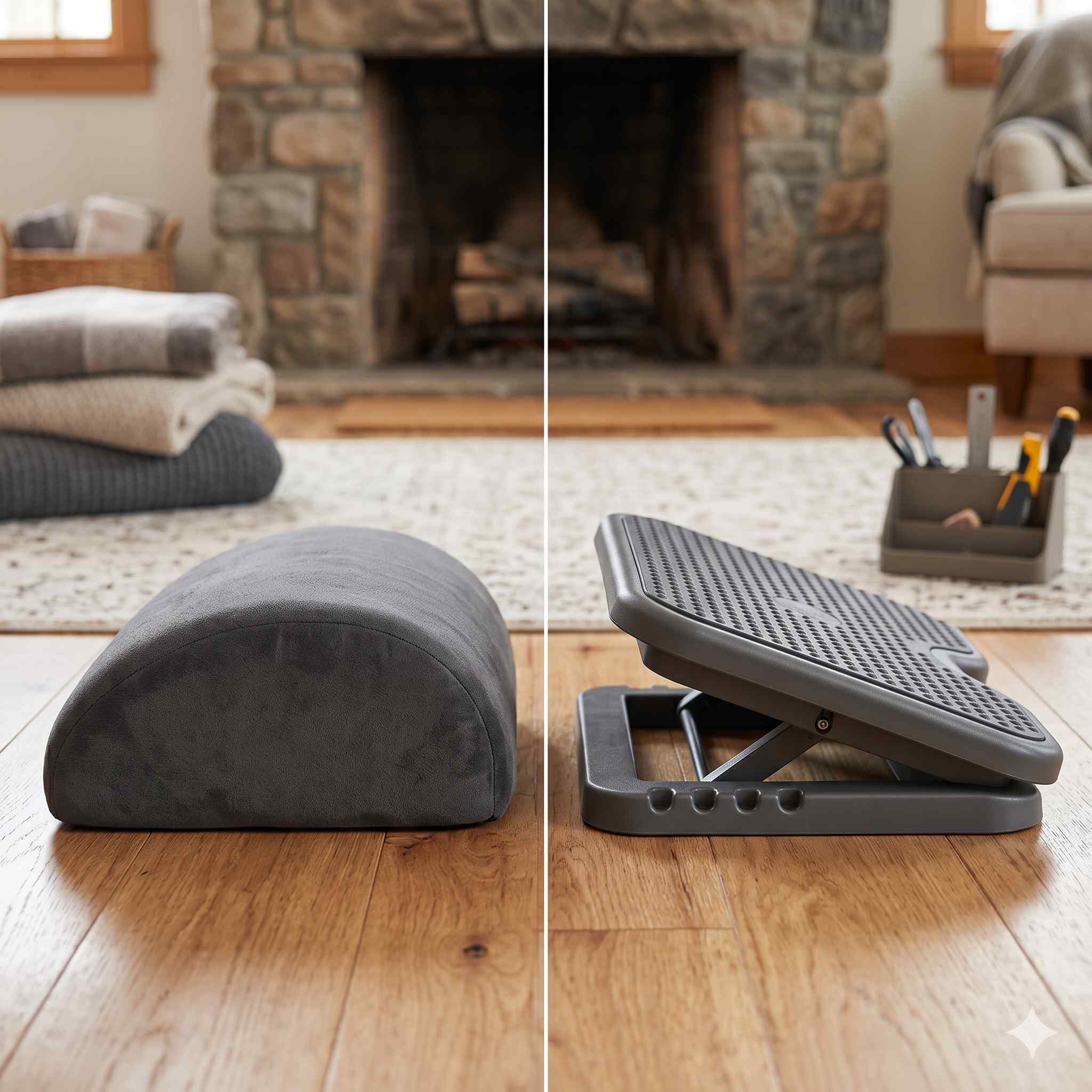
Not all footrests are built the same. Walk through any office supply section and you’ll find everything from soft, squishy foam cushions to hard-shelled plastic platforms with knobs and levers. They all promise to make your workday more comfortable, but they go about it in very different ways.
So which material actually does a better job? The answer depends on how you sit, what you wear on your feet, and what you’re actually asking a footrest to do. This article breaks down both options so you can figure out which one fits your setup before committing to a purchase.
What Is Memory Foam, and Why Do People Like It?
Memory foam is a viscoelastic material that softens with body heat and molds to the shape pressing against it. In a footrest, that means it gradually conforms to the natural contour of your feet rather than forcing your feet to sit flat on a rigid surface.
The appeal is obvious: it feels good. Memory foam is designed to conform to the natural contours of the body, providing support where it is most needed. For people who work long hours at a desk, that kind of adaptive cushioning can make a noticeable difference in how their feet and legs feel by the end of the day.
Memory foam footrests are also quieter. There are no plastic parts creaking or clicking, no adjustment mechanisms to fiddle with mid-meeting. You put it down, rest your feet on it, and that’s about it. Most models come with a removable, washable cover, which is a practical bonus if cleanliness matters to you.
The Foam Catch: Foam compresses over time and has a fixed height. If the thickness doesn’t happen to match the gap between your chair and floor, you can’t adjust it—and it will gradually flatten with heavy daily use.
How Adjustable Plastic Footrests Work
Adjustable plastic footrests take a different approach entirely. Instead of softening to fit you, they offer a firm, stable platform that you can physically reposition to match your ergonomic needs. Most models let you change the height across two to four settings, and many also allow you to tilt the platform to a specific angle.
High-density plastic footrests are lightweight, easy to clean, and moderately durable. That makes them a practical choice for shared offices, people who move between desks, or anyone who spills coffee on things regularly.
The adjustability is arguably the strongest argument in their favor. If your chair height changes, if you switch desks, or if you share your workstation with someone of a different height, a plastic footrest with multiple settings can accommodate all of that. Memory foam cannot.
Memory Foam: Molds to feet, eliminates pressure points, completely silent, ideal for bare feet or socks.
Adjustable Plastic: Custom height/angle settings, easy to wipe clean, works great with shoes, ideal for shared desks.
Comfort vs. Precision: The Real Trade-Off
This is where the comparison gets interesting. Memory foam wins on pure comfort, especially for barefoot or sock use. The give in the foam reduces pressure points and feels warm and forgiving underfoot. Adjustable plastic wins on precision. You can dial in an exact height and angle, which matters for proper ergonomic positioning.
| Feature | Memory Foam Cushion | Adjustable Plastic Platform |
|---|---|---|
| Primary Advantage | Soft, adaptive pressure relief | Precision height & angle control |
| Footwear Compatibility | Best with socks or bare feet | Best with shoes or boots |
| Adjustability | Fixed height (some flip to rock) | Multi-position height & tilt settings |
| Maintenance | Washable fabric covers | Easy wipe-clean surface |
| Long-Term Shape | Gradually compresses over time | Maintains rigid platform shape |
There is also the question of movement. Some plastic footrests include a slight rocking or pivoting mechanism that encourages subtle foot movement throughout the day. A footrest that encourages continuous subtle movement is better for circulation than one that locks your feet in place. Most memory foam options do not move, though a few models are designed to rock when flipped upside down.
Which One Lasts Longer?
Durability is not a simple comparison here. Plastic, in general, holds its shape better over time than foam. It does not compress or flatten, and it is easy to wipe clean. Quality plastic is a reasonable middle ground, but the cheapest versions will eventually crack under pressure.
Memory foam footrests can last well if they are made with higher-density foam and stored sensibly, but the material does gradually break down. How long that takes depends on daily pressure and usage patterns. A foam footrest used lightly in a home office may outlast a plastic one used heavily in a shared workspace. Conversely, a dense, well-constructed plastic footrest may easily outlast a budget foam option.
Price, Portability, and Practical Considerations
Both material types are available across a wide price range. You can find basic foam footrests for under $30 and premium adjustable plastic ones pushing well past $100. In both categories, the difference between budget and mid-range tends to matter more than the difference between the two material types.
One genuinely overlooked factor: what you wear on your feet at your desk. If you wear shoes all day, the surface texture of a plastic footrest matters less. If you prefer bare feet or socks, the softer contact of a foam footrest is a meaningful comfort upgrade, not just a preference.
Find Your Ideal Desk Footrest
Explore ergonomic footrests in memory foam and adjustable plastic to upgrade your workspace comfort.
Shop Ergonomic FootrestsSo Which Should You Choose?
Go with a memory foam footrest if:
- Comfort and pressure relief are your top priorities
- You work barefoot or in socks at home
- Your desk and chair height are consistent and fixed
- You prefer a low-maintenance, quiet, no-adjustment experience
Go with an adjustable plastic footrest if:
- You need control over exact ergonomic height and tilt angles
- You share your workstation with other people
- You routinely wear shoes or work boots at your desk
- You want an easy-to-clean, rigid platform that won’t compress
Key Takeaways
- Memory foam molds to foot contours for superior barefoot comfort and pressure relief, but compresses over time.
- Adjustable plastic platforms offer precise height and tilt control to match exact ergonomic needs, making them ideal for shared desks.
- Footwear matters: Memory foam excels with socks and bare feet, whereas plastic platforms are built for shoes and boots.
- Plastic platforms are easier to wipe clean, whereas memory foam requires removable, washable fabric covers.
- Neither material is universally better; choose foam for adaptive comfort or plastic for adjustable precision.
Final Thoughts
Neither material is objectively better. They suit different people and different situations. Once you have a clear picture of what you need from a footrest material, reading specific brand and product reviews becomes much more useful. You will know exactly what features to weigh and what trade-offs you can live with.
References and Resources: E3 Consulting Ergonomics Blog: Do You Need a Footrest? Expert Ergonomic Guide; Worksite International: To Footrest or Not to Footrest?; Remote Office Guy: Best Ergonomic Footrest: Do You Actually Need One?; BTOD.com / The Breakroom Blog: Best Ergonomic Footrests for Back and Leg Pain Relief; Beyond the Peel: 12 Best Footrests for Ergonomic Workstations in 2026.