Heated Footrests vs. Heated Slippers: Which One Actually Works for Gamers?
Heated Footrests vs. Heated Slippers: Which One Actually Works for Gamers?
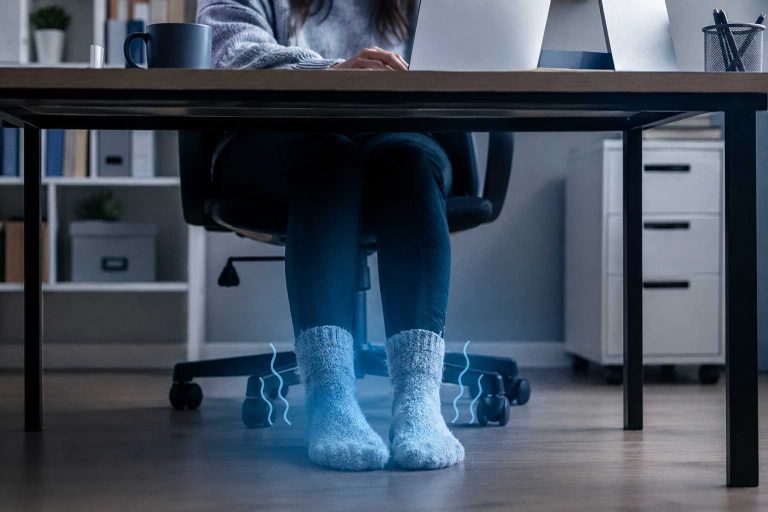
Cold feet are a real problem for gamers. Not metaphorically. When you’re three hours deep into a ranked session and your toes are going numb, it’s hard to focus on anything else.
The floor under your desk stays frigid even when the rest of the room warms up, and most of us don’t want to get up to dig out thick socks mid-game. Two options keep coming up: heated footrests and heated slippers. Both promise warm feet, both have their fans, but for gaming specifically, they’re not equally suited, and the differences matter more than you might expect.
This guide breaks down how each one performs in a real gaming setup so you can pick the right one and stop losing focus to cold feet.
Why Foot Warmth Matters More at a Gaming Desk
Most gaming rigs are built around performance: the right chair, monitor height, audio setup. Foot comfort usually gets ignored. But feet tend to get colder faster when you’re seated and stationary for long sessions, and hard floors make it worse. Laminate, tile, and concrete all pull heat away from your feet. Even with a chair mat, the cold radiates up.
Layering on thick socks helps for a while, but they slide on hard surfaces, bunch up, and can make precise footwork awkward during sim racing or flight sim setups with pedals. That’s where things get complicated, and where most gamers start googling a foot-warming solution.
Head to Head
Heated Footrests
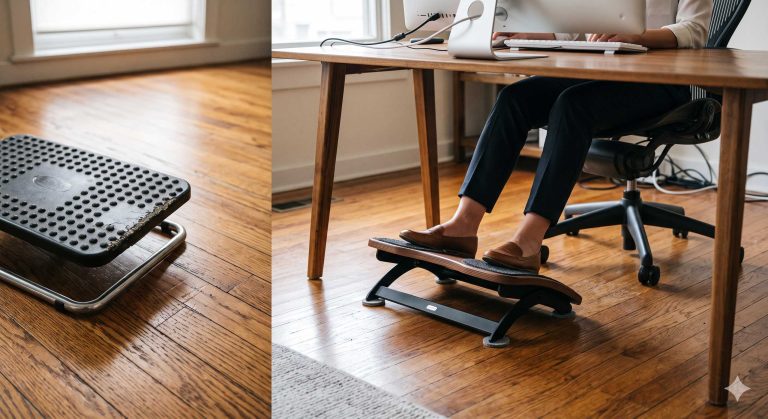
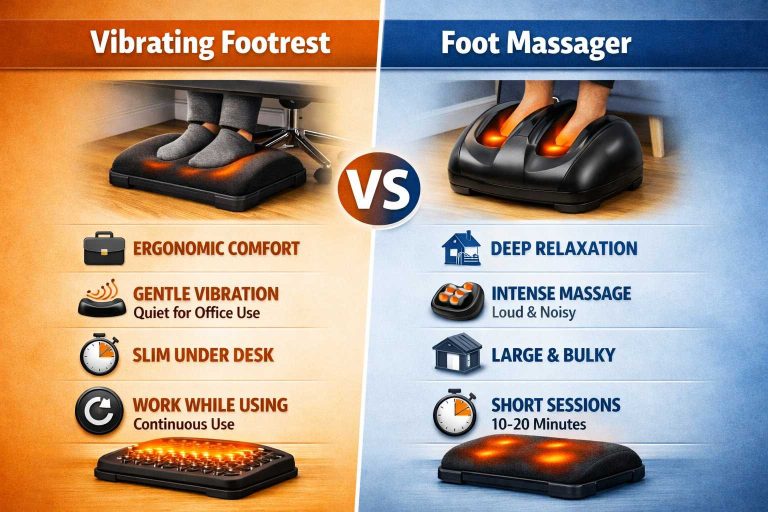
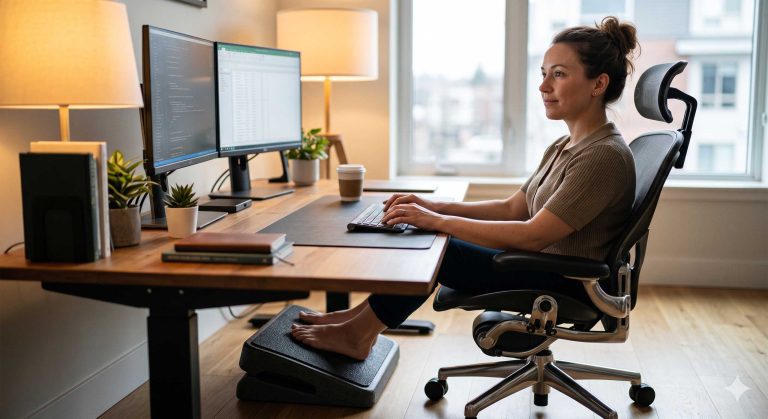
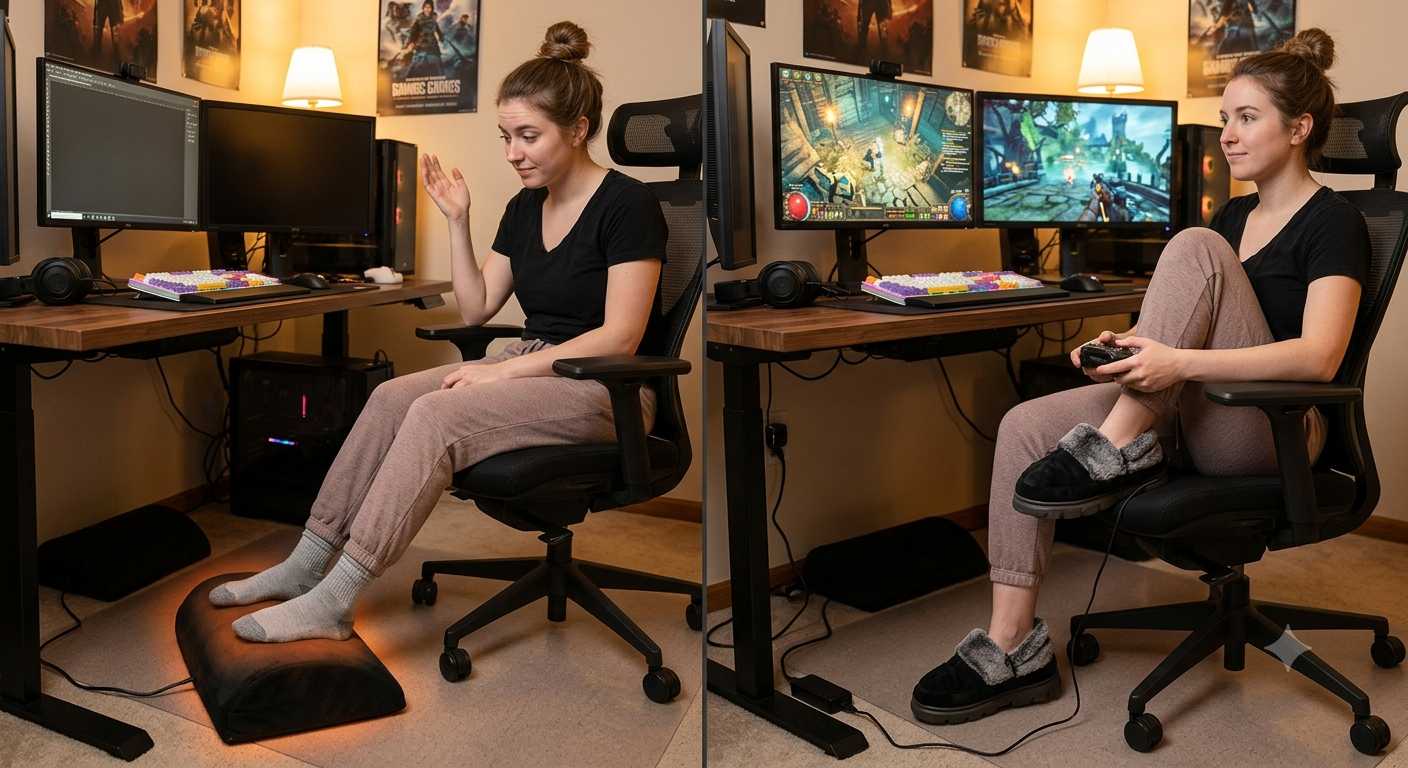
Sits flat on the floor under your desk. You plant your feet on it and it does its job quietly in the background, no cords trailing off your feet, no wearable anything. Models like Snailax and Comfier heated footrests use non-slip bases that grip the floor and stay put even when you’re repositioning constantly, pushing back in your chair, or working sim pedals. Most include adjustable heat levels, typically two or three settings, and some add massage or vibration modes.
- Hands-free once running
- Stable on hard floors, no slip risk
- Fits naturally under most gaming desks
- Wide surface warms both feet evenly
- No batteries, plugs directly into the wall
- Warmth stays behind if you leave the desk
- Takes up floor space
- Only useful while feet are on it
Heated Slippers
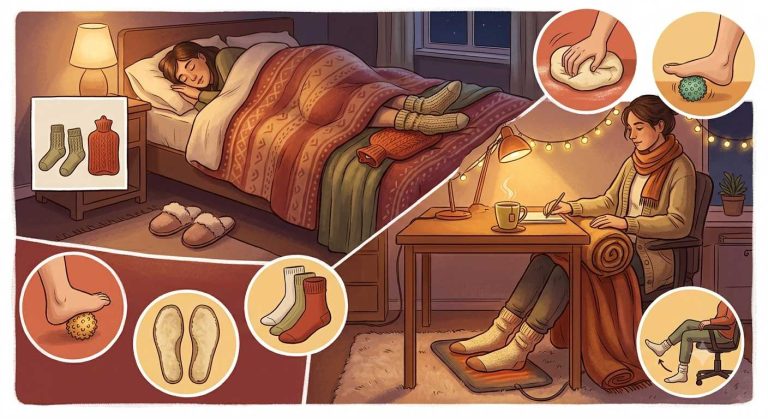
Footwear with built-in heating, usually powered by rechargeable lithium-ion batteries or USB. Comfortable, and the portability is real, you can warm up on the couch, walk to the kitchen, and come back to the desk still warm. Most battery-powered models run on 3.7V to 7.4V systems with overheat protection and auto shut-off, and battery life typically runs two to six hours depending on the heat setting.
- Great portability between locations
- No floor space used
- Solid for couch gaming or casual setups
- Can shift and slide on hard floors
- Limited battery runtime
- Corded models restrict mobility
- Thicker soles can feel awkward with pedals
For competitive or sim gaming, the complications add up. Slippers move when you move, they can shift on hard floors during repositioning, and the bulk of some models changes how your feet sit relative to the floor or pedals. If you’re running pedals for sim racing or a flight stick, the extra padding and raised sole introduces a variable most gamers would rather eliminate. Corded slippers add another issue: the cord runs from your feet and becomes a trip hazard the moment you stand up quickly.
Gaming-Specific Scenarios
| Setup | Better Fit |
|---|---|
| Sim racing or flight sim with pedals | Heated footrest, keeps feet in natural position without moving underfoot |
| Long PC session, standard desk | Heated footrest, set it and forget it |
| Couch gaming, console or handheld | Heated slippers, no desk or floor mat needed |
| Portable gaming (travel, bedroom setups) | Heated slippers, no surface to plug into needed |
Things to Look for in Either Option
- For heated footrests A non-slip base, adjustable heat settings, and a surface large enough for however you naturally hold your feet while gaming. Memory foam or plush covers add comfort for longer sessions.
- For heated slippers At least two heat settings, a rechargeable battery with 4+ hour runtime, and grippy soles. Avoid corded models unless your setup makes a short cord workable.
The Bottom Line
For most desk gamers, a heated footrest is the cleaner solution. It stays put, doesn’t interfere with how your feet naturally sit, and runs hands-free throughout the session. You set it up once and stop thinking about it, exactly what you want during a long play session.
Heated slippers fill a different niche. They’re genuinely useful for portable warmth, couch gaming, or anyone who moves between rooms frequently. They just aren’t built around the demands of a competitive or sim gaming setup. Pick based on your actual setup. Both options work. One just works better when your feet are on the floor in front of a desk.
Quick Questions
Do heated slippers work for sim racing with pedals?
Not ideally. The extra padding and raised sole can change how your foot contacts the pedal, so a heated footrest tends to work better for pedal-based setups.
How long do heated slippers stay warm?
Battery life typically runs two to six hours depending on the heat setting used.
Is a heated footrest better for couch gaming?
Not usually. Heated slippers suit couch or console gaming better, since there’s no desk or floor mat involved and portability matters more.
References & Resources
- Comfier CF-5420 Heated Footrest product specifications. comfier.com
- Snailax Heated Footrest with Vibration Massage specifications. Amazon.com product listing.
- Toasty Toes Ergonomic Heated Footrest. cozywinters.com
- “Best Under-Desk Foot Rests for Gaming.” Dot Esports, April 2022. dotesports.com
- “Heated Slipper Types and Safety Guide.” The Warming Store Blog. blog.thewarmingstore.com
- “How to Choose the Best Heated Slippers for Comfort and Safety.” Alibaba Sports Surge, February 2026. sportssurge.alibaba.com
- “Why Heated Slippers Are a Must-Have for Winter.” GoKozyWear, February 2025. gokozywear.com