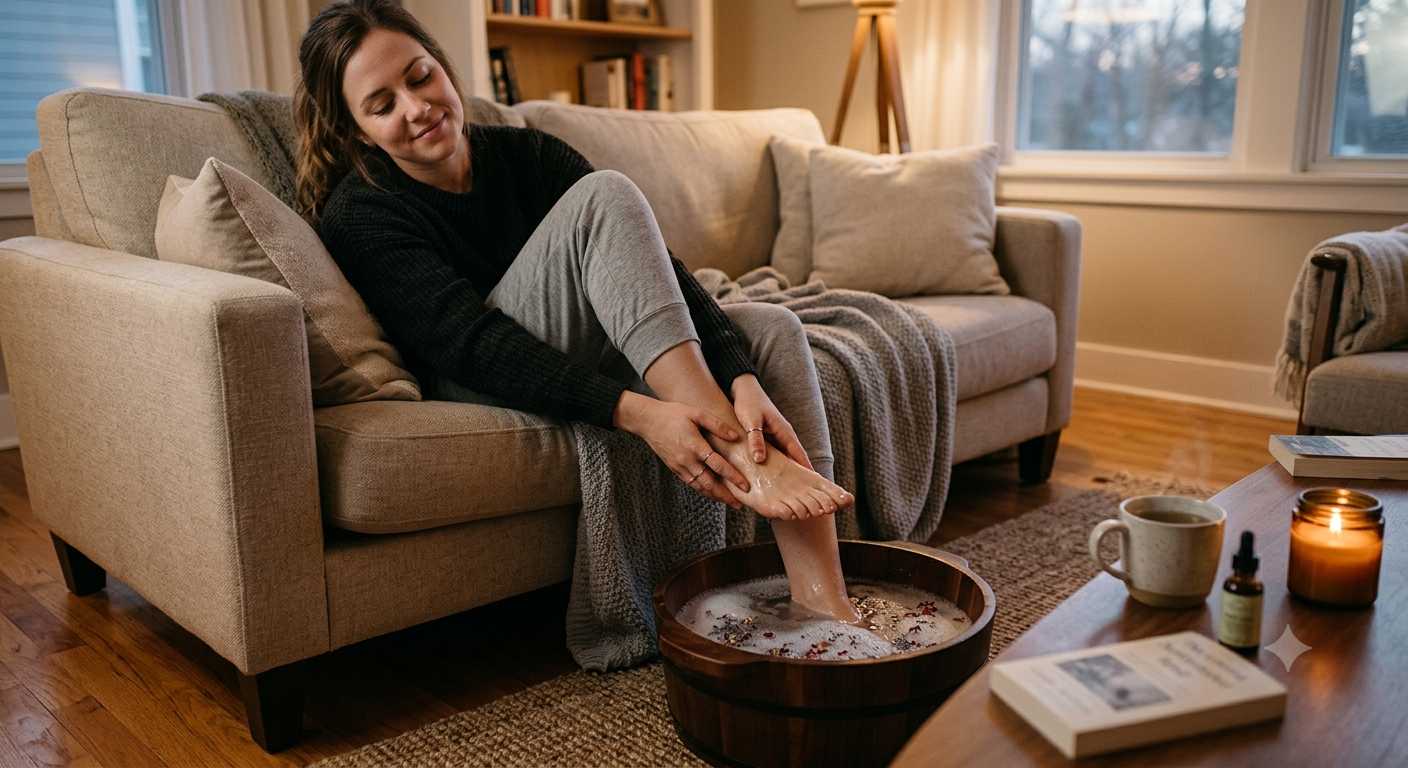
Anyone who’s spent a full shift on their feet knows the particular kind of relief that comes from finally sitting down. But not all relaxation methods are equally effective. Some genuinely help your feet recover, while others just feel nice for a few minutes without doing much for the underlying fatigue. Here’s a practical look at what actually works.
Elevate Before Anything Else
This is one of the simplest and most consistently recommended steps. Raising your feet above the level of your heart for about 10 to 15 minutes helps fluid that’s pooled in your lower legs and feet drain back toward your torso, which can noticeably reduce that heavy, swollen feeling. Lying on the floor with your feet propped up on a couch or bed works well, and it’s a good first step before doing anything more active.
Gentle Movement Helps More Than You’d Think
It might seem counterintuitive after a day of standing, but a bit of gentle movement, like a short walk around your home, can actually help. Standing still for hours slows the natural pumping action your calf muscles provide to help circulate blood back up your legs. A few minutes of easy walking helps restart that process, which can ease some of the heaviness that builds up from prolonged standing.
Warm Water or a Foot Soak
A basin of warm water, sometimes with Epsom salt added, is a commonly recommended way to relax tired feet. The warmth helps relax tight muscles, similar to how a warm shower can ease tension elsewhere in the body. One note worth mentioning here: podiatric sources generally advise against foot soaks if you have any open wounds, ingrown toenails, or active foot infections, so it’s worth skipping this step if that applies to you.
Massage, With or Without a Tool
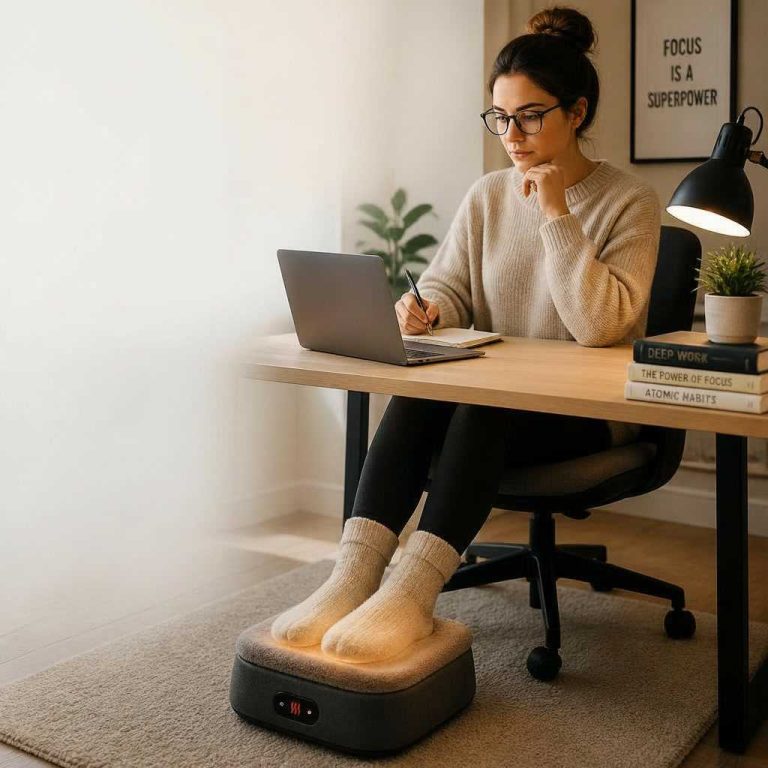
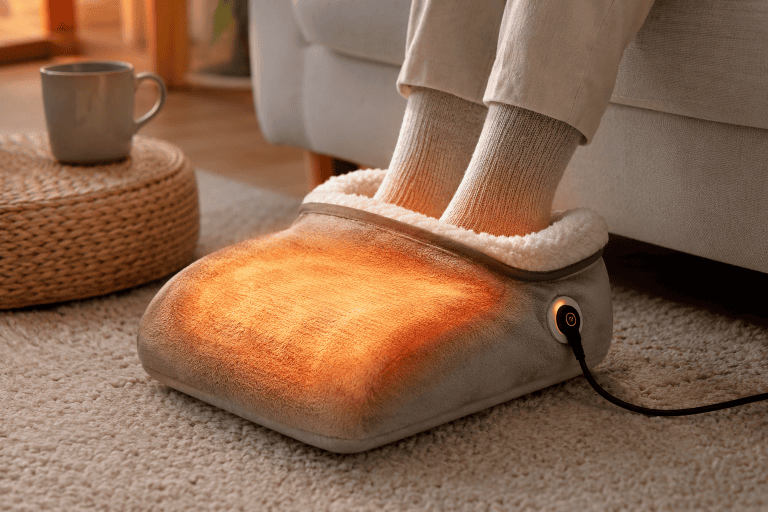
Massaging your feet, whether with your hands, a tennis ball rolled under your foot, or a dedicated foot massager, is frequently mentioned as an effective way to relieve the muscle tension and soreness that builds up from a day of standing. A foot massager with a heat function adds warmth to the kneading action, which many people find enhances the relaxing effect compared to massage alone.
If you’re using a foot massager regularly after long days, starting with a lower intensity setting and paying attention to how your feet respond is a reasonable approach, particularly if you’re new to using one.
Stretching Before You’re Fully Done for the Day
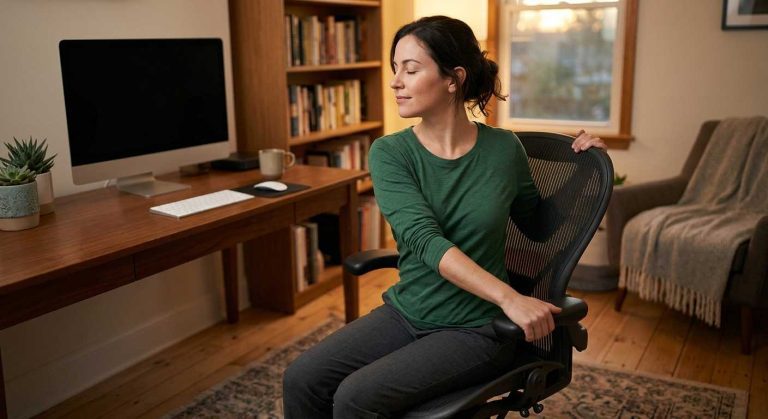
A few minutes of stretching, particularly for your calves and the bottoms of your feet, can help loosen muscles that have been working continuously all day. A simple calf stretch, standing with the balls of your feet on a step and gently dropping your heels, or pulling your toes toward you while seated, are both commonly recommended options that don’t require any equipment.
Compression Socks for Ongoing Relief
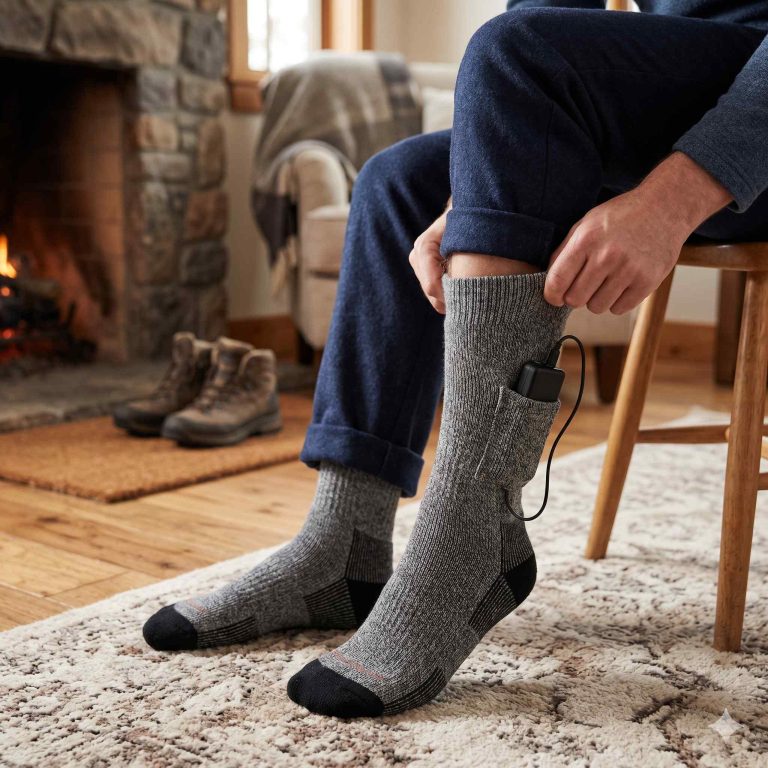
If foot and leg heaviness is a regular occurrence for you, compression socks are worth considering. They exert gentle, consistent pressure that helps blood flow back up your legs, and reduces swelling – and that tired, heavy feeling – over time. Non-medical compression socks are widely available without a prescription and typically it is recommended to start off at a lower compression level and progress to a higher level.
Building a Realistic Routine
The most effective approach usually combines a few of these methods rather than relying on just one. A reasonable routine might look like this: elevate your feet for fifteen minutes right after a long day, follow with a short massage session using heat, and finish with a couple of calf stretches before bed. This kind of consistent, layered approach tends to work better over time than any single method used alone.
Final Thoughts
Relaxing, tired feet after standing all day comes down to a combination of elevation, gentle movement, warmth, and massage. None of these require much time or equipment, and combining a few of them tends to offer more relief than relying on just one. If foot discomfort is a near-daily occurrence despite these steps, it’s worth mentioning to a podiatrist, since ongoing pain sometimes points to something worth addressing directly.
References:
- Cleveland Clinic, how to stop foot pain from standing: https://health.clevelandclinic.org/how-to-stop-foot-pain-from-standing
- Restore Foot & Ankle Specialists, tips to prevent foot fatigue and swelling: https://www.restorefoot.com/post/standing-all-day-tips-to-prevent-foot-fatigue-and-swelling