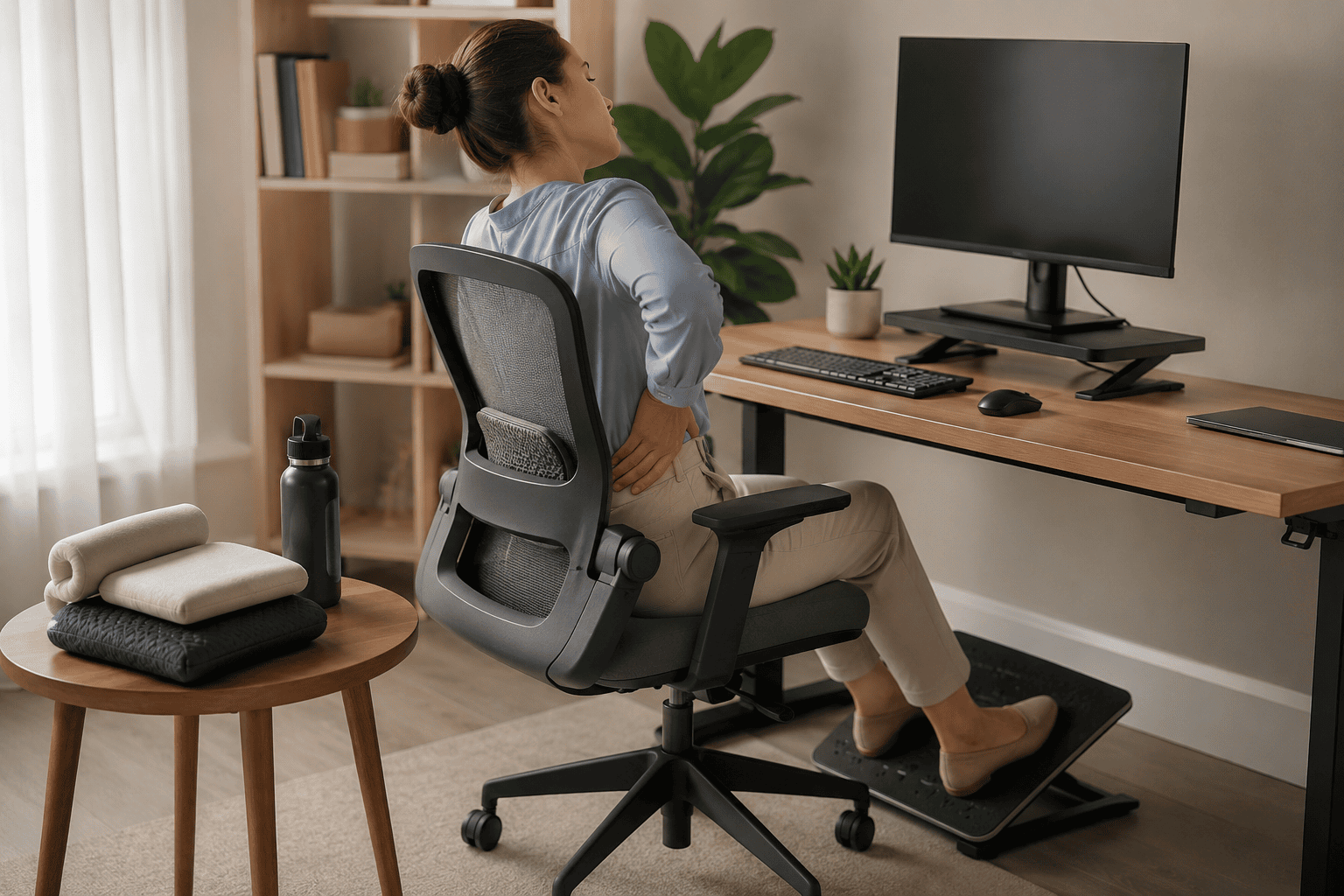
A desk job doesn’t sound physically demanding but ask anyone who’s done one for a few years and they’ll tell you their back doesn’t agree. All that adds up: long hours in a chair, repetitive posture and the general lack of movement. The good news is there’s a lot you can do about it and most of it doesn’t require a major lifestyle change.
This article covers the most practical solutions for desk job back discomfort, starting with your setup and ending with a few tools worth considering.
Start With Your Chair and Desk Setup
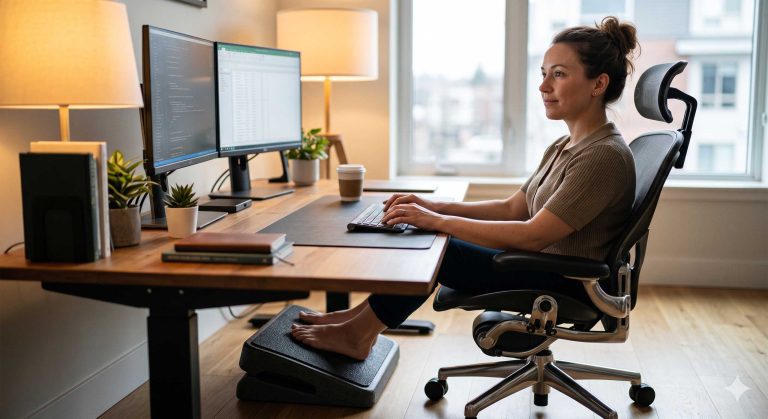
Before anything else, it helps to rule out whether your setup is working against you. A chair without lower back support, a desk that’s too high or too low, or a monitor positioned awkwardly can all contribute to ongoing tightness.
A few quick checks:
- Your elbows should sit close to a 90-degree angle when typing
- Your monitor top should be roughly at eye level, so you’re not tilting your head down all day
- Your lower back should have some support, whether built into the chair or added with a cushion
These fixes cost little to nothing and often make a bigger difference than people expect.
Build Movement Into Your Day
Even a well-set-up desk can’t fully substitute for movement. Your back muscles need to move to stay loose. Try setting a recurring reminder to stand up every 30 to 45 minutes, even just to refill your water or walk to another room.
If you’re on a lot of calls, consider taking a few of them standing or walking, especially ones where you don’t need to be looking at a screen.
Stretching That Fits Into a Workday
You don’t need a full routine to see benefits. A few minutes here and there adds up over a week.
- Seated spinal twists between meetings
- A standing forward fold before lunch
- Shoulder rolls and gentle neck stretches while waiting for something to load
None of these need special equipment or a lot of time, which is exactly why they’re easier to stick with than a longer routine you keep putting off.
Where a Heated Massage Cushion Comes In
For a lot of desk workers, the missing piece is something that targets the back directly, especially at the end of a long day. A back massager with heat that straps onto your existing chair can be a simple way to add that without buying a separate piece of furniture.
The heat helps relax tight muscles first, and the massage nodes or vibration work more effectively once that happens. Many models let you adjust intensity and target specific areas like the lower back or shoulders, so you can tailor it to where you’re holding the most tension.
If you’re shopping for one, look at coverage area, adjustable strap size for your chair, and whether it offers separate heat and massage controls, since some days you might just want the warmth.
Final Thoughts
Desk job back discomfort is common, but it’s rarely something you have to just live with. A better chair setup, small movement habits built into your day, occasional stretching, and a heated massage cushion for those tougher days can all work together. Try adjusting your setup first, then layer in the rest based on what your back responds to best.
References:
- Occupational Safety and Health Administration (OSHA), computer workstations guide: https://www.osha.gov/etools/computer-workstations