Do Warm Feet Actually Help You Focus? Here’s What the Research Says
Most people never connect foot temperature to how well they think. But if you’ve ever lost your thread mid-morning or re-read the same paragraph twice, the culprit might be quietly freezing inside your shoes.
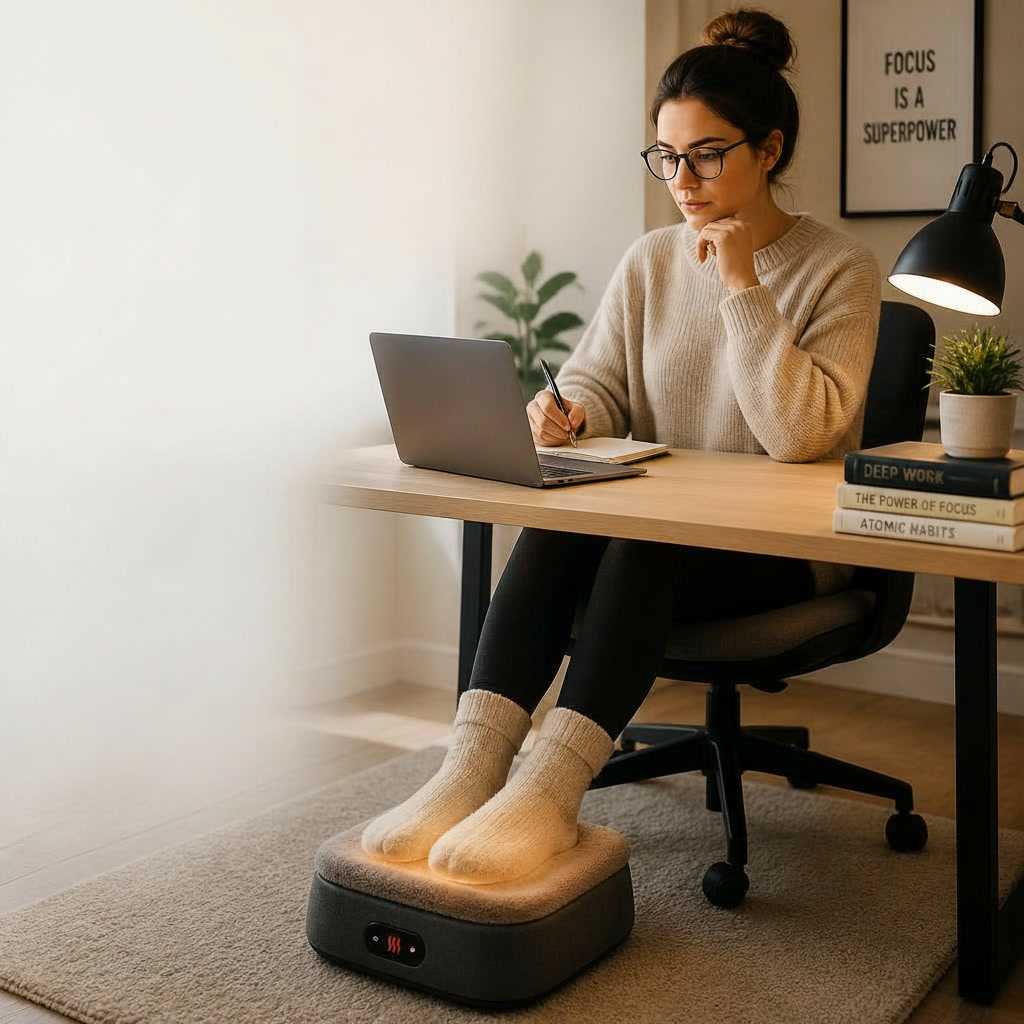
You sit down at your desk, settle in, open a few tabs, and somewhere around mid-morning you start losing your thread. Thoughts scatter. You re-read the same paragraph twice. Maybe it’s the coffee wearing off, or maybe your feet have been quietly freezing inside your shoes for the past two hours.
The link between keeping feet warm and focus is more real than it sounds. And once you understand the basic mechanics behind it, it’s hard to ignore.
Cold Feet Create More Than Just Discomfort
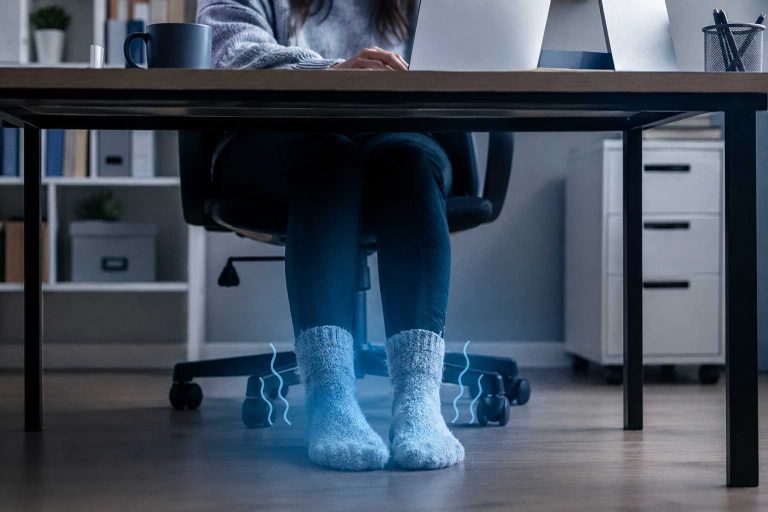
When your feet get cold, your body doesn’t just sit there and accept it. It responds. Blood vessels in the extremities constrict to protect your core temperature, circulation slows, and your nervous system quietly shifts into a mild stress state.
That last part matters for anyone trying to do focused work. Cold feet trigger a low-level stress response as your body works to warm them up, which can contribute to overall anxiety throughout the day. That’s not a dramatic reaction — it’s subtle. But subtle is exactly the kind of thing that chips away at sustained attention.
The Distraction Theory: Cold discomfort demands central attention resources, drawing focus away from your primary task. Thermal discomfort caused by cold exposure can distract you and noticeably reduce your reaction time and precision.
In other words, even if you don’t consciously think “my feet are cold right now,” part of your brain is handling it anyway. And that part isn’t available for the report you’re trying to write.
What Happens to Cognitive Performance in the Cold?
The research on cold exposure and cognitive function is fairly consistent. A recent literature review found that a single acute exposure to cold under controlled laboratory conditions induces cognitive impairment, with attention, processing speed, memory, and executive function being the most affected cognitive domains.
One particularly relevant study published in Scientific Reports tested participants at different temperatures and found that the data supports the distraction theory in the decline of cognitive performance, even during short exposure to cold temperatures. Short exposure. Not hours of sitting in a freezer — just brief cold stress, the kind you might experience at a drafty desk in winter.
Another review noted something interesting about the mechanism: cold conditions alter the concentration of central catecholamines like dopamine and norepinephrine, which may have a detrimental effect on cognition, as brain regions such as the prefrontal cortex rely on these neurotransmitters for normal function. The prefrontal cortex handles planning, attention, and decision-making — essentially the toolkit for knowledge work.
Cold stress decreases processing speed and reaction time during complex knowledge tasks.
Impaired prefrontal cortex neurotransmitters directly affect planning and decision-making.
Why Feet Specifically?
Your feet are unusually influential when it comes to thermal regulation. Like the hands, feet have a large surface area and specialized blood vessels that can be opened up to pass high volumes of blood, allowing heat to offload quickly when required. That makes them one of the body’s primary tools for managing core temperature.
Feet are at the end of the limbs, with less heat-producing muscle, which makes them prone to cooling down. They’re also often in contact with cold floors, tucked under desks with limited air movement, or stuck in shoes that don’t provide much insulation. At a desk, they’re doing none of the physical work that would normally generate warmth.
The result is that feet tend to get cold faster than other body parts during sedentary work, and they stay cold longer. For anyone spending four to eight hours a day sitting at a desk, that’s a steady, low-grade thermal drain.
The Comfort Connection: Why Warm Feet Free Up Mental Energy
There’s a practical framing here that’s easy to understand. When feet are cold and uncomfortable, part of the brain’s attention is constantly focused on that discomfort. Warm, comfortable feet eliminate this distraction, allowing for more complete focus on mental tasks. Improved circulation from foot warmth also ensures the brain receives better blood flow for cognitive function.
Think of it like background noise. If you’re working in a room with a constant low hum, you probably adapt to it. But some part of your brain is still processing it. Remove the hum, and suddenly the silence is almost startling — and focus comes a little easier. Cold feet work similarly. They’re a persistent background signal that competes for cognitive bandwidth.
Warming your feet doesn’t give you a productivity superpower. But it does remove something that was quietly working against you.
Practical Ways to Keep Feet Warm at Your Desk
The good news is that this is one of the easier problems to solve. A few options worth considering:
| Solution | How It Works | Ideal Scenario |
|---|---|---|
| Thermal Socks | Wool and non-conducting materials trap body heat rather than pulling it away. | Everyday desk wear |
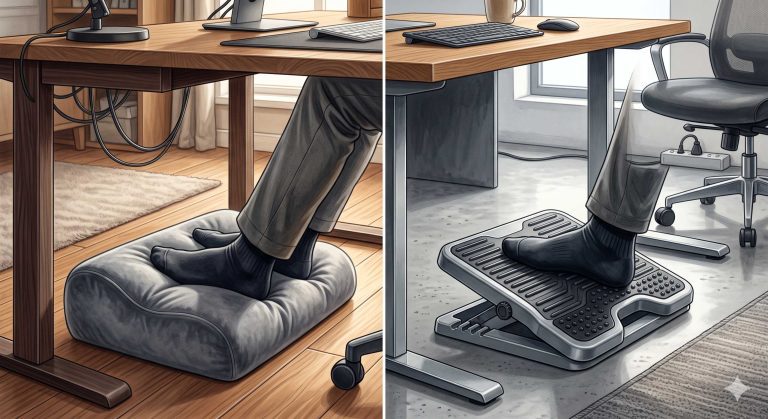
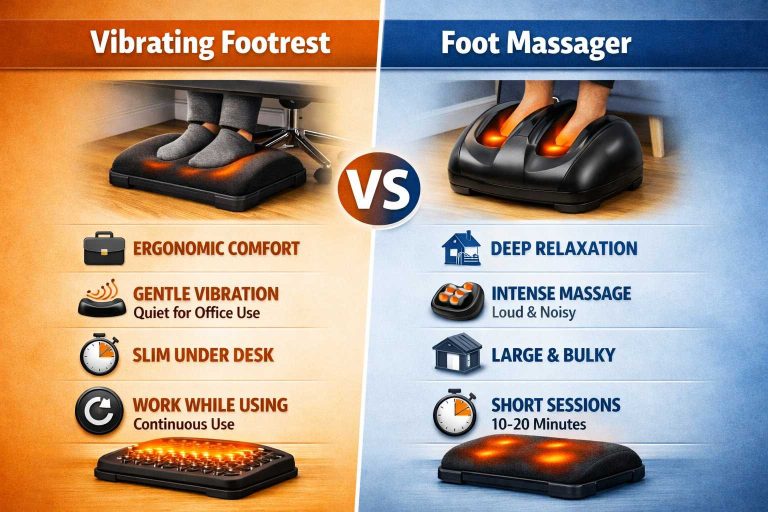
| Heated Footrest | Maintains consistent active warmth under your desk automatically. | Cooler months & AC offices |
| Small Rug or Mat | Adds meaningful insulation between your feet and cold hard flooring. | Tile or hardwood floors |
| Draft Management | Reroutes airflow away from floor-level vents and drafty windows. | Exterior walls & drafty rooms |
None of these solutions are complex. The point is just to be deliberate about it, because most people aren’t.
Upgrade Your Desk Comfort
Explore under-desk solutions and heated footrests designed to maintain optimal foot warmth and daily focus.
Shop Warm Desk AccessoriesKey Takeaways
- Cold feet trigger a low-level stress response that drains cognitive energy and induces mental fatigue.
- Thermal discomfort competes for central attention resources, reducing processing speed and memory recall.
- Cold conditions alter dopamine and norepinephrine in the prefrontal cortex, directly affecting planning and focus.
- Feet cool rapidly during sedentary desk work due to high surface area, distance from the core, and contact with cold floors.
- Simple fixes like wool socks, floor mats, or a heated footrest remove invisible background distraction.
Wrapping Up
Foot warmth and mental focus aren’t the most obvious pair, but the connection is legitimate. Cold feet trigger a mild stress response, compete for your attention, and may affect the brain chemistry involved in concentration and decision-making. Warm feet, on the other hand, allow your body to settle into a calm, comfortable state where focused work becomes easier.
If you often feel unfocused or mentally foggy during desk work, it’s worth ruling out the simple stuff first. Check whether your feet are actually warm. The fix might be sitting right there on your feet.
Further reading: Scientific Reports research on cold stress and distraction theory; academic reviews on cold exposure and central catecholamine concentrations in cognitive function.