If your job keeps you on your feet for hours at a time, whether that’s retail, healthcare, hospitality, or anything similar, you already know how much a long shift can take out of your feet. Here’s a practical routine for soothing them once you’re finally home.
Understand What Your Feet Just Went Through
A long shift on your feet means constant muscle engagement to maintain your balance, repeated impact if you’re walking or standing on hard floors, and slowed circulation from being upright for long stretches without much rest. Knowing this helps explain why soreness after a shift isn’t just in your head. It’s the direct result of hours of physical strain that your feet don’t typically get during a normal day of less standing.
Start With Your Shoes
Before doing anything else, take your shoes off as soon as you reasonably can. This sounds obvious but giving your feet a chance to breathe and move freely after being confined in supportive but restrictive footwear for hours is a genuinely helpful first step, even before you get to any active relief methods.
Elevate to Reduce Swelling
Propping your feet up above heart level for 10 to 15 minutes helps drain fluid that’s built up over your shift, particularly if you noticed any mild swelling by the end of it. This is a quick, low-effort step that makes a real difference before moving on to anything more involved.
Use Heat to Loosen Tight Muscles
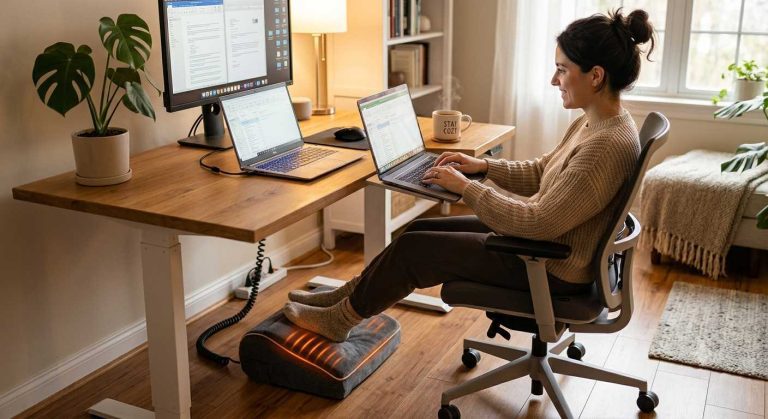
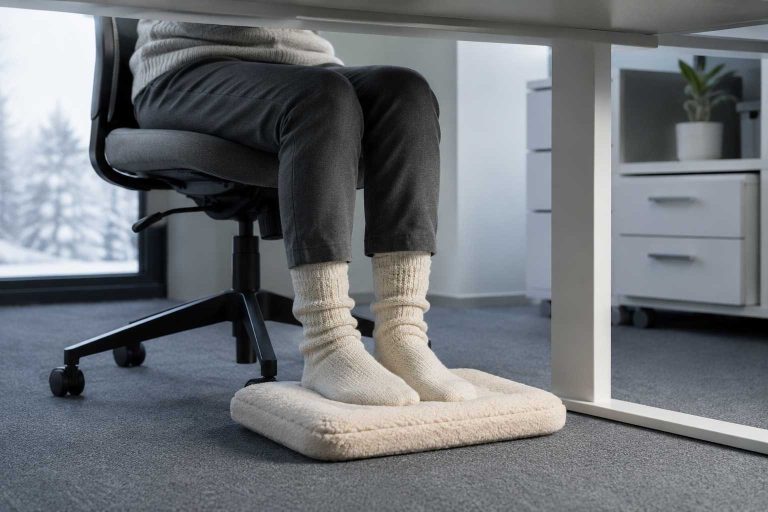
Heat is commonly recommended for soothing muscles that have been working hard for hours. A warm foot soak, a heating pad, or a foot massager with a built-in heat function are all reasonable options here. The warmth helps relax muscles that have tightened up over the course of a long shift, which can make the next step, massage, feel more effective.
Massage the Areas That Took the Most Strain
During a long shift, your arches and heels take the brunt of the impact and so these areas tend to benefit most from direct massage. You may be able to relax the built-up tension by applying gentle pressure with your thumbs along your arch or with a foot massager that hits those specific areas. If you’re using a device with adjustable intensity, starting on a lower setting after a particularly long or hard shift is a reasonable approach, since your feet may be more sensitive than usual right after hours of standing or walking.
Stretch Before Bed
A few minutes of stretching helps close out the recovery process. Calf stretches and gentle toe pulls, holding each for 20 to 30 seconds, can help loosen muscles and tendons that stayed engaged throughout your shift, which may help reduce stiffness the next morning.
Building This Into a Regular Routine
If long shifts are a regular part of your schedule, doing some version of this routine consistently, rather than only when your feet feel especially bad, tends to help more over time. Elevation, heat, massage, and stretching used together after each shift can help prevent soreness from building up cumulatively over a stretch of consecutive workdays.
When to Get It Checked
If soreness after shifts starts getting worse over time rather than resolving with rest, or if you notice sharp pain, numbness, or swelling that doesn’t go down overnight, it’s worth having a podiatrist take a look. Sometimes, persistent symptoms like these can be a sign of something that needs more than home care to treat it.
Final Thoughts
Soothing sore feet after a long shift comes down to a fairly simple sequence: get out of your shoes, elevate, apply heat, massage the areas that took the most strain, and finish with some gentle stretching. Doing this consistently after demanding shifts tends to help more than waiting until soreness becomes a bigger problem.
References:
- Cleveland Clinic, how to stop foot pain from standing: https://health.clevelandclinic.org/how-to-stop-foot-pain-from-standing
- Austin Foot and Ankle Specialists, foot pain from standing all day: https://www.austinfootandankle.com/library/austin-podiatrist-explains-foot-pain-from-standing-all-day.cfm