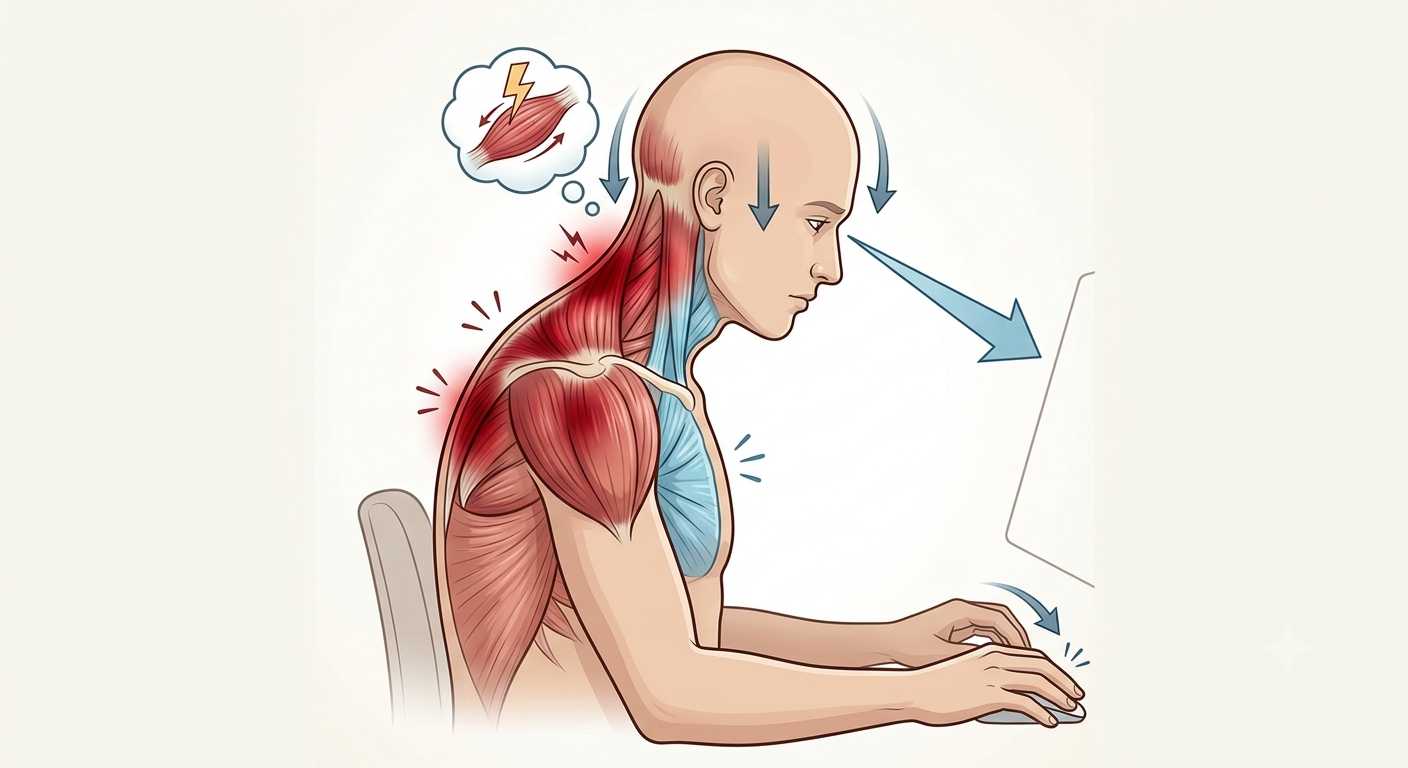
If your neck and shoulders feel noticeably tighter by the end of a workday spent at a screen, there’s a clear physical reason behind it, not just a vague sense of stress. Here’s a closer look at what’s actually happening and why it builds up the way it does.
Your Head Position Changes the Workload on Your Neck
The core issue comes down to posture. When you look at a screen, especially one positioned lower than eye level, your head tends to tilt forward rather than staying stacked neutrally over your shoulders. According to research published in Surgical Technology International, this forward tilt significantly increases the effective load placed on your cervical spine, with estimates showing the load can roughly double or more compared to a neutral head position, depending on the angle.
Your neck and upper shoulder muscles are the ones doing the work of holding your head up against that increased load. The more forward your head sits, and the longer it stays there, the harder those muscles have to work just to keep you upright.
Static Posture Adds to the Problem
Beyond the angle of your head, staying in the same position for extended periods, without much movement, compounds the issue. Muscles that stay contracted in a fixed position for a long time, rather than moving through a natural range of motion, tend to accumulate tension more than muscles that get regular movement throughout the day. This is part of why a single long stretch of focused screen work, like a two hour block without a break, often leaves you feeling tighter than the same total time spent working with more frequent breaks.
The Muscles Most Affected
A few specific muscle groups tend to bear the brunt of this. The upper trapezius, which runs across the top of your shoulders and up into your neck, is one of the most commonly affected areas. The muscles at the base of your skull, sometimes grouped as the suboccipital muscles, also tend to tighten with sustained forward head posture, which is part of why tension headaches often seem to start at the back of the head and work forward.
Stress Can Compound the Physical Strain
It’s also worth mentioning that mental stress tends to show up physically in the shoulders and neck for a lot of people, sometimes through subtle habits like hunching the shoulders up toward the ears without realizing it. If your screen time overlaps with a demanding or stressful workday, the physical strain from posture and the muscular tension from stress can layer on top of each other, which may explain why some days feel noticeably worse than others even with a similar amount of screen time.
What Tends to Ease the Tightness
A few approaches consistently show up in guidance for reducing this kind of tension:
- Adjusting your screen height so your eyes meet the top third of the screen without tilting your head down
- Taking short breaks every 30 to 45 minutes to move your neck and shoulders through their natural range of motion
- Gentle stretching, like slowly turning your head side to side or tilting it toward each shoulder
- Heat and massage applied to the affected areas, which can help relax muscles that have been holding tension for hours
A neck and shoulder massager with heat combines the last two of these into a single, low-effort routine, which some people find easier to actually stick with compared to remembering to stretch throughout the day.
Final Thoughts
Tight neck and shoulders after a day at a screen come down to a combination of forward head posture increasing the load on your cervical spine and staying in a static position for extended periods. Adjusting your screen height, moving more throughout the day, and using heat or massage on tight areas are all reasonable, well-supported ways to manage this common, familiar end-of-day feeling.
References:
- Spine-health, forward head posture’s effect on the cervical spine: https://www.spine-health.com/conditions/neck-pain/forward-head-postures-effect-cervical-spine
- Cleveland Clinic, repetitive strain injury overview: https://my.clevelandclinic.org/health/diseases/17424-repetitive-strain-injury