It’s a fairly common observation. Neck and shoulder tension feels worse on days spent working from a kitchen table or couch compared to days at a proper office desk. There’s a reasonably clear explanation for why this happens, and it mostly comes down to setup rather than anything about home work itself.
Home Workstations Are Often Improvised
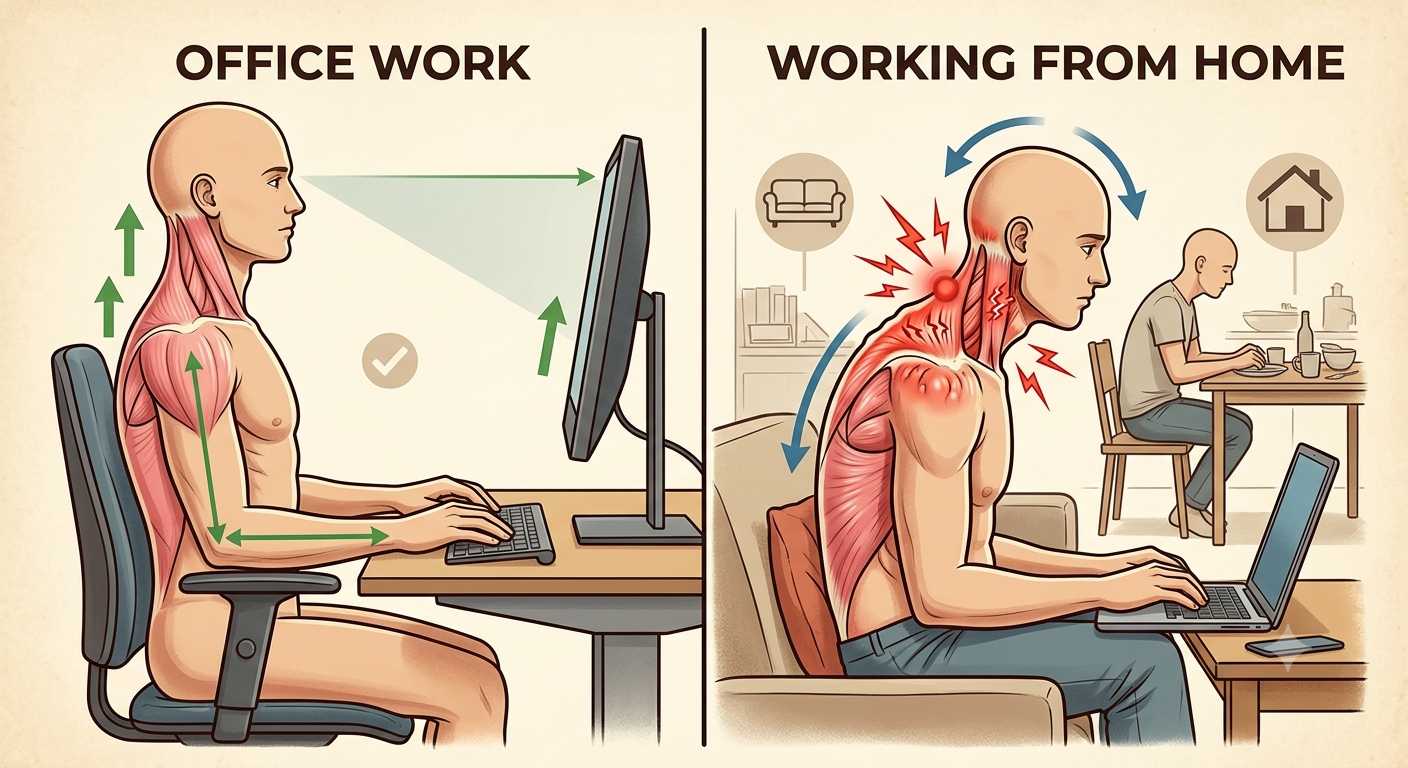
Office desks, even basic ones, are usually built with some intention around desk height, monitor placement, and seating. Home setups are frequently more improvised: a laptop on a kitchen table, a dining chair without much back support, or working from a couch with a laptop balanced on your knees. None of these are inherently wrong for occasional use, but they tend to encourage exactly the kind of forward head posture that places extra strain on your cervical spine.
Laptop Screens Sit Lower Than Monitors
This is one of the more direct contributors. A laptop screen, especially when placed flat on a table, sits considerably lower than a properly positioned external monitor. This encourages you to look down and forward at the screen rather than keeping your head in a more neutral position, which, according to postural research, meaningfully increases the effective load on your neck the further forward your head drifts.
Less Natural Movement Throughout the Day
Office days often involve a certain amount of built in movement: walking to a meeting room, grabbing coffee from a shared kitchen, or simply changing rooms between tasks. Home workdays can sometimes involve far less of this, especially if your setup is compact and everything you need is within arm’s reach. Since static, unchanging posture tends to compound neck and shoulder tension more than posture that’s regularly broken up by movement, this reduced movement can make home days feel more taxing on your neck even with similar total screen time.
Comfortable Furniture Isn’t Always Supportive Furniture
Couches and dining chairs are often chosen for comfort in a general sense, but they don’t always provide the kind of back and neck support that helps maintain a neutral head position during focused work. A soft couch, for example, might feel relaxing initially but often encourages slouching over time, which shifts your head further forward relative to your shoulders.
What Helps on Home Working Days
A few adjustments can meaningfully reduce this effect without requiring a full office setup:
- Raising your laptop with a stand or a stack of books, and using a separate keyboard and mouse, so the screen sits closer to eye level
- Choosing a chair with some back support over a couch or overly soft seating for extended work sessions
- Deliberately building in short walks or movement breaks, since home days often lack the natural movement an office day provides
- Using heat or massage on your neck and shoulders at the end of a home working day if tension has built up more than usual
A neck and shoulder massager with heat can be a useful addition specifically for home working days, since it’s easy to use right at your desk or on the couch during a break, without needing to leave your space.
Final Thoughts
Neck pain that feels worse on work from home days usually comes down to improvised setups that encourage forward head posture, combined with less natural movement throughout the day. Raising your screen, choosing more supportive seating, and building in movement breaks can go a long way toward closing that gap between home and office comfort.
References:
- Spine-health, forward head posture’s effect on the cervical spine: https://www.spine-health.com/conditions/neck-pain/forward-head-postures-effect-cervical-spine
- Mayo Clinic, office ergonomics guide: https://www.mayoclinic.org/healthy-lifestyle/adult-health/in-depth/office-ergonomics/art-20046169