Cold Feet at Night and at Your Desk: Non-Medicinal Ways to Finally Stay Warm
If you’ve ever lain in bed with icy toes, wide awake while the rest of your body is perfectly comfortable, you already know how maddening it is. Cold feet don’t stay in bed either, they follow you to your desk the next morning.
The usual go-to fixes, thick socks, heating pads, cranking up the thermostat, each have their own limitations. This guide looks at practical, non-medicinal ways to keep cold feet warm at night and while sitting, with a particular focus on heated footrests and plush fleece foot-warmer pockets as targeted, energy-efficient options worth knowing about.
Why Your Feet Get Cold in the First Place
Your body is clever about warmth. When temperatures drop, it prioritizes circulation to your core organs, heart, lungs, abdomen, and reduces blood flow to your extremities to conserve heat. That’s why your hands and feet feel the cold first, even when the rest of you is comfortable.
At night, things get a bit more involved. Your body naturally lowers its core temperature to prepare for sleep, widening blood vessels in your hands and feet to release heat. If circulation is running slow, this process doesn’t work as smoothly, and instead of your feet warming gently as you drift off, they stay cold, which can push back sleep onset or interrupt rest altogether. During the day, sitting still for hours at a desk makes things worse. Without movement to stimulate circulation, blood pools and feet stay cool, and air-conditioned offices compound the problem.
The Problem with Traditional Fixes
Heavy socks help, but they’re not always enough, especially for people whose circulation runs slow, and some people simply find them uncomfortable to sleep in.
The heating pad route is popular but comes with real caveats. Most experts and manufacturers recommend against leaving electric heating pads on overnight. Prolonged skin contact with a continuous heat source, even at moderate settings, can cause burns, and because pain response dulls during sleep, discomfort may go unnoticed until morning. There’s also the issue of electrical hazards when pads are tucked under blankets or bedding, a concentrated heat source left on for hours introduces risks most people don’t think about when they’re half-asleep and just want warm feet.
Cranking up the thermostat to heat your whole home just for the sake of warm feet is a different kind of inefficiency. You’re spending energy warming every room, every wall, and a large volume of air, most of which you don’t need to heat.
Heated Footrests: Targeted Warmth That Makes Sense
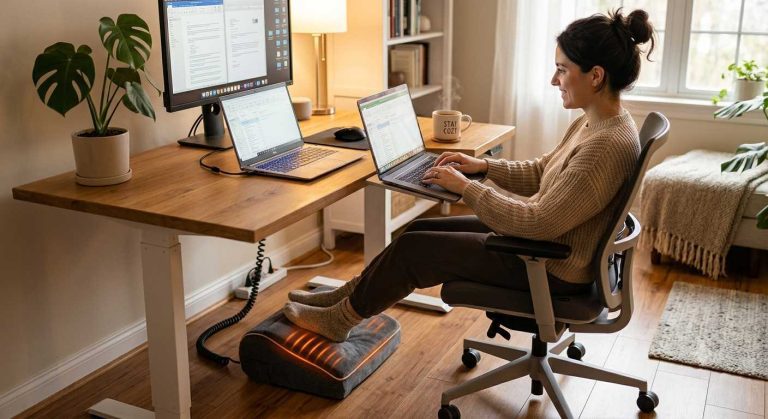
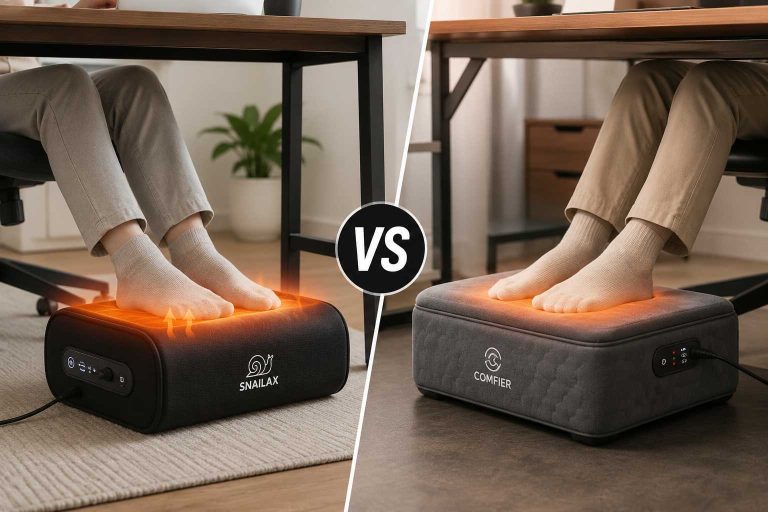
A heated footrest takes a different approach. Instead of trying to warm the whole room, it delivers gentle radiant heat directly to the two square feet where your feet actually rest.
less electricity used by a typical heated footrest (50–105 watts) compared to a standard space heater (1,000–1,500 watts), while warming exactly where your feet are instead of the whole room.
A typical space heater uses roughly ten to fifteen times more electricity than a heated footrest to accomplish something far less precise: warming a volume of air that rises to the ceiling almost immediately while your feet, sitting on the floor, stay cold. Targeted heat delivery sidesteps that problem entirely.
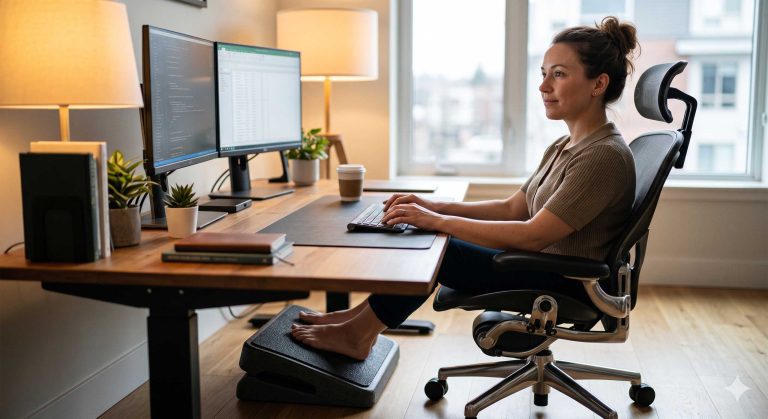
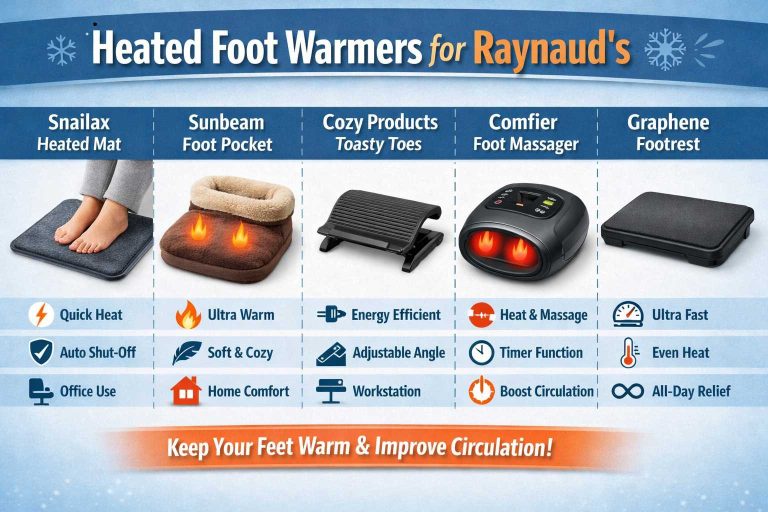
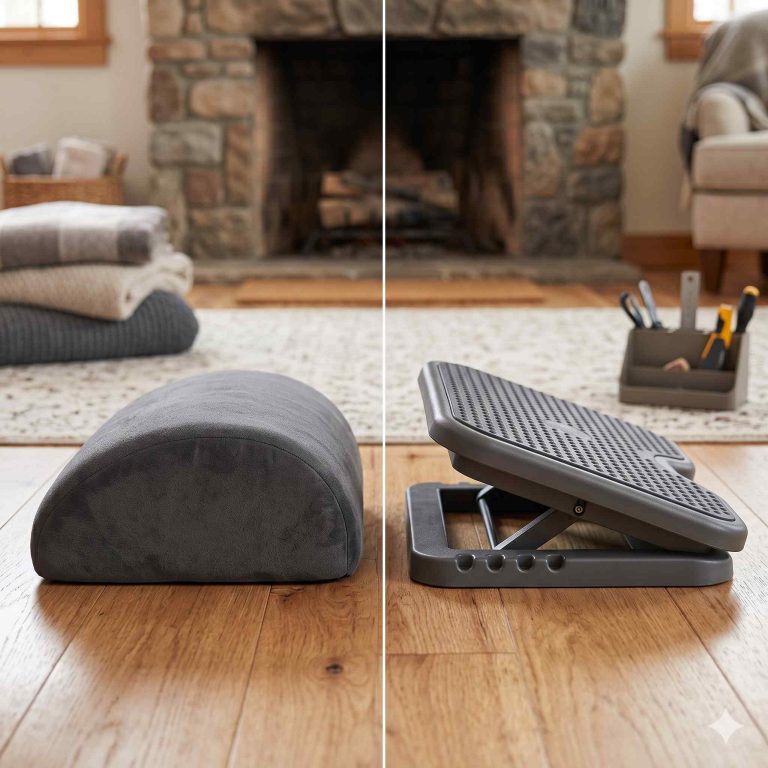
For the desk worker, a heated footrest also doubles as an ergonomic tool. Many models offer adjustable angles, which encourages a better seating posture by reducing pressure on the lower back and legs. Some include built-in auto shut-off timers, handy for an office setting and reassuring for anyone concerned about leaving a device on. Quality models are generally comfortable for extended, direct contact, since the surface temperature is designed for prolonged use rather than short heat therapy sessions.
Plush Fleece Foot-Warmer Pockets for Bedtime
For cold feet at night specifically, a plush fleece foot-warmer pocket (sometimes called a foot-warmer muff or bed foot warmer) is one of the more underrated options. These are non-electric, insulated pouches, usually lined with fleece or sherpa, that you slide your feet into while in bed.
The idea is simple: your own body heat builds up inside the pocket and stays there. A well-insulated foot pocket can warm cold feet faster than socks alone, since it traps heat more effectively around the entire foot, not just the sole. Fleece foot pockets are passive warmth, no cords, no electricity, no safety considerations, so falling asleep in one is straightforward. They’re also washable, easy to pack when traveling, and relatively inexpensive compared to electric options.
For people who want something in between, passive but with a little boost, microwavable versions using grain or gel inserts are worth considering. These warm up for a set period and then cool naturally, which removes concerns around prolonged heat exposure.
Combining Approaches for Better Results
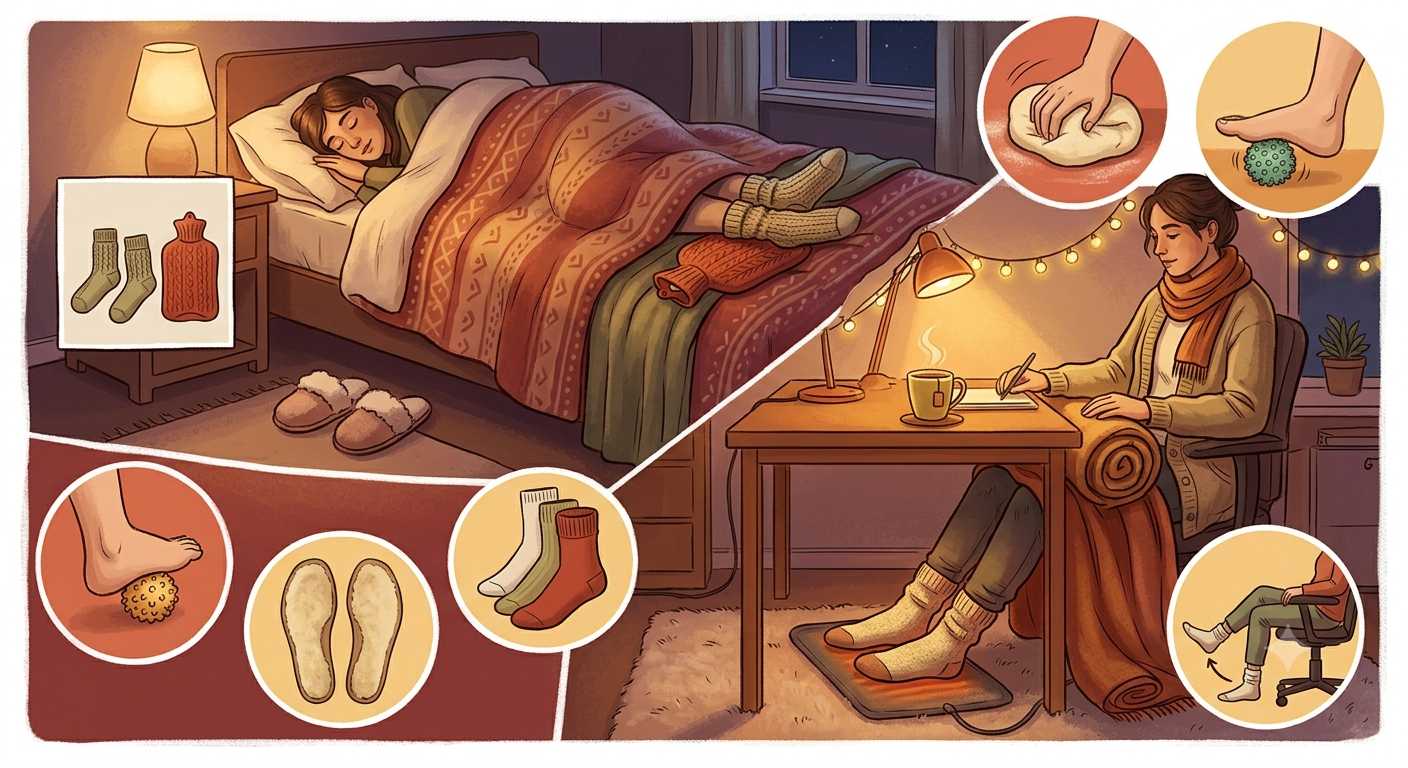
None of these options are mutually exclusive. A practical setup for someone who works from home might look like this:
- During work hours: a heated footrest under the desk, handling the sedentary sitting problem.
- At night: a plush foot-warmer pocket, addressing the sleep issue without any electricity involved.
- Before bed: a warm (not hot) foot soak for ten to fifteen minutes gets blood moving to the feet ahead of time, giving any passive insulation a head start.
- Getting into bed: a hot water bottle warmed for a few minutes, then removed, pre-heats the bedding rather than applying continuous heat through the night.
- Throughout the day: light movement, short walks, ankle rotations, or calf raises at your desk, improves circulation and pairs well with targeted foot warmth.
Conclusion
Cold feet at night and during long hours of sitting are a common complaint with straightforward solutions, mostly a matter of matching the right tool to the actual problem.
A heated footrest is an energy-efficient, targeted option for the desk-sitting hours, using a fraction of the power of a space heater while delivering warmth exactly where it’s needed. A plush fleece foot-warmer pocket handles the bedtime problem simply, safely, and without electricity. Together, they address what heavy socks and heating pads often can’t: persistent cold feet that won’t respond to half-measures.
Quick Questions
Is it safe to sleep with an electric heating pad on all night?
Most experts and manufacturers recommend against it. Prolonged contact with continuous heat can cause burns, and pain response dulls during sleep, so discomfort may not register until morning.
How much less electricity does a heated footrest use compared to a space heater?
Roughly ten to fifteen times less. Most under-desk models draw 50 to 105 watts, compared to 1,000 to 1,500 watts for a standard space heater.
Do fleece foot-warmer pockets need to be plugged in?
No. They’re passive, insulated pouches that trap your own body heat, so there’s no cord or electricity involved.
If cold feet are interrupting your sleep or concentration on a regular basis, it’s worth speaking with a healthcare professional to rule out any underlying circulatory concerns.
References & Resources
- Calida. “Cold Feet at Night? Causes & Fixes.” January 2026. blog.calida.com
- Healthline. “Sleeping with Socks On: Benefits, Risks, and More.” March 2017. healthline.com
- Ubie Health. “Can’t Sleep Because of Cold Feet? Best Ways to Warm Up Fast.” March 2026. ubiehealth.com
- Ubie Health. “Thermal Comfort: The Dos and Don’ts of Sleeping with a Heating Pad.” May 2026. ubiehealth.com
- Neurolaunch. “Sleeping with a Heating Pad: Benefits, Risks, and Safety Guidelines.” April 2026. neurolaunch.com
- Cozy Products / AllMats. “Toasty Toes Heated Footrest.” allmats.com
- EconoHome. “Electric Foot Warmer — 70 Watt.” econohome.net
- Puffy. “How Much Electricity Does a Heated Blanket Use?” puffy.com
- FITS Socks. “Can Cold Feet Affect Your Sleep Quality?” March 2022. fitssock.com
- Sleep Advisor. “Electric Blankets vs. Space Heaters: Which Is Better?” May 2024. sleepadvisor.org